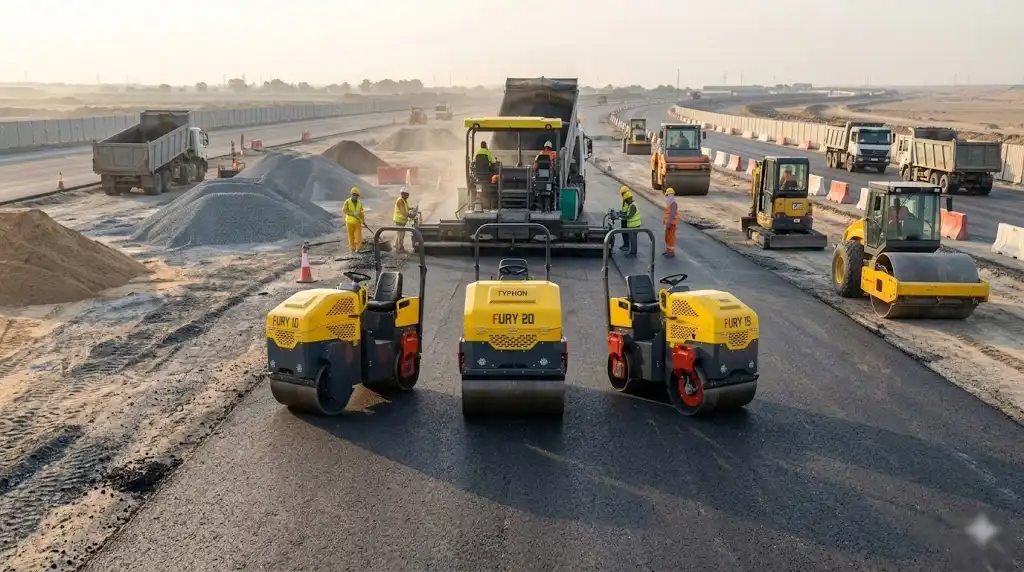
The drum on your roller does more than roll back and forth across a surface. Its width and weight shape how well you compact material, how quickly you finish a job, and how evenly the final surface holds up over time. Get these specifications right, and you produce dense, stable results in fewer passes with less wasted effort. Get them wrong, and you fight uneven compaction, missed coverage, and rework that drains both time and budget. Whether you are paving a highway, preparing a foundation, or finishing a tight residential lot, understanding how drum width and weight work together helps you match the machine to the job with confidence. This guide breaks down how each factor influences performance and how to use that knowledge to choose the right roller and get the most from every pass.
How Drum Width Affects Compaction Coverage
Drum width is one of the most direct factors influencing how much ground you cover with each pass, and it has a straightforward relationship with productivity. A wider drum compacts a larger surface area in a single pass, which means you finish large, open areas faster and with fewer trips back and forth. On big jobs like highways, parking lots, and expansive site preparations, that extra width translates into real time savings and a more consistent surface because fewer passes mean fewer seams and overlaps where compaction can vary.
Narrow drums serve a different but equally important purpose. While they cover less ground per pass, they excel in confined spaces where a wide machine simply cannot fit or maneuver. Tight residential streets, trench work, areas around utilities, and projects bordered by structures all call for a narrower drum that can work close to edges and navigate obstacles without leaving gaps. The trade-off is more passes to cover the same area, but the precision and access a narrow drum offers often matter more than raw speed on these jobs.
Coverage also depends on how you manage overlap between passes. Even the widest drum produces poor results if the operator fails to overlap adjacent passes correctly, leaving strips of under-compacted material between them. Matching drum width to the dimensions of your work area helps minimize the number of passes while keeping overlap consistent. When you choose a width that suits the space, you reduce wasted motion, achieve more uniform density across the surface, and finish the job with the even, dependable coverage that quality compaction demands.
Why Roller Weight Matters
Weight is the force that actually accomplishes compaction, pressing soil, aggregate, or asphalt particles together until air voids collapse and density rises. A heavier roller delivers more static force to the surface, driving particles closer together and producing the firm, stable foundation that lasting work requires. When you need to compact thick lifts of material or dense, stubborn soils, that added weight becomes essential, because lighter machines simply cannot generate the force needed to reach proper density at depth.
The relationship between weight and material is not a simple case of heavier always being better. Too much weight on the wrong material can cause problems just as serious as too little. On thin asphalt lifts or delicate surfaces, an overly heavy roller can crush aggregate, push material out of place, or over-compact the top layer while leaving issues below. Matching weight to the material and lift thickness protects the quality of the finished surface and prevents the damage that comes from applying more force than the job calls for.
Many modern rollers add dynamic force through vibration, which multiplies the effective compaction power well beyond static weight alone. Consider how these factors combine to influence results:
- Static weight that presses particles together through sheer mass
- Vibratory force that rearranges particles for deeper, more efficient compaction
- Lift thickness that determines how much force is needed to reach target density
- Material type that dictates whether heavy static or vibratory action works best
Understanding how weight interacts with these variables lets you select a machine that delivers the right force for your specific conditions, achieving solid density without harming the surface you worked so hard to build.
The Relationship Between Drum Width and Machine Weight
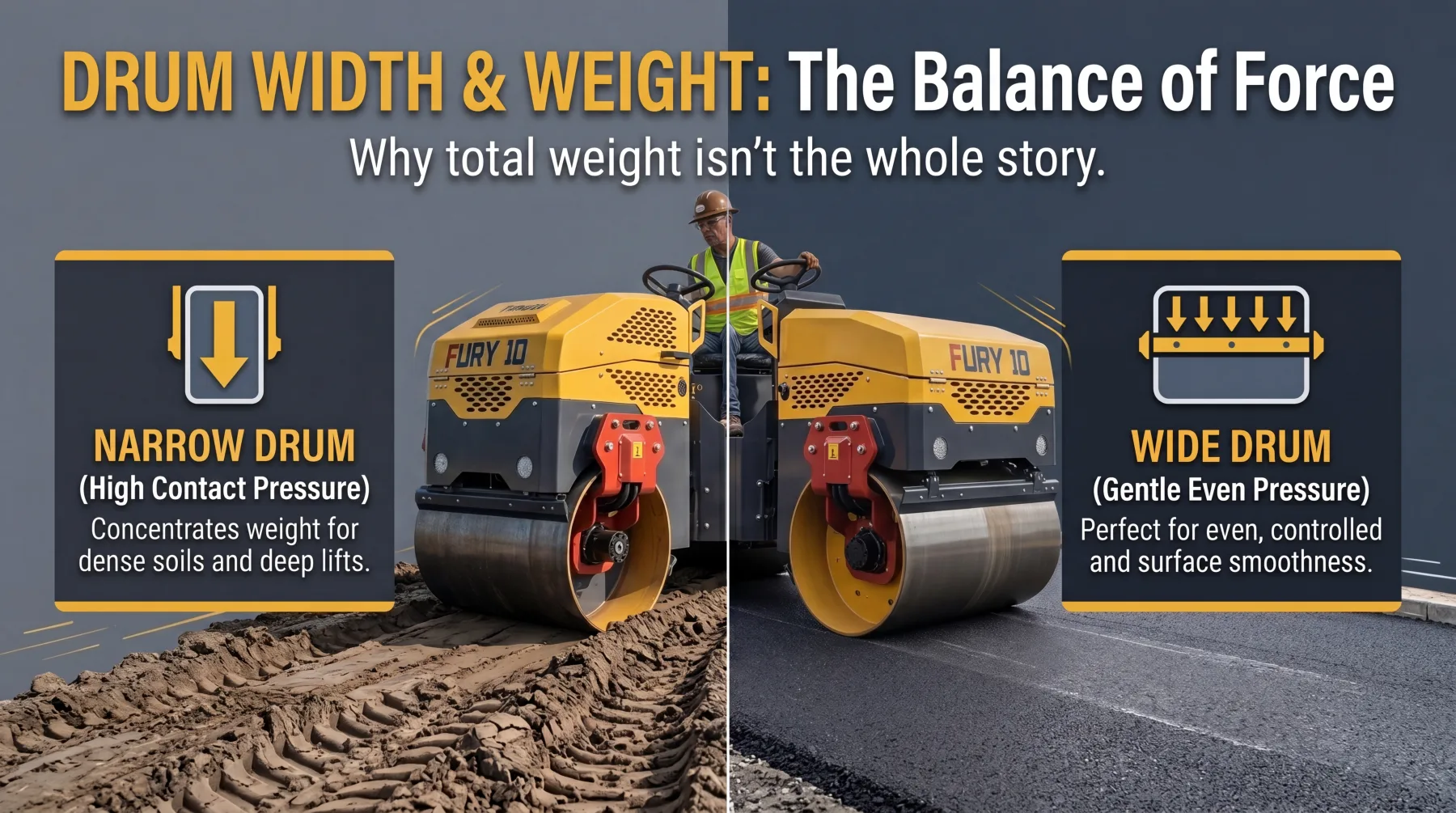
Drum width and machine weight are connected in ways that directly affect compaction performance, and understanding this link helps you read what a machine can truly do. The key concept is how weight distributes across the width of the drum, often described as the force applied per inch or linear measure of drum contact. A heavy machine with a narrow drum concentrates its weight over a smaller area, delivering high pressure that drives deep compaction. Spread that same weight across a much wider drum, and the pressure at any single point drops, which changes how the machine performs on different materials.
This relationship explains why two rollers with similar total weights can produce very different results. A wider drum that distributes weight more gently suits surfaces that need even, controlled pressure without the risk of over-compacting any one area. A narrower drum concentrating the same weight applies more aggressive force, ideal for dense soils and thicker lifts that demand higher pressure to reach proper density. Neither approach is universally better; each fits particular conditions and material types.
When you evaluate a roller, look past the headline weight figure and consider how that weight works with the drum width to create pressure on the surface. A machine that seems heavy enough on paper may apply gentler pressure than expected if its drum is very wide, while a lighter machine with a narrow drum can deliver surprising compaction force. Recognizing how width and weight balance against each other lets you predict performance more accurately and choose equipment that matches the pressure your material genuinely requires, rather than relying on a single specification that tells only part of the story.
Choosing the Right Roller for Different Applications
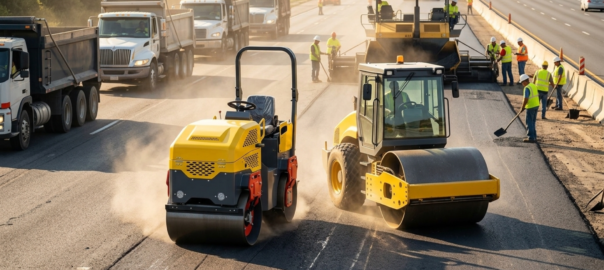
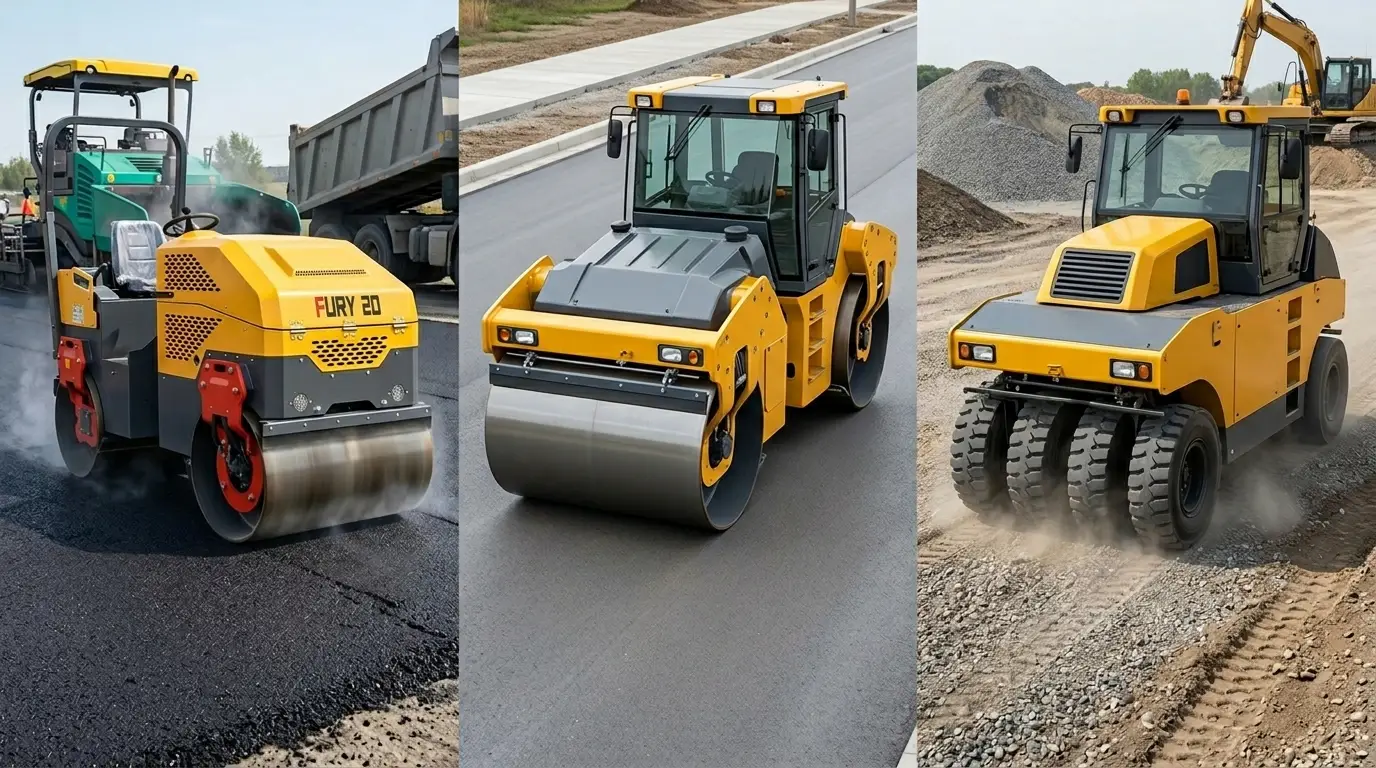
Selecting the right roller starts with a clear understanding of the work in front of you, because the ideal combination of drum width and weight changes dramatically from one application to the next. Large paving projects and broad site preparations reward wider drums and substantial weight, since these jobs demand both fast coverage and the force to compact material thoroughly across expansive areas. The open space lets a big machine work efficiently, and the productivity gains add up quickly across a long shift.
Confined and detail-oriented work calls for a different approach entirely. Narrow drums that fit tight spaces, work close to edges, and maneuver around obstacles become far more valuable than raw width when the job site limits your room to operate. Weight selection on these jobs depends heavily on the material and lift thickness rather than the desire for speed. Consider how different applications shape your choice:
- Highway and large lot paving: wider drums with higher weight for fast, deep compaction
- Residential streets and tight sites: narrower drums for access and edge precision
- Trenches and utility work: compact machines that fit confined spaces safely
- Thin asphalt finishing: controlled weight that compacts without crushing aggregate
- Deep soil and subgrade prep: heavier machines, often vibratory, to reach density at depth
Beyond width and weight, think about the material type, the required density, and the conditions of the site itself. A roller that performs beautifully on one project may struggle on another with different demands. Taking the time to match the machine’s specifications to the specific requirements of each application protects your results and your schedule. When you choose deliberately rather than defaulting to whatever is available, you set the job up for the even, dependable compaction that quality work depends on.
Maximizing Compaction Efficiency
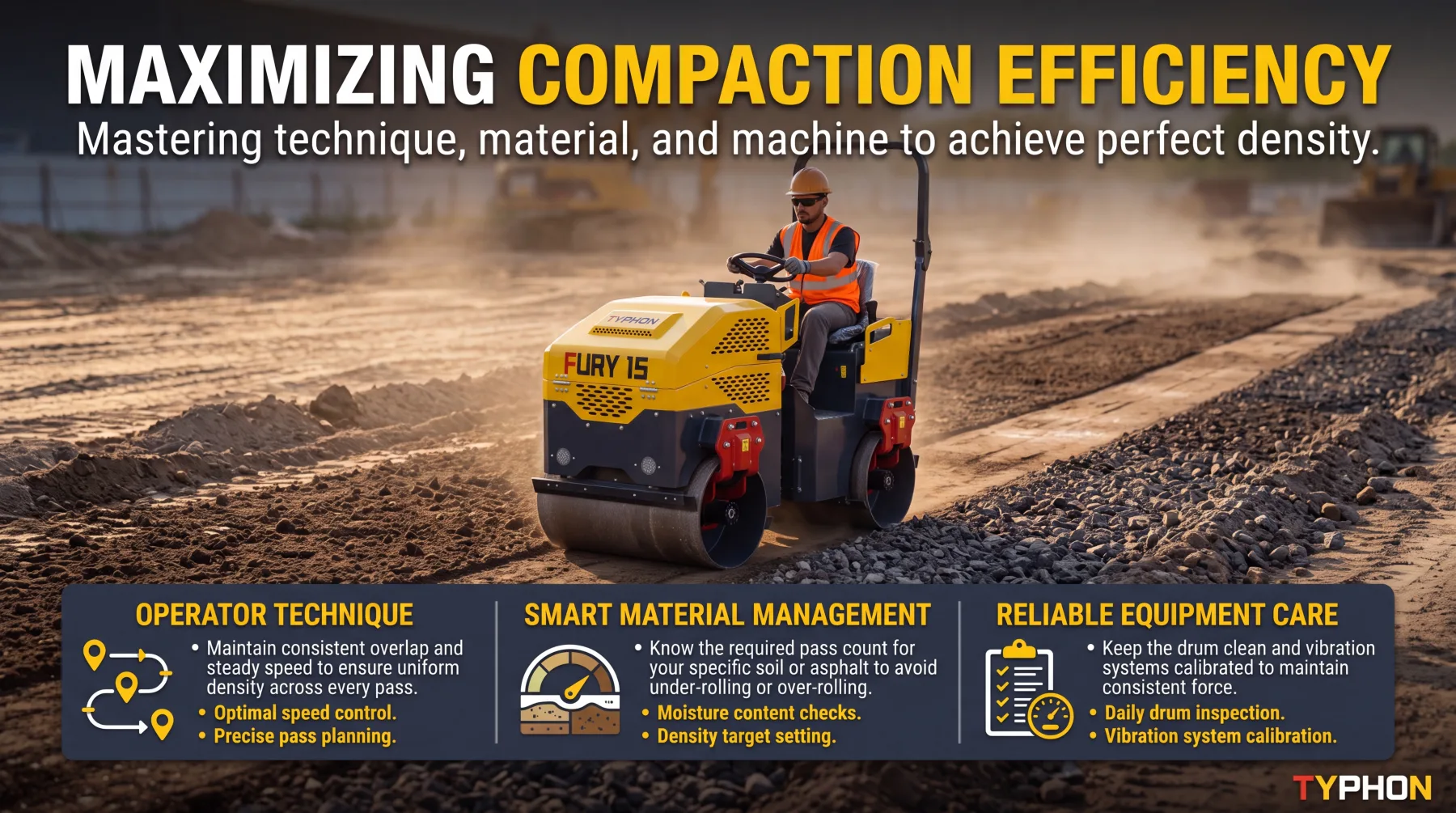
Getting the most from your roller means more than owning the right machine; it depends on how skillfully you operate it across every pass. Operator technique has an enormous influence on results, and even the best-matched roller delivers poor compaction in careless hands. Maintaining consistent overlap between passes, keeping a steady travel speed, and following a planned rolling pattern all ensure uniform density across the surface. Moving too fast leaves material under-compacted, while erratic patterns create soft spots and inconsistent results that show up as failures down the road.
Understanding your material and matching your approach to it is equally important. Different soils and asphalt mixes respond best to specific numbers of passes, and both under-rolling and over-rolling waste effort while harming quality. Under-rolling leaves voids and weak density, while over-rolling can break down aggregate, displace material, or damage a surface that has already reached its target. Knowing how many passes your material needs, and when vibratory action helps or hurts, lets you reach proper density efficiently without wasting time or fuel on unnecessary passes.
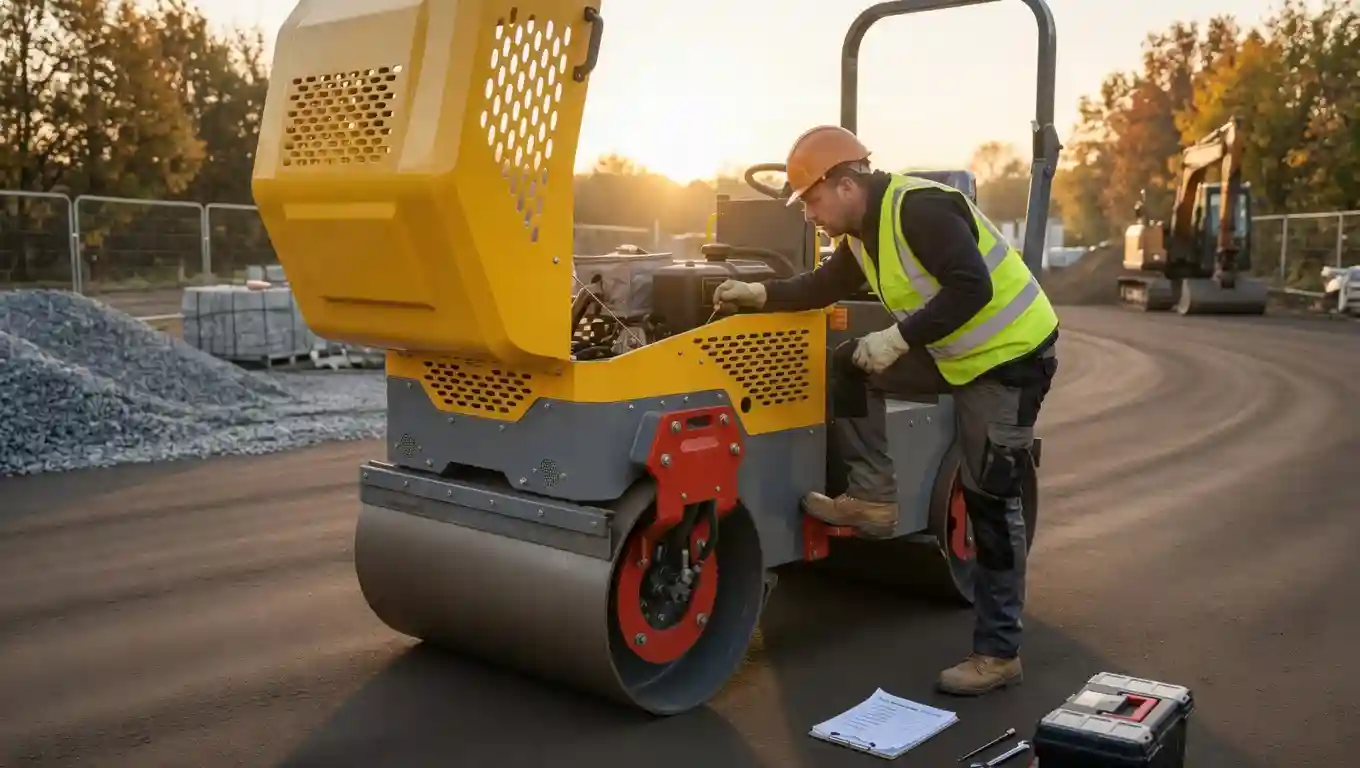
Efficiency also depends on keeping the machine in good working condition. A well-maintained roller delivers its rated weight and vibratory force consistently, while neglected equipment loses performance in ways that are hard to see until results suffer. Keep the drum clean and free of buildup that affects the surface, confirm vibration systems function as designed, and address wear before it undermines compaction. By combining sound operator technique, smart material management, and reliable equipment care, you achieve dense, uniform results in fewer passes, protect your surfaces, and complete each job with the consistent quality your projects demand.
Conclusion
Drum width and roller weight are not just numbers on a spec sheet; they are the factors that decide whether your compaction holds up or fails over time. Width determines how much ground you cover and how well you reach tight spaces, while weight provides the force that drives material to proper density. The way these two work together creates the pressure your surface actually feels, which is why looking past a single headline figure matters so much. Matching that combination to the demands of each application, from open highways to confined residential lots, sets every job up for even, dependable results. Yet the right machine only pays off when paired with skilled operation, smart material management, and consistent maintenance. When you bring all of these elements together, you achieve dense, uniform compaction in fewer passes, protect your surfaces and your budget, and finish each project with the quality and confidence your work demands.