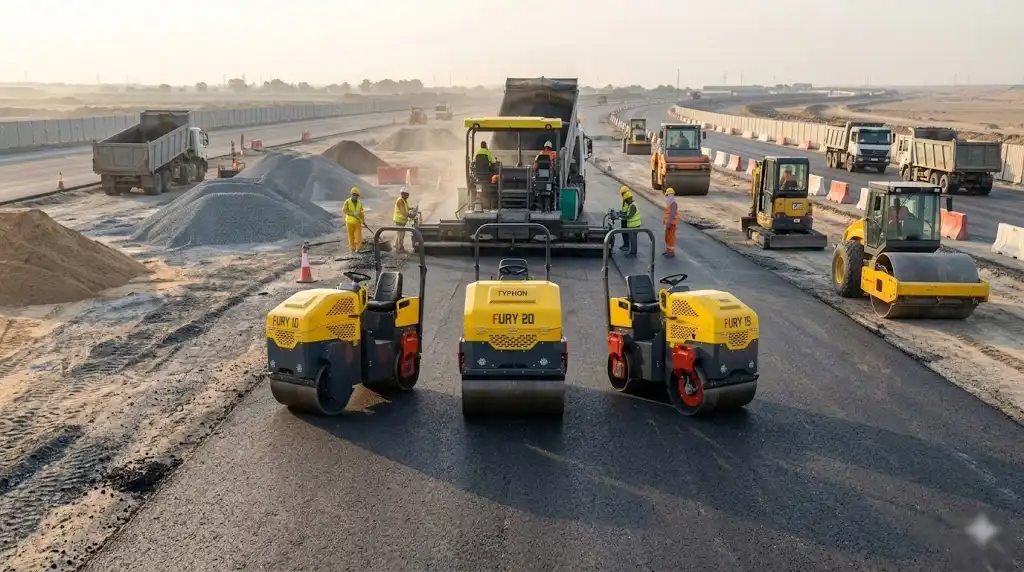
Every durable road begins with what you cannot see: a tightly compacted foundation that carries the weight of traffic for decades. When compaction falls short, the consequences surface fast, in the form of rutting, cracking, potholes, and premature failure that drain repair budgets and reputations. The road roller is the machine that prevents all of that, pressing loose material into a dense, stable mass capable of bearing real loads.
This guide is written for construction business owners, site supervisors, and equipment buyers who want a clear, practical understanding of road roller compaction. It explains how road rollers work, walks through the main types of rollers and the role each one plays, and shows why proper compaction is the difference between a road that lasts and one that fails early. Along the way, you will learn how vibratory systems reach deeper into the material, where each roller fits in road construction and paving, and how skilled operators achieve the optimal number of passes. By the end, you will be equipped to match the right machine and method to the work in front of you.
Why Proper Compaction Matters for Road Durability
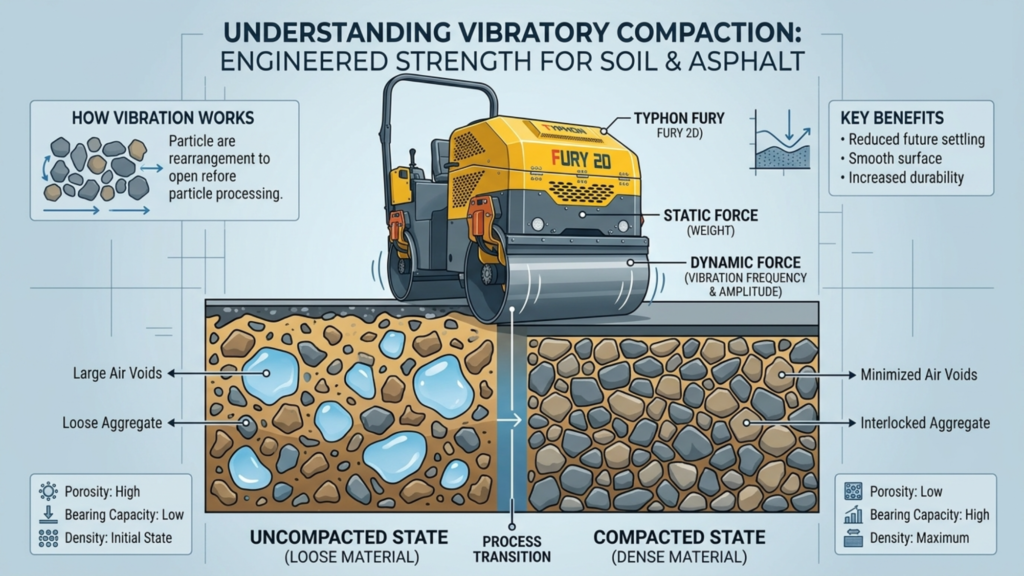
Compaction is not a finishing touch. It is the structural backbone of every road, parking lot, and paved surface you build. When you compact soil or asphalt correctly, you push out the air voids and force particles into close, interlocking contact. That density is what gives the surface its load-bearing capacity, its resistance to water, and its ability to withstand years of repeated traffic without deforming.
Poorly compacted material tells a different story. Trapped air and loose particles leave the structure weak and porous. Water seeps in, freeze-thaw cycles widen the damage, and the surface settles unevenly under load. The result is the rutting, cracking, and potholing that no contractor wants to revisit. Strong soil compaction in the base and subgrade prevents settlement before the pavement ever goes down, while proper asphalt compaction locks in the density that keeps the wearing surface intact. Getting both right is the most reliable investment you can make in a road’s long-term performance.
How Road Rollers Work: The Mechanics of Compaction
At its core, a road roller works by applying force to loose material, driving the particles closer together and expelling the air and excess moisture between them. Understanding how road rollers work means understanding the forms that force can take, because a roller can compact material through several mechanisms at once. The simplest is static pressure, the sheer dead weight of the drum bearing down on the surface as the machine rolls across it. That weight presses the top layers of material into a denser arrangement.
Many modern rollers add dynamic force to that static weight. A vibratory drum introduces rapid oscillation that momentarily reduces friction between particles, allowing them to settle into a tighter configuration than weight alone could achieve. Some machines also rely on a kneading or manipulating action, particularly pneumatic rollers, whose rubber tires flex and work the surface as they pass. Each mechanism suits different materials and stages of the job. The skill lies in applying the right type of force in the right amount at the right moisture content, so the material reaches its target density without being damaged by over-compaction.
The Main Types of Road Rollers
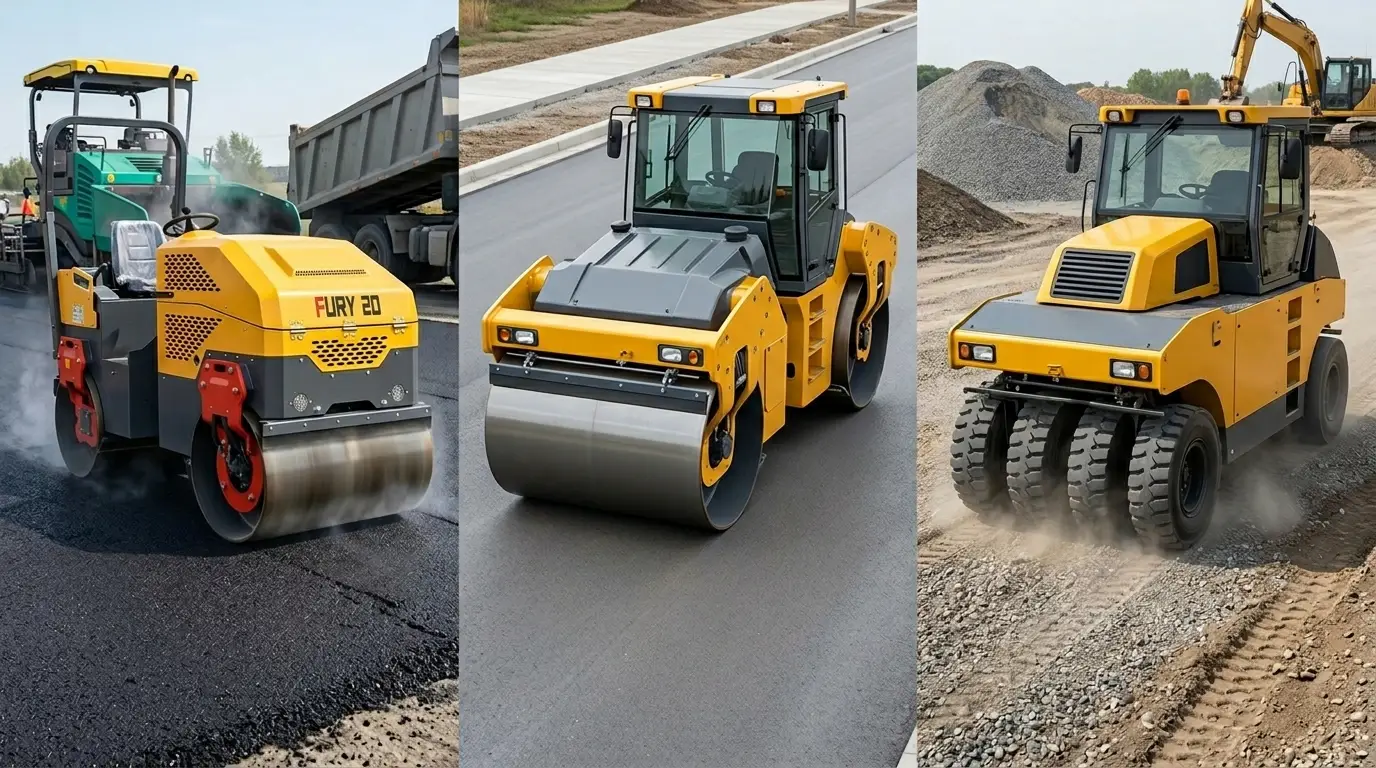
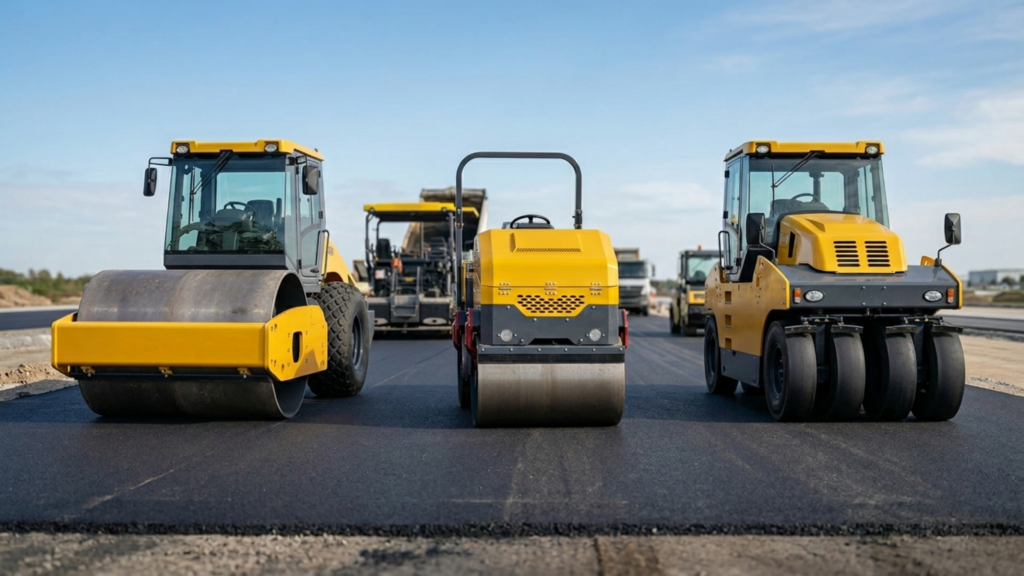
No single roller does every job well. Road construction calls for different machines at different stages, and knowing the strengths of each type is essential whether you are operating equipment or buying it. The three workhorses of compaction are static rollers, vibratory rollers, and pneumatic rollers, and each improves density and stability in its own way.
Static Rollers
Static rollers compact purely through weight, relying on heavy steel drums to press material into a denser state as the machine passes over it. The classic smooth-wheel and three-wheel rollers fall into this category, and they have a long, proven history in road work. Because they depend on mass alone, static rollers excel at finishing and smoothing surfaces, ironing out the marks left by earlier passes and producing a clean, even finish on asphalt.
Their strength is also their limit. Static pressure works effectively on the upper layers of material but does not transmit force deeply into a thick lift. For that reason, static rollers are often used for final finishing rather than primary compaction on substantial layers. When you need a smooth, tightly sealed surface and the bulk of the densification is already done, a static roller delivers reliable, controllable results.
Vibratory Rollers
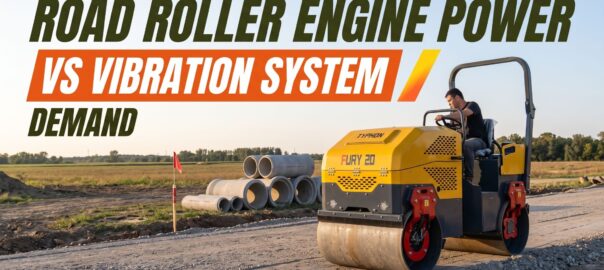
Vibratory rollers are the most versatile and widely used machines in modern compaction, and for good reason. They combine the static weight of the drum with a vibrating mechanism, typically an eccentric weight that spins to generate rapid impacts against the surface. This combination produces far greater compactive force than weight alone, allowing the machine to achieve high density in fewer passes and across thicker lifts of material.
The vibration does something static weight cannot: it sets the particles in motion. As the drum vibrates, friction between particles drops for a fraction of a second, and the particles rearrange themselves into a denser, more stable packing. This makes vibratory rollers highly effective on granular soils, aggregate bases, and asphalt alike. Operators can often adjust the amplitude and frequency of the vibration to match the material and lift thickness, which gives them precise control over how the machine performs. For most soil compaction and asphalt compaction work, the vibratory roller is the primary tool.
Pneumatic Rollers
Pneumatic rollers, also called rubber-tired rollers, compact through a different mechanism entirely. Instead of a steel drum, they run on rows of smooth rubber tires, and the weight of the machine is transmitted through those tires to the surface. The result is a kneading action that works the material in a way steel drums cannot, sealing the surface and eliminating voids near the top of an asphalt mat.
This kneading effect makes pneumatic rollers particularly valuable in the intermediate stage of asphalt compaction, where they help achieve uniform density and a tight, sealed finish. The flexible tires also conform to slight surface irregularities, distributing pressure more evenly than a rigid drum. By adjusting tire pressure and ballast, operators can tune the machine to the job at hand. Pneumatic rollers complement vibratory and static machines, and many paving operations use all three in sequence to reach the specified density and surface quality.
How Vibratory Systems Enhance Compaction Depth
The reason vibratory rollers dominate modern road construction comes down to depth. Static weight loses its effect quickly as it travels down through a layer of material, which limits how thick a lift it can compact in a single pass. Vibration changes that equation by sending dynamic energy deeper into the material than dead weight ever could on its own.
When the drum vibrates, it delivers a rapid series of impacts that travel downward through the lift, energizing particles well below the surface. This momentarily loosens the internal friction holding those particles in place, allowing them to settle into a denser arrangement throughout the depth of the layer, not just at the top. The practical benefit is significant: contractors can place and compact thicker lifts in fewer passes, which speeds the work and lowers cost without sacrificing density. By controlling amplitude, the operator adjusts how deep that energy reaches, using high amplitude for thick lifts of soil or aggregate and lower amplitude for thinner asphalt layers where surface quality matters most. That control over compaction depth is what makes the vibratory system so powerful and so widely trusted.
Common Applications in Road Construction and Paving
Road rollers earn their keep across nearly every stage of building a road, and each phase calls on the right machine for the material at hand. The work begins below the surface, in the subgrade and the granular base, where soil compaction establishes the foundation everything else rests on. Here, heavy vibratory soil compactors, often fitted with padfoot or smooth drums, compact thick layers of soil and aggregate to create the stable, load-bearing platform that prevents future settlement. Without this groundwork, even the finest asphalt will fail.
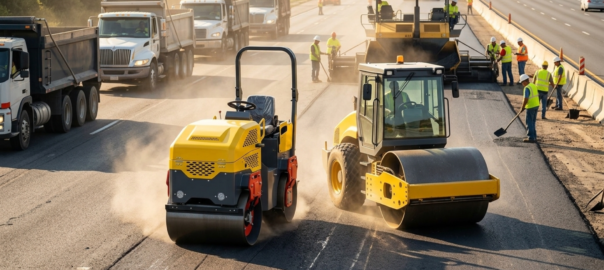
Once the base is sound, the focus shifts to the asphalt itself, and asphalt compaction typically unfolds in stages. Breakdown rolling comes first, using a vibratory roller to achieve the bulk of the density immediately behind the paver while the mat is still hot. Intermediate rolling often follows with a pneumatic roller, kneading the surface to seal it and reach uniform density. Finish rolling closes out the process, with a static steel-drum roller smoothing the surface and removing any remaining roller marks for a clean final appearance. Beyond highways and city streets, these same principles apply to parking lots, airport runways, industrial yards, and driveways. Matching the roller to the stage and material is the foundation of quality paving work.
How Operators Achieve Optimal Compaction
The best equipment in the world will not deliver results without skilled operation, and achieving optimal compaction is as much about technique as it is about the machine. Operators work toward a target density, often verified with testing equipment, rather than simply rolling until the surface looks finished. Reaching that target reliably depends on controlling several factors at once: the number of passes, the rolling pattern, the speed of the machine, the material’s moisture or temperature, and the settings of the roller itself.
The number of passes matters enormously. Too few leave the material short of its target density, while too many can over-compact and damage the structure, particularly with asphalt. Experienced operators establish a rolling pattern through a test strip at the start of the job, determining exactly how many passes at what amplitude and speed produce the specified density. They then maintain that pattern consistently, overlapping each pass to cover the full width evenly. Moisture and temperature are equally critical. Soil compacts best at its optimal moisture content, and asphalt must be compacted within a specific temperature window before it cools, which is why breakdown rolling follows the paver so closely. Operators also keep their speed steady and moderate, because moving too fast spaces the impacts too far apart and leaves density behind. By managing all of these variables together, a skilled operator turns a capable machine into a road that lasts.
Conclusion
Road roller compaction is the quiet discipline behind every durable road. By driving out air voids and forcing particles into dense, interlocking contact, rollers give soil and asphalt the strength, stability, and load-bearing capacity that long-lasting pavement requires. Static rollers finish and smooth; vibratory rollers reach deep to densify thick lifts, and pneumatic rollers knead and seal the surface, and the most reliable operations use each one where it performs best. Layered on top of the right machine, proper moisture, temperature, speed, and pass control are what carry the work from adequate to excellent.
The practical takeaway is straightforward: match the roller and the method to the material and the stage of work, and verify your results against a target density rather than appearance alone. If you are planning a project or expanding your fleet, start by assessing the soils and asphalt mixes you work with most, then choose machines suited to that work and train your operators to establish proper rolling patterns. Get the compaction right, and you build roads that stand up to traffic, weather, and time, protecting both your investment and your reputation on every job.