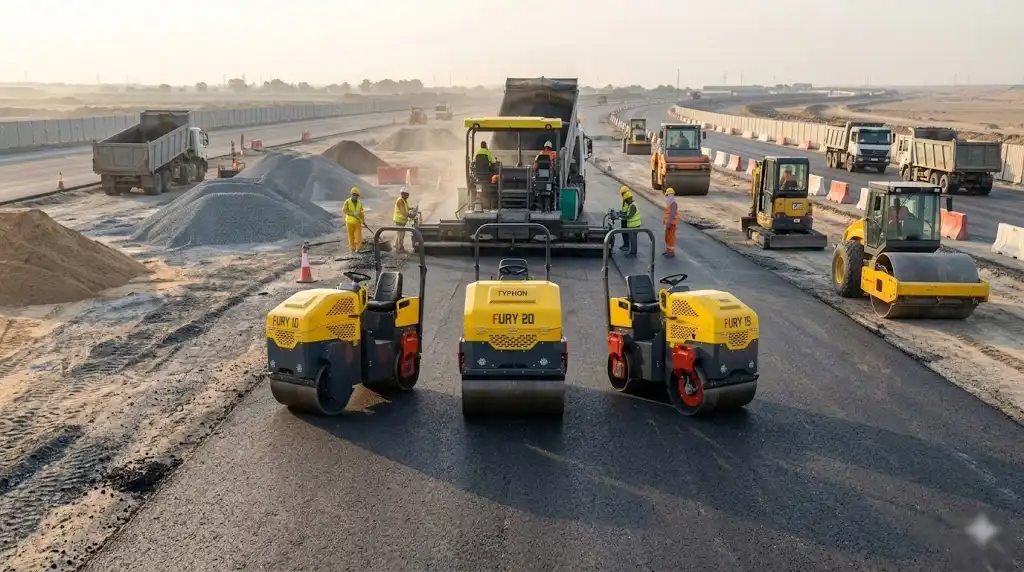
Compaction density is one of the most important indicators of quality in earthmoving, road construction, and paving projects. While rollers and compactors are responsible for achieving the final density, the process begins much earlier with the loader. Every bucket of material that is scooped, transported, and placed affects how efficiently the compaction crew can achieve specification requirements. Poor loading techniques often lead to uneven material distribution, particle segregation, inconsistent moisture levels, and variable lift thickness. These issues increase the likelihood of failed density tests, additional grading work, and costly project delays.
Effective loader operation creates a strong foundation for successful compaction. Consistent bucket loading, careful material handling, and controlled placement help maintain a uniform material structure before the first roller pass. When operators follow standardized loading practices, downstream crews spend less time correcting uneven lifts and more time achieving target density efficiently. Small improvements in loading techniques can produce significant gains in productivity, reduce material waste, and improve the long-term performance of finished roads, foundations, and embankments. Understanding how loader operations influence compaction allows contractors, equipment operators, and site supervisors to improve quality while reducing unnecessary rework across the entire project.
The Connection Between Loading Technique and Material Density
The quality of compaction begins with how material is handled during the loading process. Long before rollers apply compaction forces, the loader determines whether the material arrives at the work area in a condition that supports consistent density. Every movement, from entering the stockpile to dumping the load, affects the distribution of particles and the overall condition of the material. Consistent loading techniques create a stable foundation that allows the compaction crew to achieve reliable results across the entire lift.
One of the biggest concerns during loading is material segregation. When operators dig aggressively, travel too quickly, or dump material carelessly, larger aggregate particles separate from finer materials. This uneven distribution creates sections with different particle sizes, making it difficult for compaction equipment to achieve uniform density. Areas containing excessive coarse material may contain large voids, while areas with concentrated fines can compact differently, resulting in inconsistent test results across the project.
Moisture consistency is equally important. Material taken from different sections of a stockpile may contain varying moisture levels due to weather exposure or drainage conditions. Repeatedly loading from random locations can produce loads with inconsistent water content, forcing crews to make continual adjustments before compaction begins. Maintaining a consistent working face within the stockpile helps preserve both particle distribution and moisture balance.
Smooth loader operation also reduces unnecessary disturbance of the material. Controlled bucket entry, steady travel speeds, and careful dumping help preserve the material’s natural characteristics while minimizing segregation. Operators should think of every bucket as part of the finished surface rather than simply another load to move. Consistent loading habits allow grading and compaction crews to work more efficiently, improve density results, and reduce the need for corrective work later in the project.
How Bucket Fill Factor Affects Compaction Outcomes
“Bucket fill factor” refers to the amount of material carried in the loader bucket compared with its rated capacity. Although maximizing payload may seem like the fastest way to move material, consistent bucket loading has a much greater impact on compaction quality than simply carrying the largest possible load. Uniform bucket fills help create evenly distributed lifts that allow rollers to apply compaction energy consistently across the entire work area.
Inconsistent bucket loads often produce uneven material placement. A fully loaded bucket followed by a partially filled one creates variations in lift thickness, leaving some sections deeper than others. Thick areas require more compaction effort, while thinner sections may receive excessive compaction, creating inconsistent density throughout the project. Maintaining a repeatable bucket fill factor allows operators to place material more evenly, making it easier for graders to establish a consistent surface before rolling begins.
Different materials also require different loading approaches. Dense clay tends to stick inside the bucket, making slightly lighter loads more practical to prevent carryback and maintain predictable placement. Loose sand and crushed aggregate usually flow more freely, allowing operators to achieve fuller bucket loads without sacrificing consistency. Mixed materials containing oversized rock or irregular fragments benefit from controlled loading that prevents large pieces from dominating individual bucket loads and disrupting material distribution.
Experienced operators focus on consistency rather than maximum capacity. Repeating the same loading technique during every cycle creates predictable material volumes and improves coordination with grading and compaction crews. Standardized bucket loading also helps reduce machine strain, minimize fuel consumption, and improve cycle efficiency. Over the course of a project, these small improvements contribute to more uniform compaction, fewer failed density tests, reduced rework, and greater overall productivity for the entire construction team.
The Impact of Drop Height and Material Distribution
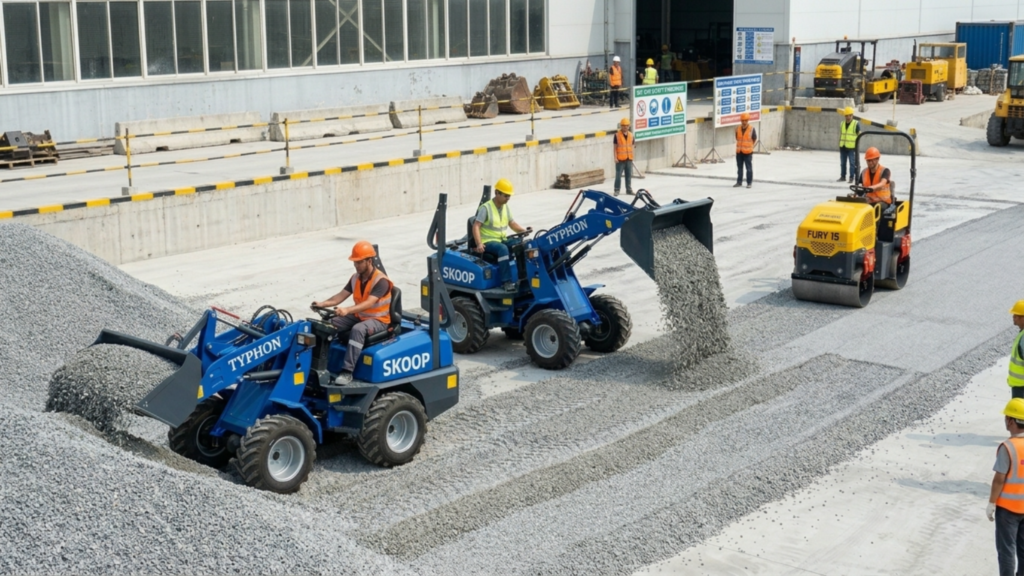
Drop height, meaning the vertical distance material travels from the loader bucket to the ground or lift surface, has a direct effect on compaction quality. It is often overlooked, but it is one of the simplest factors to control on site. When material is dropped correctly, it stays uniform, spreads evenly, and requires less correction before compaction begins.
When the drop height is too high, several problems appear:
- Segregation increases as larger particles travel farther than fines during freefall.
- Fine materials drift away from coarse aggregate, creating uneven blends
- Impact energy creates craters or loose piles that require extra grading
- Moisture can separate slightly during fall, affecting uniform compaction
These issues reduce the quality of the initial lift and force additional machine passes before rolling even starts.
A controlled low drop helps maintain material integrity. The load lands closer to its final position, reducing separation of particles and minimizing surface disturbance. This creates a smoother starting layer for graders and compactors, reducing rework and improving overall efficiency.
Building even distribution from the start
Material placement is just as important as drop height. Consistent distribution ensures the lift begins as evenly as possible before compaction. Key practices include the following:
- Keep the bucket low when dumping to minimize fall distance
- Overlap each dump slightly to avoid ridges, gaps, or weak zones
- Place material in the direction of spreading to reduce rehandling
- Avoid concentrated piles that require heavy dozer or grader correction
- Maintain consistent dump spacing across the entire work area
Small adjustments in placement technique reduce segregation, improve surface uniformity, and help the compaction crew achieve consistent density with fewer passes.
Layer Thickness and Pass Strategy for Optimal Density
Layer thickness plays a critical role in achieving target compaction density. Even well-placed and well-mixed material will not compact correctly if the lift is too thick. Compaction energy from rollers has a limited depth of influence, and anything beyond that range remains under-compacted beneath the surface.
When lifts are too thick:
- The top layer compacts while the bottom remains loose
- Density tests may pass at the surface but fail at depth
- Weak zones form, leading to long-term settlement issues
- More roller passes are required without guaranteed improvement
Thinner, controlled lifts allow compaction energy to reach the full depth of the material. This ensures more uniform density from top to bottom and improves structural stability.
The loader plays an important role by controlling how much material is placed per lift. Consistent bucket filling and even dumping help the spreading crew maintain correct layer thickness across the entire surface.
Planning passes for uniform results
A structured approach to rolling ensures consistent compaction:
- Confirm target lift thickness before material placement begins
- Maintain uniform lift depth across the entire working area
- Use overlapping roller passes so coverage is consistent
- Avoid over-rolling, which can fracture aggregate or displace material
- Follow a planned rolling pattern instead of random movement
One common mistake is placing overly thick lifts to speed up production. While it may appear efficient, it usually results in rework, failed density tests, and higher fuel and labor costs.
Operator Technique and Its Role in Consistent Compaction Results
Operator technique is the connecting factor behind all successful compaction outcomes. Even with good material and proper equipment, inconsistent operation can create variability that no compaction machine can fully correct. The loader operator directly influences how material is handled, placed, and prepared for compaction.
Consistency is the most important principle. When an operator repeats the same loading, carrying, and dumping method each cycle, the resulting lifts become predictable. This allows grading and compaction crews to work efficiently without constantly adjusting for variation. In contrast, inconsistent habits introduce uneven material layers, moisture variation, and irregular lift thickness.
Awareness is equally important. Skilled operators observe changes in material behavior and adjust accordingly before issues affect the lift. For example, noticing a shift in moisture content or particle size early allows corrections before large sections of work are affected.
Habits that support consistent density
Strong operator practices include:
- Maintain a steady fill factor instead of maximizing each load
- Keep the bucket low during dumping to reduce drop height
- Place and overlap material deliberately to form uniform lifts
- Communicate regularly with grading and compaction crews
- Monitor moisture and material changes throughout the shift
- Adjust technique early when stockpile conditions change
When operators develop disciplined habits, the entire compaction process becomes more predictable. This reduces rework, improves density results, and increases overall project efficiency.
Conclusion
Compaction density is built one bucket at a time, long before the roller arrives. The way a loader handles material, fills the bucket, controls drop height, builds lifts, and is operated all feed directly into the density the project ultimately achieves. When these techniques work together, the result is uniform lifts, fewer failed tests, and far less rework. The opposite is just as true: careless loading creates problems that no amount of rolling can fully fix. The most reliable path to consistent density is consistency itself, applied at every stage of loading. Review your crew’s current loading habits against these five areas, pick the one with the most variation, and standardize it on your next lift. That single improvement often delivers measurable gains in both density and productivity.