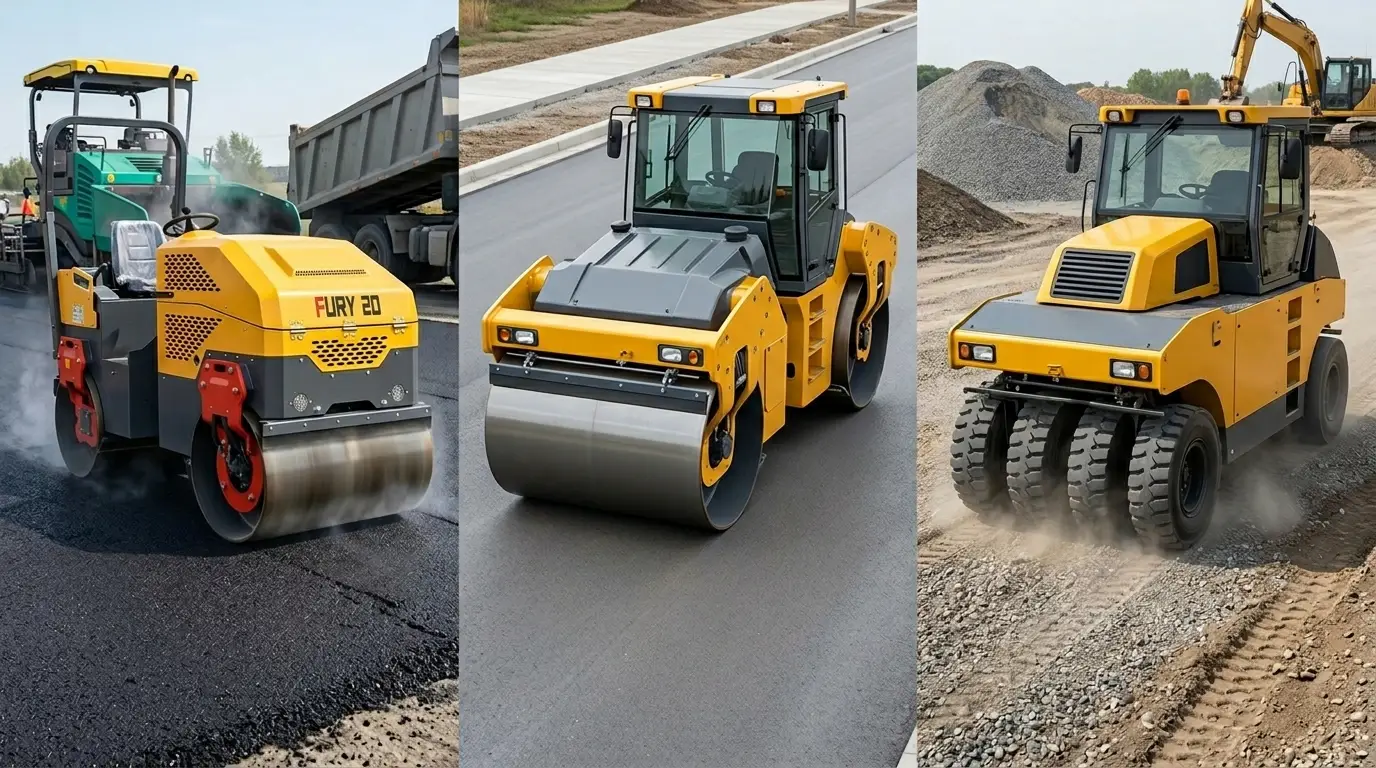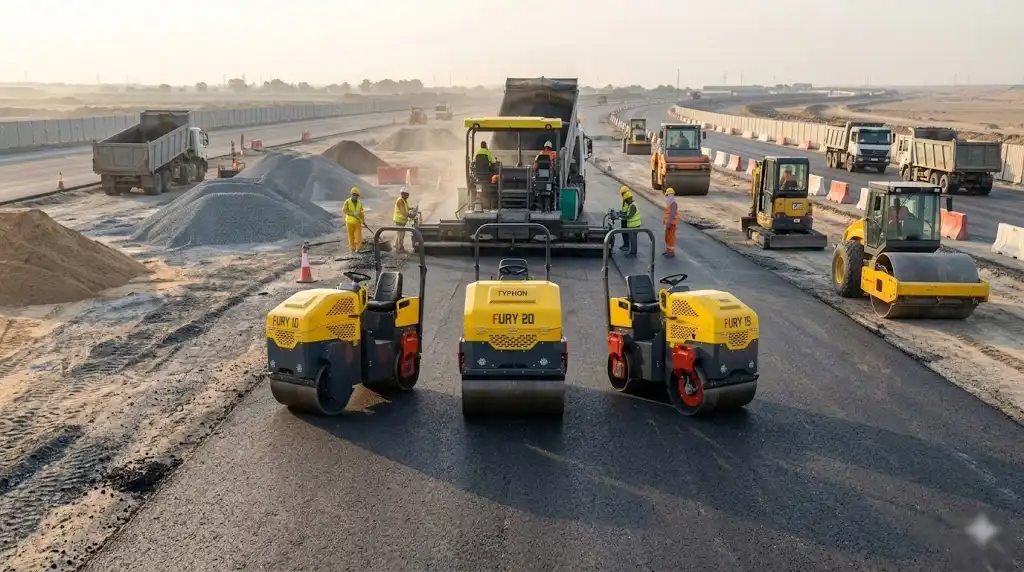
A road roller can look identical to another on the lot, share the same drum width, and weigh nearly the same, yet leave behind compaction results that differ noticeably from one pass to the next. The reason often hides in the balance between the engine and the vibration system it feeds. The vibratory mechanism inside the drum is what actually densifies asphalt and soil, but that mechanism runs entirely on power the engine must generate. When engine output comfortably supports the vibration demand, the roller holds steady amplitude and frequency across every pass. When it falls short, the drum loses its rhythm, compaction suffers, and fuel gets spent for weaker results. Buyers who study horsepower in isolation frequently miss how tightly it must pair with what the vibration system asks for.
This balance deserves close attention because it decides both the quality of your mat and the cost of achieving it. A well-matched engine keeps the eccentric weights spinning at their rated speed while the machine also propels itself and climbs grades, all without straining. Undersize the engine relative to the vibration load, and density targets slip while consumption climbs.
How the Engine Drives the Vibration Mechanism
A road roller compacts through a vibrating drum, not weight alone. Inside that drum sits an eccentric shaft carrying offset weights, and when the shaft spins at high speed, those weights fling the drum into rapid oscillation. That oscillation is what drives air and voids out of the material below, pressing particles into a dense, stable layer. The faster and heavier that motion, the more compactive energy reaches the ground.
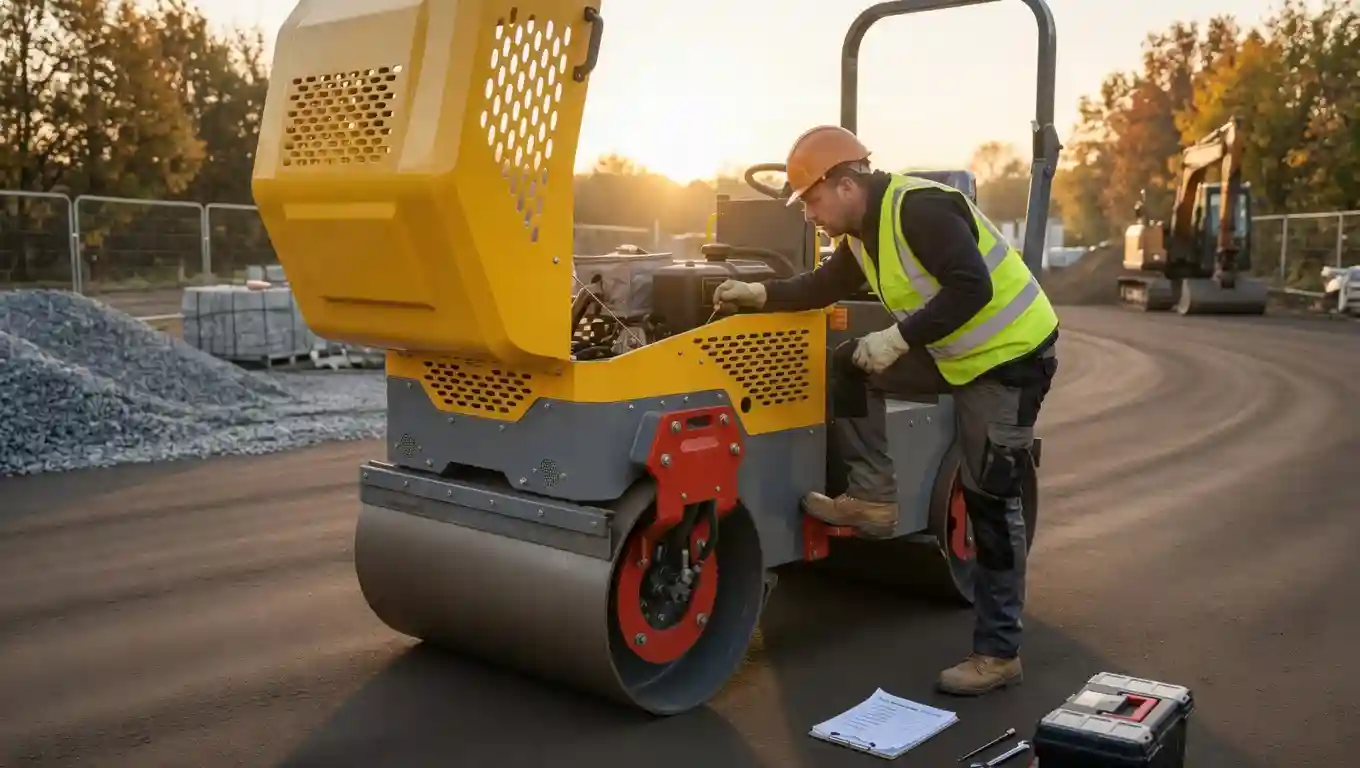
Spinning that eccentric shaft takes real power. The engine drives a hydraulic pump or a dedicated drive circuit that turns the shaft, and holding it at the rated rotational speed against the resistance of the flung weights demands sustained output. Two characteristics define what the drum delivers: frequency, the number of oscillations per minute, and amplitude, the distance the drum travels on each stroke. Both draw on the engine, and both must stay steady for even compaction.
Key takeaway: The engine spins the eccentric shaft that vibrates the drum, and holding frequency and amplitude steady against that resistance takes sustained power the engine must supply.
How Vibration Demand Pulls From Total Engine Output
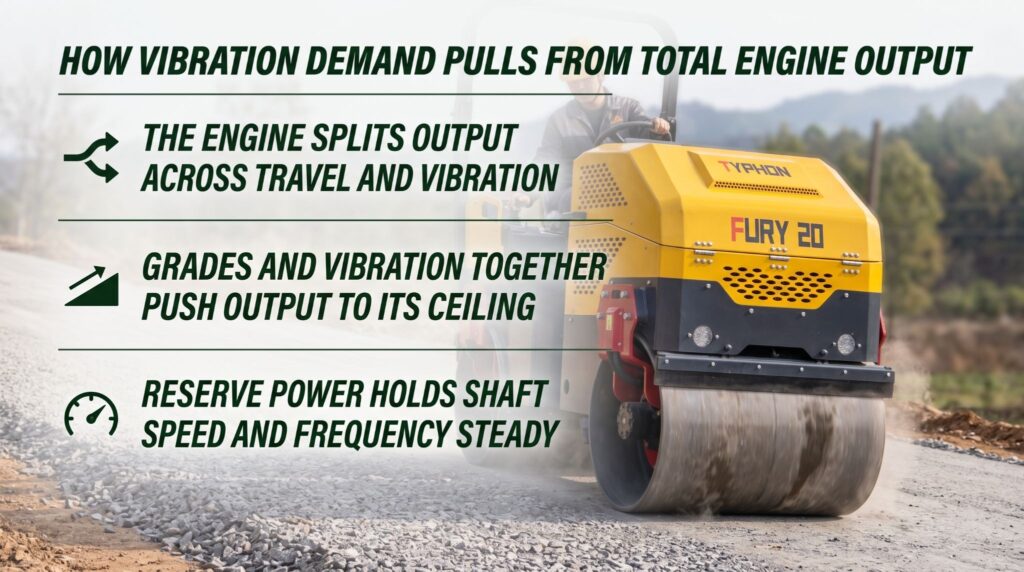
The engine never serves the vibration system in isolation. During a working pass, it splits its output several ways at once: propelling the machine forward, steering or articulating the frame, climbing any grade, and driving the eccentric shaft. The vibration circuit is often the heaviest of these draws, and it competes with the rest for a finite pool of power.
You feel this contest most when demands stack together. Rolling uphill while the drum vibrates at full amplitude asks the engine to feed traction and vibration simultaneously, and output climbs toward its ceiling. An engine with headroom absorbs that combined load and holds shaft speed steady, so frequency stays locked where it belongs. An engine without reserve drops revolutions under the strain, and when shaft speed sags, frequency and amplitude both fall with it. The drum then delivers less compactive energy than the job needs, even though the operator hasn’t changed a single setting.
Key takeaway: Engine output is shared among travel, steering, grade, and vibration at once, so adequate reserve is what keeps the eccentric shaft at full speed when demands pile up together.
How Mismatched Power Weakens Compaction and Raises Fuel Use
An engine sized wrong for the vibration system undermines results in two directions, and both cost money. The mechanism differs, but the outcome is the same: weaker density at a higher price per completed area.
When power runs short of the vibration demand, the drum can’t hold its rated frequency and amplitude under load. Compaction energy drops, so the material fails to reach target density in the planned number of passes. Crews respond by adding passes, and every extra pass burns fuel, adds hours, and wears the machine further, all to recover density the drum should have delivered the first time. Worse, inconsistent amplitude can leave soft spots that fail inspection or shorten the life of the finished surface.
Oversizing carries its own penalty. An engine far larger than the vibration load ever requires fuel carrying and idling capacity it never applies, and the extra weight and cost return little on light-duty work. The efficient target sits between these extremes: an engine with enough reserve to hold vibration output steady on your hardest passes, without hauling capacity you’ll rarely tap.
Key takeaway: Too little power starves the drum and forces extra passes, while too much wastes fuel on unused capacity, so matching engine output to the vibration demand protects both density and cost.
How Soil Type and Pass Count Shape Power Demand
The material under the drum decides how hard the vibration system, and therefore the engine, must work. Loose granular fill and fresh asphalt yield quickly, so the drum reaches target density with modest effort and fewer passes. Cohesive clay, thick lifts, and stubborn subgrade resist compaction far more, forcing the vibration system to pour in more energy over more passes before the layer stabilizes.
Amplitude selection ties directly into this. Thick lifts and dense material usually call for high amplitude, which drives the drum harder and pulls more power from the engine on every stroke. Thin lifts and finishing work use low amplitude, which eases the draw. A roller that must run high amplitude for most of its duty places a far heavier standing demand on the engine than one doing light finishing passes.
Pass count compounds the picture. Each pass over resistant material repeats the full vibration load, so a subgrade needing six passes taxes the engine six times over where loose fill might need two. Reading your typical material and lift thickness tells you how much sustained vibration power your work truly requires.
Key takeaway: Dense material, thick lifts, high amplitude, and high pass counts all raise the sustained power the vibration system demands, so your soil and lift profile sets the engine reserve you need.
Practical Tips for Balancing Engine Power and Vibration Demand
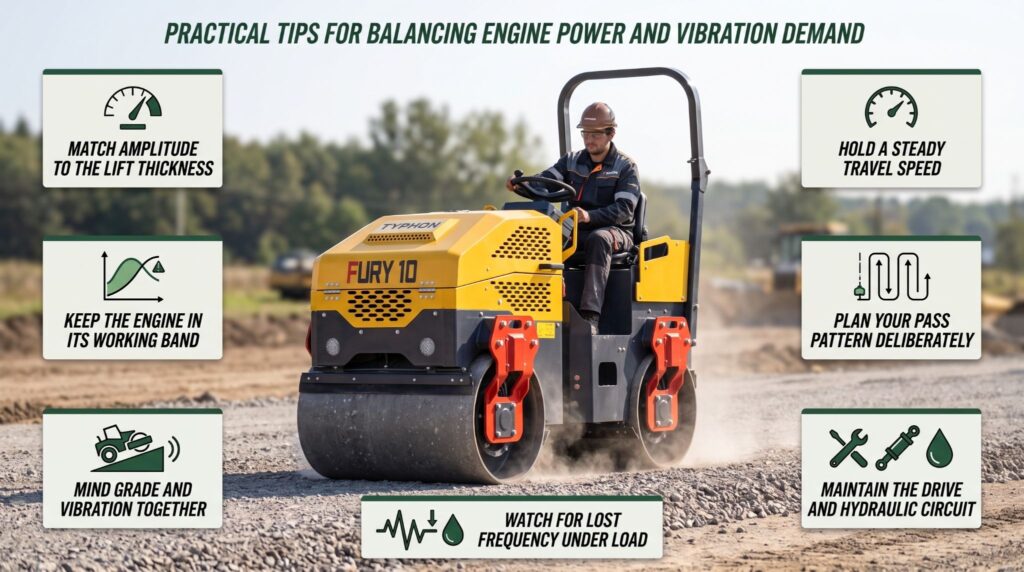
You influence more of this balance than the spec sheet alone suggests. A few deliberate habits keep the engine feeding the drum efficiently and the compaction consistent across the mat.
- Select amplitude to suit the lift. Match high amplitude to thick or dense layers and low amplitude to thin finishing passes, so the engine never works harder than the material requires.
- Hold a steady travel speed. Rushing forces the drum to compact more ground per oscillation, thinning coverage; a measured pace lets each pass deliver full energy.
- Keep the engine in its working band. Let the machine run at the operating speed the manufacturer specifies for vibration, where power delivery and efficiency align.
- Plan your pass pattern. Map overlapping passes deliberately rather than repeating sections needlessly, so you spend vibration energy only where density demands it.
- Mind grade and vibration together. On slopes, recognize the engine is serving both climb and drum, and adjust expectations before shaft speed sags.
- Maintain the drive and hydraulic circuit. Clean fluid, sound filters, and a healthy pump keep the eccentric shaft spinning at rated speed without extra engine effort.
- Watch for lost frequency. If the drum note drops under load, the engine is losing the contest for power, a signal to ease demand rather than push through.
Applied together, these habits reclaim a meaningful share of the density and fuel that a strained or mismatched setup quietly forfeits.
Key takeaway: Choosing the right amplitude, holding steady speed, staying in the working band, and maintaining the drive circuit keep vibration output strong without overtaxing the engine.
Conclusion
Engine power and vibration demand are bound together through the drive system, because spinning the eccentric shaft at its rated frequency and amplitude takes sustained output the engine must supply while also propelling the machine. When output comfortably covers that combined demand, the drum holds steady compaction energy and reaches target density efficiently. When it falls short, frequency sags, extra passes pile up, and fuel drains for weaker results. Read your material and lifts, manage amplitude and pace, and size the engine to your hardest passes, and your road roller will deliver consistent density at a predictable cost across every shift.
Frequently Asked Questions
Why does my road roller’s drum lose vibration strength when climbing a grade?
On a grade, the engine must power both uphill travel and the drum’s vibration system. When demand approaches its limit, engine and eccentric shaft speed can drop, reducing vibration frequency and amplitude. This lowers compaction energy even if the setting stays unchanged. A machine with more power reserve can maintain steadier vibration on steep passes.
Will a road roller with a bigger engine always compact better?
Not necessarily. Compaction depends on maintaining the correct vibration frequency and amplitude for the material. A larger engine helps on dense material, thick lifts, or grades where extra power keeps vibration steady. But excess capacity adds cost and may provide little benefit on lighter work. Match engine reserve to your hardest routine tasks.
How can I get target density in fewer passes without pushing the engine harder?
Match vibration amplitude to the material and lift thickness, then maintain a steady travel speed for consistent compaction. Plan overlapping passes carefully to avoid unnecessary coverage. Keep the drive and hydraulic systems maintained so the roller can hold its rated vibration speed efficiently. These steps help reach target density without placing unnecessary demand on the engine.