
Tri-loaders handle landscaping materials, soil, aggregate, and site supplies across compact work areas where travel distance and maneuverability affect daily output. Long transport routes, unsuitable attachments, oversized loads, and repeated repositioning can extend each loading cycle and reduce the amount of material moved per hour. Improving productivity starts with identifying delays across the full process rather than focusing only on the machine’s travel speed or lifting power.
A loading cycle includes approaching the stockpile, filling the attachment, transporting material, positioning for discharge, unloading, and returning for the next load. Bucket capacity and design should suit the material’s density, volume, and handling characteristics, while load size must remain within the machine’s rated limits. Shorter travel distances, clearly marked dump points, organized traffic routes, and consistent operator movements help reduce unnecessary handling and keep material flowing toward its destination.
Measuring cycle times can reveal whether loading, travel, repositioning, or discharge causes the greatest delay. Site teams can use those observations to relocate stockpiles, select suitable attachments, establish efficient routes, and coordinate material placement with ground crews. Regularly cleaning cooling screens and couplers, checking tires, and maintaining hydraulic components also supports consistent performance throughout the shift, helping tri-loaders move more material without sacrificing safety or control.
Understanding Material Loading Cycle Time
Loading cycle time is the total time required to complete one material-handling cycle. It begins when the tri-loader leaves the discharge point to collect material and ends when the machine returns to that point, ready to begin again. Each load of topsoil, gravel, mulch, or debris follows the same basic sequence, with every stage contributing to the total time.
A typical cycle begins as the machine approaches the material pile and loads or secures the attachment. The operator then carries the load to the work area, positions the machine at the discharge point, and unloads the material by raising, tilting, or releasing the attachment. After unloading, the machine returns to the pile, usually empty, to start the next cycle.
Productivity depends on how much material each cycle moves and how many cycles the machine completes per hour. A tri-loader that completes one cycle every three minutes can perform about 20 cycles per hour. Reducing the cycle to two minutes increases that figure to about 30 cycles per hour, moving roughly 50 percent more material with the same crew and equipment.
Measuring cycle time is the first step toward improving performance. Use a stopwatch or phone timer to record several complete cycles under normal working conditions. Where possible, measure each stage separately to identify which activities consume the most time. Look for unnecessary delays, such as waiting for a crew member to clear the route, repeatedly repositioning at the discharge point, or changing attachments more often than necessary. In many cases, travel and positioning offer greater opportunities for improvement than loading speed itself.
Shorter cycle times improve productivity only when the machine continues to operate safely and effectively. Driving faster, carrying raised loads, or overfilling the attachment may save a few seconds on an individual trip, but these practices increase spillage, reduce stability, and raise the risk of striking people or property. Cleanup and rework can quickly erase any time saved. The goal is a smooth, repeatable cycle that eliminates wasted movement while keeping travel speed, load size, and positioning within safe limits.
Key Takeaway: Loading cycle time includes loading, travel, positioning, unloading, and the return trip. Measure each stage to identify wasted time, then improve the cycle without compromising safe and effective operation.
Loading Efficiency and Attachment Selection
The loading stage influences the efficiency of the entire cycle. A full, secure load reduces the number of trips required and minimizes spillage along the route. The attachment determines how quickly and completely the tri-loader collects material, making proper attachment selection an important step toward higher productivity.
Attachment compatibility, capacity, and condition also affect loading speed. Confirm that each attachment is approved for the machine, matches its mounting system, and suits its hydraulic capabilities. The attachment’s weight counts against the machine’s rated capacity, leaving less capacity available for material. A worn bucket cutting edge may penetrate the pile less effectively, while bent fork tines or damaged grapple teeth can make loads harder to secure.
Loading technique is equally important. Approach the pile squarely with the bucket positioned flat, enter at a steady pace, and curl the bucket back as it fills. Work across the pile face rather than repeatedly digging into one location, which can undercut the pile and create an uneven surface for subsequent passes. Keep spilled material out of the loading area so the machine can approach on firm, level ground.
Key Takeaway: Select an attachment suited to the material and compatible with the tri-loader, maintain it properly, and organize attachment changes in advance to collect full, secure loads efficiently.
Travel Distance and Site Layout
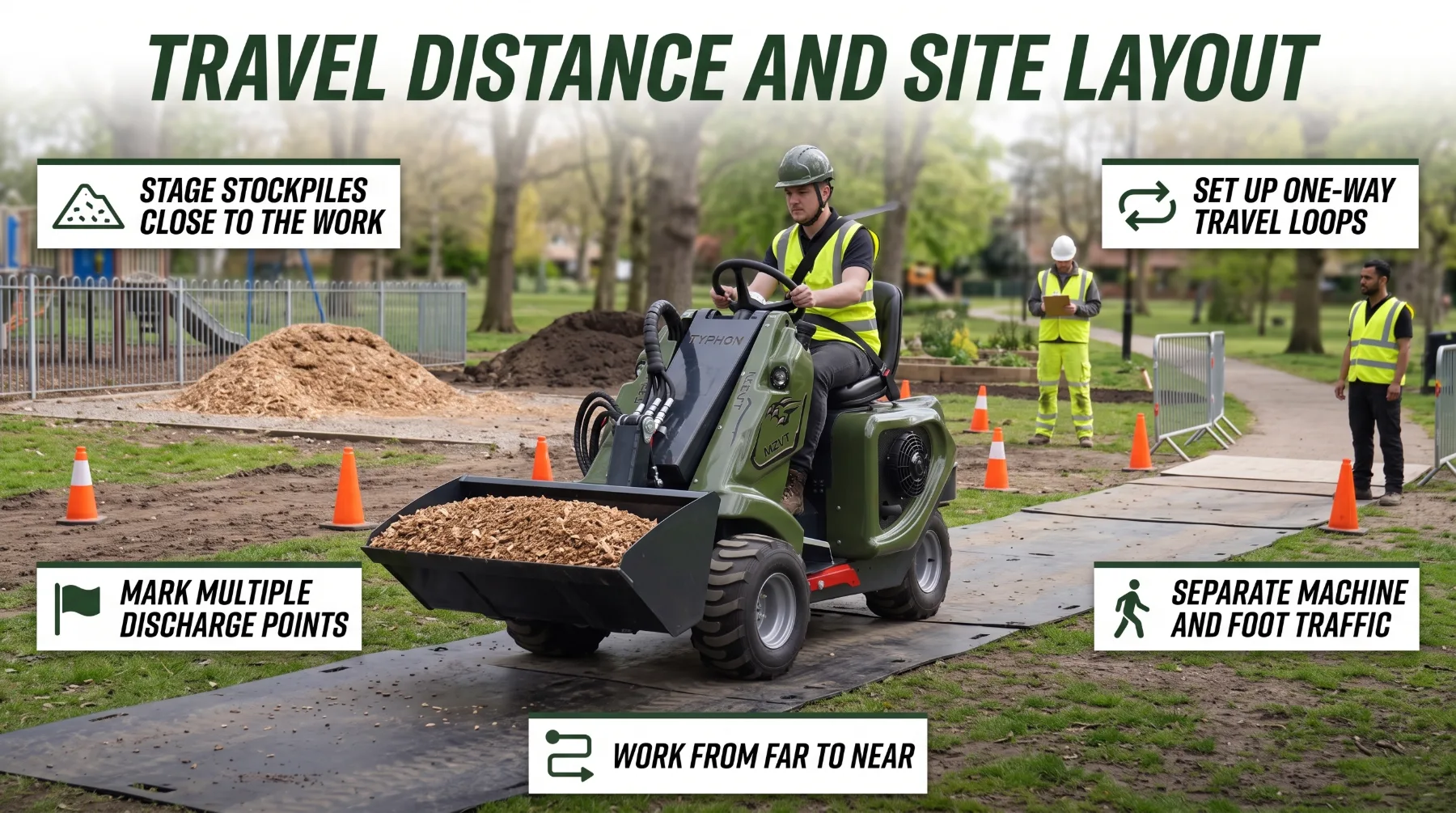
Travel often accounts for a large share of loading cycle time. The distance between the material pile and discharge point directly affects how long each trip takes, and every additional foot is repeated across every load. On projects involving hundreds of cycles, placing a stockpile 200 feet farther away than necessary can add hours to the total work time.
Site layout offers a practical way to recover that time. Before work begins, assess where materials will arrive, where they will be stored, and where they will be placed. When property conditions and access allow, position stockpiles as close as practical to the areas that will use them. Choose firm, level ground away from entrances, walkways, and finished surfaces. Coordinate deliveries by telling suppliers exactly where to unload and marking the location before the truck arrives. Material delivered to the wrong location can create unnecessary travel throughout the project.
Multiple discharge points can further improve efficiency. Mark locations throughout the work area so material is deposited close to where it will be used. This reduces the need to reposition the machine repeatedly and limits the amount of manual spreading required afterward.
Work sequencing also affects travel time. Placing material in the area farthest from the stockpile first and then working back toward it can shorten subsequent trips as the job progresses. Plan the sequence carefully to avoid driving over surfaces that have already been completed.
A well-organized layout must protect workers as well as productivity. Separate machine routes from pedestrian walkways and crew work areas whenever possible, and use cones or barriers to mark travel paths. When the machine must cross a walkway or operate near people, reduce speed and use a trained spotter where needed. Keep tools, hoses, and debris out of the route to prevent unnecessary stops or sudden changes in direction.
Key Takeaway: Organize stockpiles, travel routes, and discharge points to reduce the distance between material and the work area. Planned routes and efficient sequencing help keep the tri-loader moving while maintaining safe separation from pedestrians.
Load Size and Material Characteristics
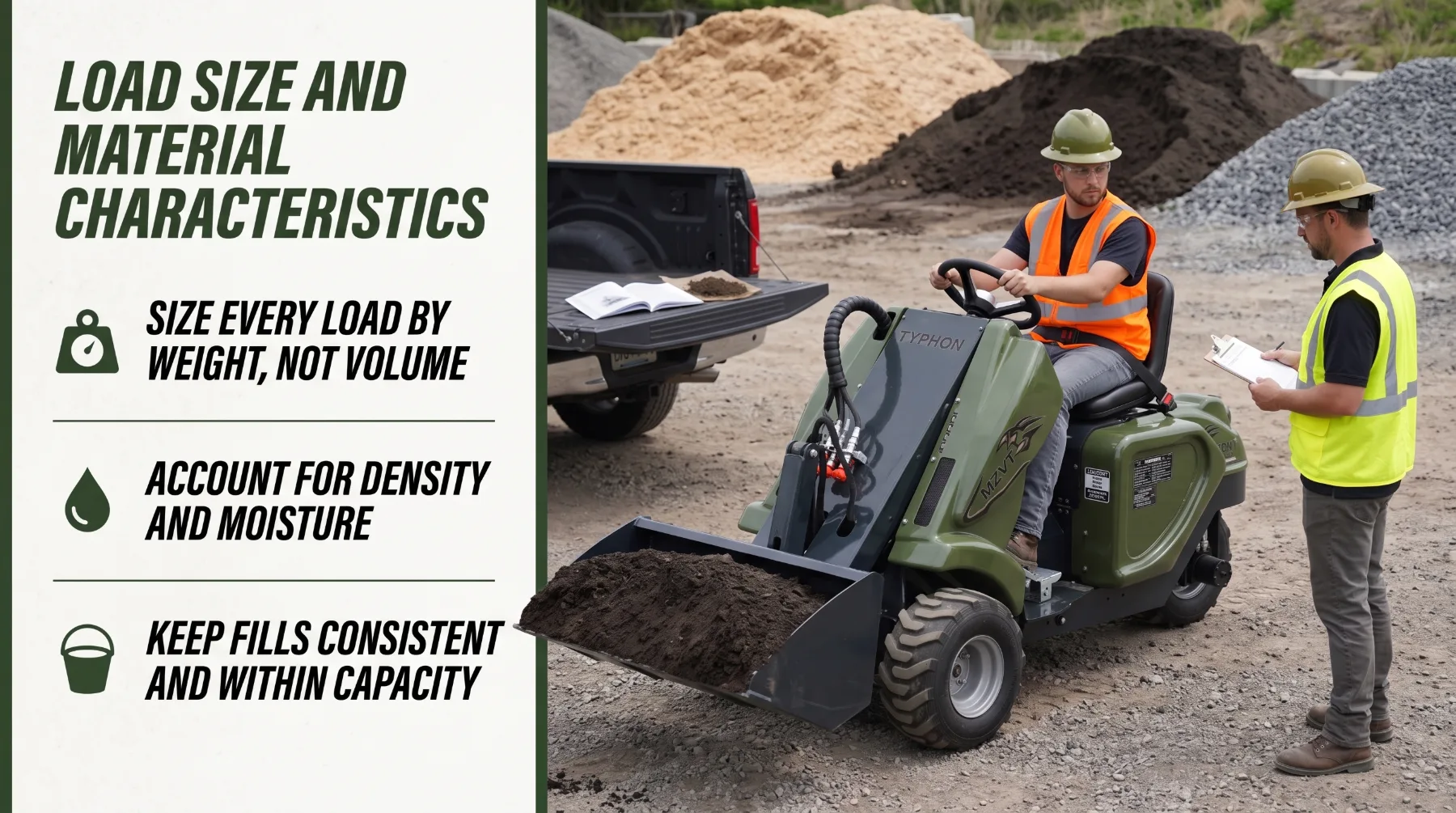
Larger loads can reduce the number of trips required to complete a job, but only when they remain within the tri-loader’s rated capacity. An oversized load may slow lifting and travel, increase spillage, and reduce stability. These problems can erase the time saved by carrying more material and introduce serious safety risks.
Every tri-loader has a rated operating capacity specified on its capacity decal and in the operator’s manual. The weight of the attachment must be included when calculating the material the machine can safely carry. A heavier attachment leaves less capacity for the load, so operators should check the rating for the machine’s actual configuration before determining load size.
Material density is just as important as volume. Mulch, wood chips, and leaves are relatively light, allowing a larger light-material bucket to carry substantial volume within the machine’s limits. Topsoil and compost weigh considerably more, particularly when moist. Sand, gravel, and crushed stone can reach the machine’s capacity before the bucket looks full, while broken concrete and rock can impose particularly heavy loads.
Moisture can change the weight and handling characteristics of material significantly. Topsoil that was easy to carry in dry conditions may exceed capacity after overnight rain. Wet, sticky material can also cling to the bucket and discharge poorly, adding time to each cycle. Operators should reassess load sizes whenever weather or material conditions change.
Material shape, weight, and stability all affect how safely a machine can transport a load. Matching the attachment and load size to the material helps reduce spillage, maintain machine balance, and improve overall work efficiency.
- Material Shape: Consider how the material behaves during transport. Round stones can roll, long branches may catch on nearby objects, and loose materials can shift, so choose a suitable attachment and adjust travel speed as needed.
- Load Weight: Determine the expected load weight using supplier information, delivery records, or reliable material-density estimates. Never judge capacity by how full the bucket looks, and always remain within the machine’s rated limits.
- Consistent Loading: Fill the attachment evenly and avoid excessive or uneven loads. Consistent loading makes each trip more predictable, reduces spillage, and helps crews monitor material movement.
- Warning Signs of Overloading: Watch for slow lifting, reduced steering response, a light rear end, or excessive bouncing. If these signs appear, lower the load safely and reduce its size before continuing.
- Productivity and Efficiency: Focus on completing each loading and transport cycle smoothly rather than carrying the largest possible load. A properly sized load can improve overall productivity by reducing delays, spillage, and unnecessary strain on the machine.
Key Takeaway: Larger loads reduce the number of trips only when they remain within the tri-loader’s rated capacity. Account for material density, moisture, shape, and attachment weight, and maintain consistent load sizes for predictable performance.
Machine Maintenance and Cycle Consistency
A tri-loader can maintain consistent cycle times only when its major systems are in good working condition. Hydraulic performance, engine condition, tires or tracks, loader arms, and attachment couplers all affect how efficiently the machine completes repeated loading cycles. Minor mechanical problems often appear first as slower lifting, reduced travel speed, or less precise positioning before they develop into more serious failures.
Before each inspection, park the machine on firm, level ground, lower the attachment, engage the parking brake, shut off the engine, and remove the key. Follow the manufacturer’s procedures for any additional steps required to make the machine safe to inspect.
Hydraulic systems power lifting and tilting, so check the fluid level and condition according to the manufacturer’s instructions. Replace filters at the recommended intervals and inspect hoses, fittings, and cylinders for leaks, abrasion, or damaged rods. Keep the hydraulic oil cooler clean because restricted airflow can cause the fluid to overheat and reduce performance during the shift. Never use your hand to search for a hydraulic leak. Pressurized fluid can penetrate the skin and cause severe injury, so use a suitable method, such as a piece of cardboard, to help identify the leak.
Check engine oil, coolant, and fuel before each shift. Monitor the air filter restriction indicator, especially in dusty conditions, because a restricted filter can reduce engine power and slow both travel and lifting. Clean the radiator and cooling screens regularly to maintain proper airflow and prevent overheating.
Inspect tires or tracks as part of routine checks. Verify tire inflation against the manufacturer’s specifications and look for cuts, damage, and excessive wear. Low or uneven tire pressure can cause the machine to pull to one side, reduce travel efficiency, and affect stability when carrying a load. On tracked models, check track tension and inspect for damage according to the manufacturer’s guidance.
Loader arms, pins, and pivot points also need regular attention. Look for cracks, looseness, and missing retainers, and lubricate pivot points according to the service schedule. Worn pivots can introduce excessive movement, making accurate positioning more difficult and slowing the discharge stage.
Clean packed soil, mulch, and grass from attachment couplers and mounting plates. Debris can prevent proper engagement, delay attachment changes, or contribute to an unsafe connection. Confirm that the coupler locks fully according to the manufacturer’s instructions before using the attachment.
Check that controls move freely and return to neutral, the seat belt latches properly, and warning indicators clear after startup as specified. If the loader arms drift when the controls are in neutral, investigate the problem before continuing to operate the machine.
End-of-day maintenance helps prepare the machine for the next shift. Remove grass, mulch, and organic debris from the engine compartment and cooling screens because dry material near hot components can create a fire hazard. Record inspection findings, repairs, and service work in a maintenance log. Follow the manufacturer’s recommended intervals for fluid changes, filters, and other scheduled maintenance. If a defect affects safe operation, remove the machine from service until the issue has been repaired.
Key Takeaway: Routine maintenance of the hydraulic system, engine, tires or tracks, loader arms, couplers, and controls helps maintain consistent cycle times and prevents mechanical problems that can interrupt production or compromise safety.
Conclusion
Tri-loader productivity depends on how efficiently every part of the loading cycle works together, and the strongest results come from improving the overall workflow rather than focusing only on travel speed. Measuring cycle time stage by stage reveals where minutes are lost, while the right attachment, kept in good condition, collects full and secure loads quickly. Thoughtful site layout with well-placed stockpiles, one-way routes, and marked discharge points shortens travel and keeps the machine away from people on foot. Loads sized by weight, with attention to material density, moisture, and shape, move more material without overloading the machine, and accurate positioning with smooth, coordinated movements turns discharge into a quick, repeatable step. Routine maintenance of hydraulics, the engine, tires or tracks, loader arms, and couplers keeps every cycle as consistent as the first. When you manage these factors together, you move more material per hour, reduce cleanup and rework, and deliver dependable results that keep projects on schedule for the customers who count on you. Before your next material-handling job, time a few cycles, plan stockpile and discharge locations with the crew, match each attachment to its material, check the capacity decal against the day’s loads, and complete a full inspection so your tri-loader works safely and efficiently from the first cycle to the last.
Frequently Asked Questions
What is material loading cycle time?
Material loading cycle time is the total time required to complete one full loading operation, including picking up material, transporting it, positioning the machine, discharging the load, and returning for the next cycle. Measuring the time spent on each stage helps operators and site managers identify delays and improve workflow. Factors such as travel distance, material type, load size, ground conditions, and operator technique can all affect cycle time. Tracking several cycles provides a more reliable productivity estimate than timing a single operation.
How can tri-loader cycle time be reduced?
Tri-loader cycle time can be reduced by improving site layout, selecting suitable attachments, minimizing unnecessary travel, and using smooth, consistent loading and discharge movements. Positioning stockpiles close to the work area and clearly marking discharge points can reduce repeated repositioning and wasted travel. Operators should also choose practical travel routes and avoid sharp turns or sudden movements that interrupt the workflow. Coordinating material supply and discharge areas helps keep operations moving steadily, allowing the machine to complete more cycles without sacrificing control or safe handling.
Does carrying larger loads always improve productivity?
No. Loads must remain within the machine’s rated capacity and any applicable attachment limits. Excessive weight can affect stability, steering, braking, and travel speed, potentially increasing cycle time and operating risks. The material’s density also matters because a bucket that appears only partly full may already reach the machine’s load limit. Consistent loads sized according to weight and working conditions often deliver better hourly productivity than oversized loads that slow loading, transport, positioning, and discharge. Operators should follow the manufacturer’s guidance and maintain stable handling throughout each cycle.
How does maintenance affect loading productivity?
Proper maintenance helps a tri-loader complete loading cycles consistently and reduces interruptions caused by mechanical problems. Inspect hydraulic hoses, cylinders, loader arms, tires or tracks, and attachments for leaks, damage, or excessive wear. Clean coolers and radiator screens as recommended to support effective cooling, maintain correct tire pressure where applicable, and lubricate pivot points according to the service schedule. These checks help preserve lifting response, traction, and maneuverability during repeated loading tasks. Addressing small faults early can also reduce unplanned downtime and help maintain steady material movement throughout the shift.
