A three-person paving outfit lands a steady run of driveways, small parking pads, and residential road patches, and the owner keeps renting a roller every time a job calls for one. Rental fees stack up week after week, a machine sometimes shows up late and stalls his crew, and one busy month he loses a job entirely because the yard had nothing available on the day he needed it. Buying a full-size compaction machine feels like overkill for the work he actually does, yet the rental treadmill keeps draining his margins. He needs a roller sized and priced for a small company, one he owns outright and trusts to show up ready every morning. That gap is exactly where a machine built for smaller operations earns its keep.
Deciding whether a road roller fits a small construction company comes down to weighing value, usability, and reliability against the scale of work you actually take on. A machine too big or too costly sits idle and drains cash, while one built for smaller jobs and modest budgets earns back its price fast. This guide walks through why TYPHON rollers suit small companies, the affordability and value they bring, how easily they run and transport, the durability behind their Kubota engines, the compaction performance they deliver on small to mid-size jobs, the range of work they handle, and how to pick the right model. Here’s what to weigh before you commit.
Sized for the Way Small Crews Actually Work
Scale is where most equipment decisions go wrong for a small company, since machines built for large contractors rarely match the work a small crew repeats. TYPHON road rollers are proportioned for driveways, patios, small lots, residential streets, and patch jobs, so a small outfit gets a machine that fits its daily projects rather than one designed for highway-scale work. Buying to your real scale keeps capital tied up in a tool you use, not one that mostly waits.
Ownership changes the math for a crew stuck on the rental treadmill. A company running compaction jobs regularly stops paying a fee every time a project comes up, gains a machine ready on its own schedule, and never loses a job to a yard that’s out of stock. Control over your own equipment turns steady work into steady profit.
Key takeaway: A TYPHON roller matches the scale a small company actually works at, so it earns its place instead of idling. Own a machine sized to your daily jobs, and you trade recurring rental costs for equipment you control.
Affordability That Fits a Tight Budget
Price is the first hurdle a small company faces, and TYPHON rollers land at a point that makes ownership realistic rather than aspirational. Rather than carrying the sticker of a large contractor’s machine, these rollers come priced for outfits watching every dollar, which lets a small business own compaction equipment without stretching its budget thin. Affordable entry turns a machine you once only rented into one you keep.
Return on the purchase shows up faster than many owners expect. Every job you’d otherwise rent a roller for now runs on equipment you own, so the machine pays itself back across a season of regular work rather than over many years. Money that used to leave with each rental invoice stays in the business instead.
Running costs stay lean alongside the purchase price. Modest fuel use, straightforward upkeep, and durable components keep the ongoing expense low, so the machine doesn’t quietly erode the savings its price delivered. What this means: weigh the purchase against what you spend renting today, and a TYPHON roller often pays for itself while trimming the running costs that eat a small company’s margins.
Simple to Run and Easy to Move
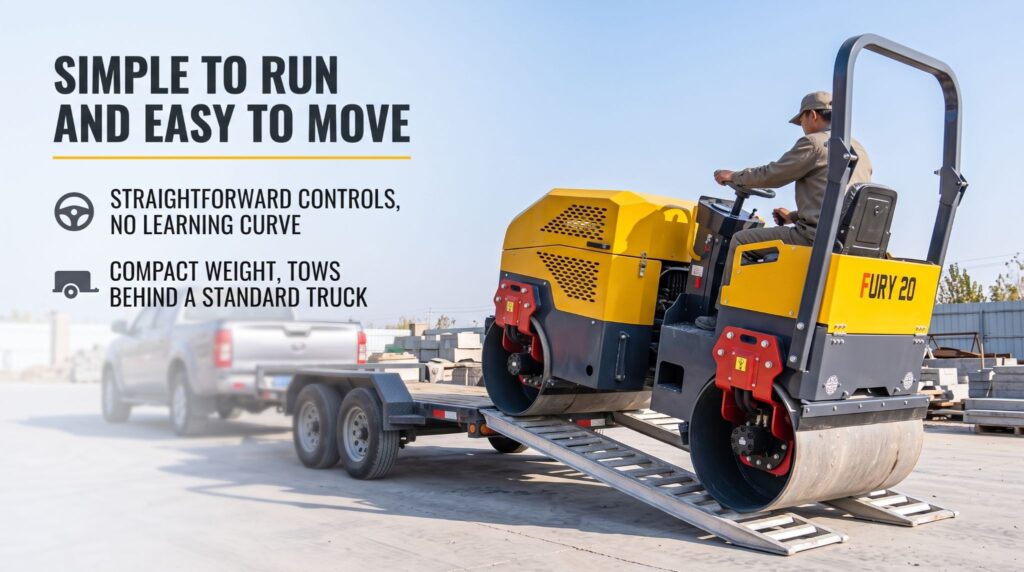
Operation ranks high for a small crew, where one person often wears several hats and nobody has time to wrestle a complicated machine. TYPHON rollers keep their controls straightforward, so an operator learns the machine quickly and runs it confidently without extensive training. Simplicity at the controls means a crew member steps on and gets productive the same day.
Transport catches many small companies off guard, and it’s where a right-sized roller shines. Because these machines stay compact and manageable in weight, a modest trailer behind a standard truck hauls them from job to job, sparing the expense and hassle of a heavy hauler or a hired transport. Moving your own machine easily keeps you flexible across a schedule packed with small jobs in different places.
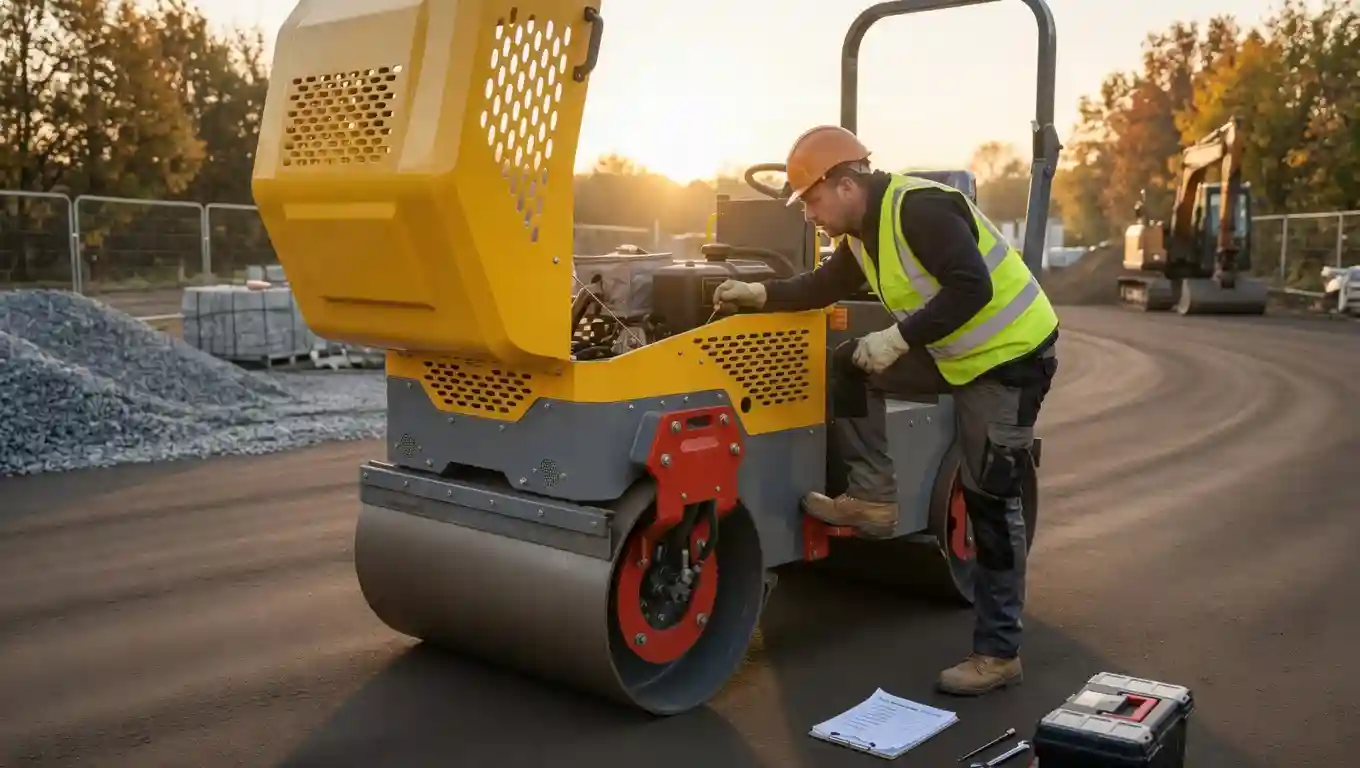
Maintenance stays within reach of a small team too. Machines built so an operator can check fluids, grease points, and wear parts without a specialist keep the roller healthy between jobs and catch small issues early. Key takeaway: a TYPHON roller runs simply, hauls behind an ordinary truck, and maintains easily, so a small crew stays productive and mobile without added cost or complexity.
Built Tough Around a Proven Kubota Engine
Reliability decides whether a machine helps a small company or hurts it, since a single breakdown can stall a crew that has no backup unit waiting. TYPHON rollers pair a Kubota engine with a rugged build, giving a small outfit the dependability it can’t afford to go without. Equipment that starts every morning and finishes every job protects a schedule with no slack in it.
Kubota’s track record carries real weight behind that dependability. Known for longevity and steady performance, these engines hold up under daily use and demand little beyond routine care, so the roller keeps running when a lesser machine would sideline a crew. Trusting a proven powerplant means fewer surprises and less downtime across a busy season.
Sturdy construction extends the machine’s working life well past its purchase price. Heavy-duty components and a frame built for repeated compaction work absorb the daily strain, so a small company gets years of service from a single investment rather than replacing a worn-out unit early. What this means: a Kubota-powered TYPHON roller delivers the reliability and longevity a small crew depends on, keeping downtime low and stretching one purchase across many seasons.
Compaction That Delivers on Smaller Jobs
Performance is what ultimately matters, and a machine sized for small jobs still has to reach proper density or it’s worth nothing. TYPHON rollers deliver the compaction force that driveways, patios, small lots, and residential roadwork demand, so a small company produces surfaces that pass inspection and hold up under traffic. Solid density from a right-sized machine beats renting a larger one you can’t fully use.
Vibratory capability multiplies what a compact roller achieves on suitable material. Turning on the drum’s vibration adds dynamic force that helps the machine reach density in fewer passes, so a smaller unit compacts base and asphalt more effectively than its size alone would suggest. That added muscle lets a modest machine punch above its weight on everyday jobs.
Consistent results build the reputation a small company lives on. A roller that reaches uniform density across every section produces surfaces that last, which keeps clients satisfied and referrals coming. Key takeaway: a TYPHON roller brings the compaction force and vibratory power to hit proper density on small to mid-size jobs, so a small crew delivers lasting surfaces that protect its reputation.
Handling the Range of Work a Small Company Takes On
Variety defines a small construction company’s schedule, where one week means a gravel driveway and the next brings an asphalt patch or a base for a shed. TYPHON rollers handle that spread, compacting soil, granular base, and asphalt across the mix of jobs a small outfit juggles. One versatile machine covering the whole range beats owning several specialized units a small budget can’t justify.
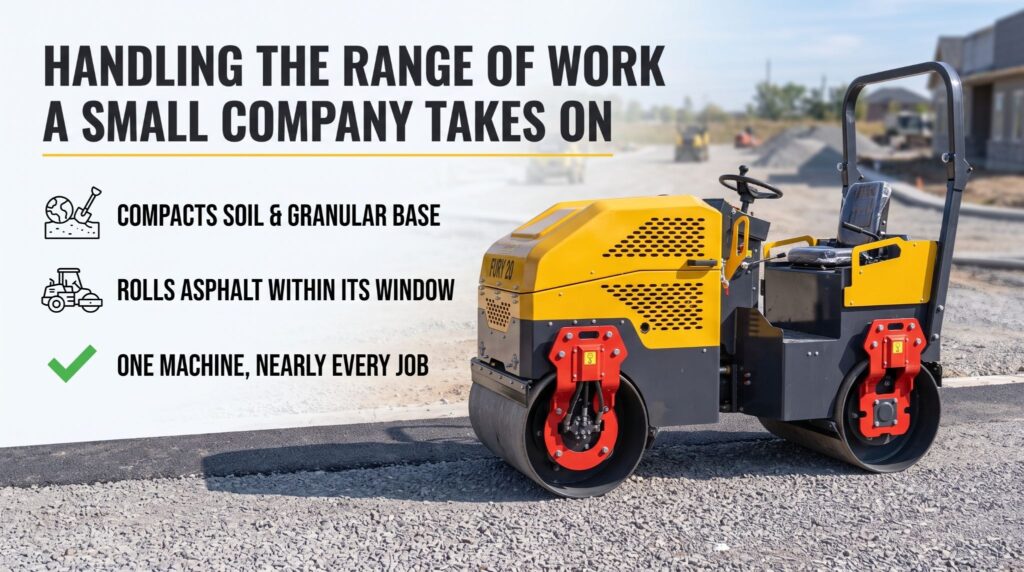
Different materials play to the machine’s strengths in different ways. Granular base and soil compact under the drum’s weight and vibration, while asphalt calls for prompt rolling within its temperature window, and a single roller manages both when the operator adjusts his approach. Flexibility like that turns one purchase into a tool for nearly every compaction task the company faces.
Job-to-job adaptability keeps the machine earning steadily. Rather than sitting idle between specialized tasks, a versatile roller works across the varied projects that fill a small company’s calendar, so the investment stays productive week after week. What this means: a TYPHON roller adapts across soil, base, and asphalt work, so one machine covers a small company’s varied schedule and keeps earning instead of idling.
Picking the TYPHON Roller That Fits Your Jobs
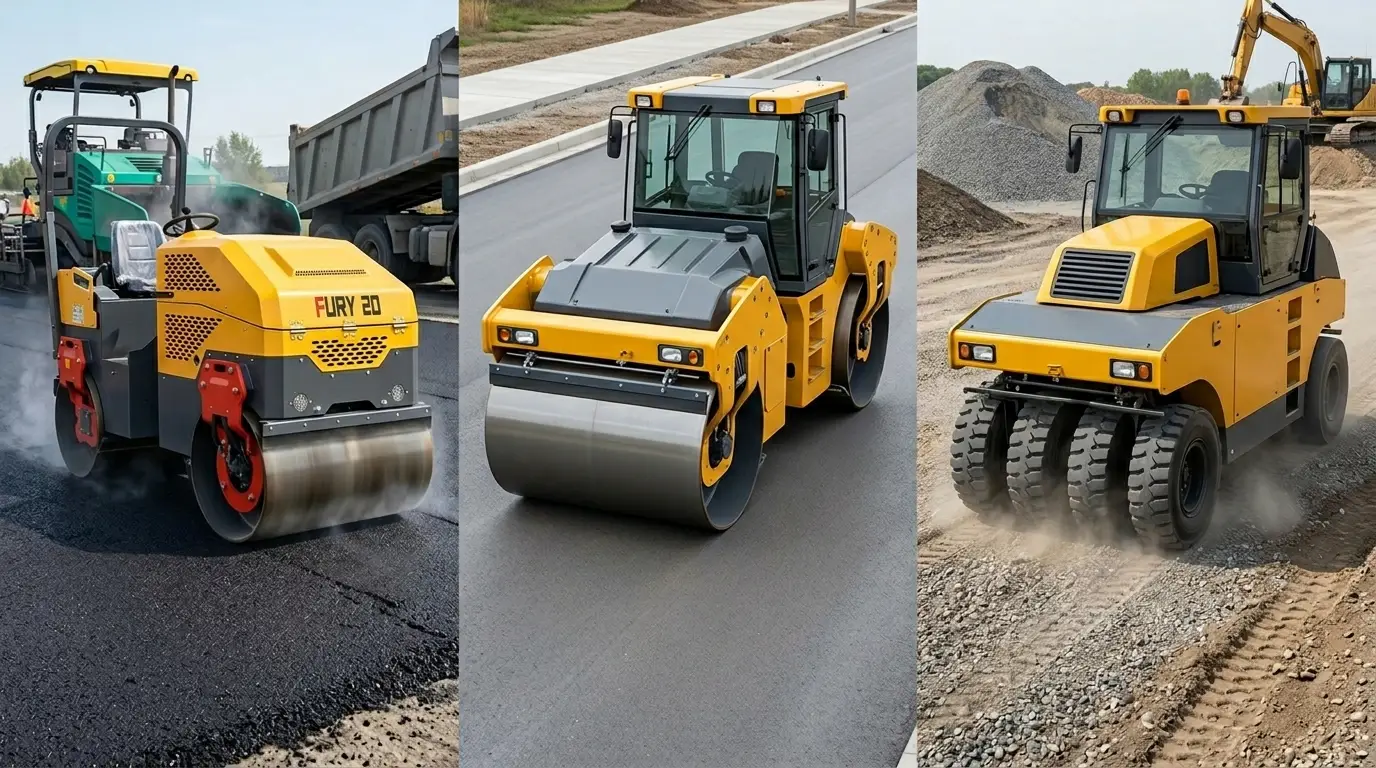
Job type points you toward the right roller faster than any spec, so picture the work you repeat most before you choose. Light driveways, patios, and small patches suit a smaller walk-behind or compact ride-on unit, while regular residential roadwork and mid-size lots call for a larger drum that covers ground faster. Naming your typical projects first narrows the field to models that genuinely fit them.
Drum width and machine weight settle the size question next. A wider drum covers more surface per pass and suits bigger jobs, while a heavier machine reaches density in fewer passes on demanding material, so match both to the scale and material you work most. Reading these against your real jobs keeps you from buying too much machine or too little.
Vibration and drum type round out the decision. Confirm the roller offers vibratory capability for the base and asphalt you compact, and consider whether a smooth drum or a padfoot suits your typical material, since cohesive soils often reward a padfoot’s kneading action. Key takeaway: match the TYPHON model to your jobs by weighing drum width, machine weight, vibration, and drum type against the work and material you handle most, and let those realities steer the pick rather than the biggest option available.
Conclusion
Choosing a TYPHON road roller for a small construction company comes down to a machine sized, priced, and built for the way a small crew actually works. These rollers land at a budget-friendly price that turns rental costs into ownership, run simply and haul behind an ordinary truck, and pair a proven Kubota engine with a rugged frame that keeps downtime low across many seasons. Because they deliver real compaction force and vibratory power on small to mid-size jobs and adapt across soil, base, and asphalt, one versatile machine covers the varied schedule a small outfit takes on while earning its keep week after week. Match the model to your work by weighing drum width, machine weight, vibration, and drum type against the projects and materials you repeat most, then let those realities guide the choice. Picture your typical job, your usual material, and your transport setup, and the right TYPHON roller becomes clear. When you’re ready to put a dependable, well-matched TYPHON road roller to work for your company, reach out to a trusted equipment specialist who can pair a reliable machine with the results your projects depend on.
Frequently Asked Questions
Are TYPHON road rollers a good fit for a small construction business?
Yes, because they’re sized and priced for the work small companies actually do. Rather than carrying the cost and bulk of a highway-scale machine, TYPHON rollers suit driveways, patios, small lots, residential streets, and patch jobs, so a small outfit owns a machine that fits its daily projects. Ownership also ends the rental treadmill, giving you a roller ready on your own schedule so you never lose a job to a yard that’s out of stock.
How much maintenance does a TYPHON road roller need?
Upkeep stays straightforward and within reach of a small crew. The Kubota engine is known for longevity and demands little beyond routine care, and the machine is built so an operator can check fluids, grease points, and wear parts without a specialist. Staying on top of these simple checks between jobs keeps the roller healthy, catches small issues early, and stretches one purchase across many working seasons.
Which TYPHON roller model should a small company choose?
Start with the work you repeat most. Light driveways, patios, and small patches suit a smaller compact unit, while regular residential roadwork and mid-size lots call for a larger drum that covers ground faster. Confirm the drum width and machine weight match your scale and material, and check that the roller offers vibratory capability for the base and asphalt you compact. Weighing those factors together lands you on the model that fits both your jobs and your budget.