You are finalizing the equipment budget for an upcoming commercial parking lot expansion and a mile-long utility trenching project. The grading crews are scheduled, the aggregate base is secured, and your project’s profitability relies entirely on hitting strict soil density and asphalt compaction specifications on the first pass. Yet, when you start pricing out compaction equipment, you are immediately hit with an incredibly frustrating financial spread: one 5-ton roller costs $40,000, while another similar-looking unit on the same dealer lot commands well over $80,000.
What fleet managers and private contractors frequently get wrong when searching for a reliable road roller price guide is looking strictly at the upfront sticker price or the machine’s basic operating weight. They overlook how internal vibration mechanics, structural configuration, and specialized drum technologies exponentially compound or reduce the initial financial layout. Attempting to save cash by purchasing a lightweight, underpowered unit for heavy clay work—or overpaying for a high-frequency intelligent compaction machine when you only need to pack down shallow gravel sub-bases—is a guaranteed way to bleed money through missed production deadlines, failed density tests, or excessive fleet depreciation.
Understanding exactly what drives compaction equipment expenses goes far beyond tracking current auction trends. Gaining a practical, grounded grip on these pricing variables directly sharpens your asset management, streamlines your project estimating, prevents catastrophic over-investment, and ensures you secure the exact level of mechanical performance required to keep your business competitive and highly profitable.
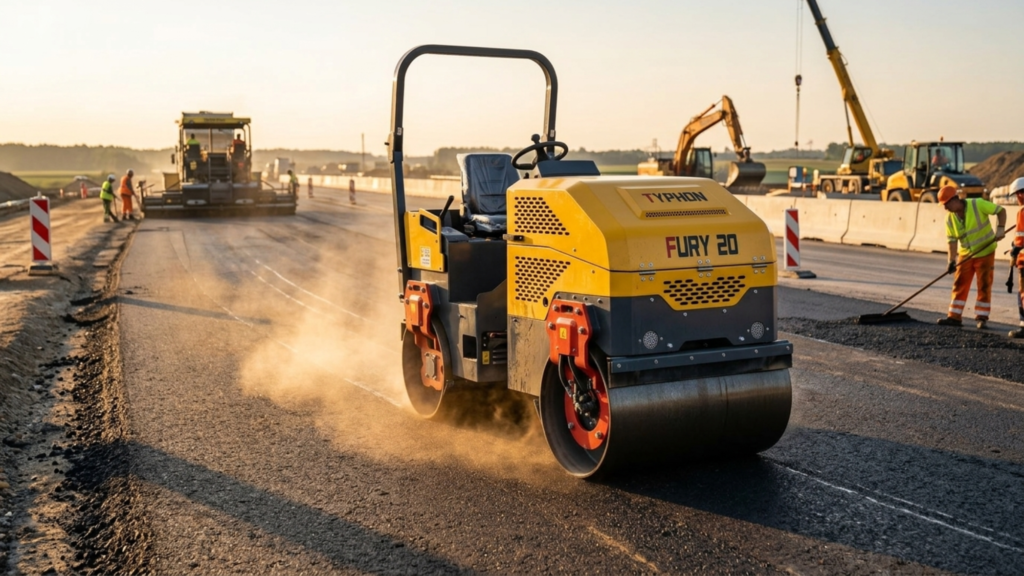
The Baseline: Small Double-Drum Roller Compaction
You are stepping onto a localized municipal job site where your crew needs to patch several square yards of fresh asphalt after a utility cut, or you are finishing a tight, winding suburban driveway. If you attempt to handle these constrained spaces with massive, high-tonnage highway soil compactors, your project will immediately run into physical and structural roadblocks.
The primary problem is a direct conflict between machine scale and workspace architecture. Large civil rollers physically cannot navigate tight radii, risk cracking adjacent concrete curbs, and apply an overly aggressive vibratory force that can easily shatter thin, freshly laid asphalt layers. Furthermore, mobilizing a 15-ton rig via a heavy lowboy trailer just to roll out a small driveway overlay ruins your project profit margins. To solve this specific problem, paving contractors turn to nimble, entry-level ride-on double-drum rollers (also known as tandem rollers).
In real-world jobsite conditions, these compact double-drum units represent the true entry-level ride-on tier of any road roller price guide, typically ranging in cost from $35,000 to $55,000 for high-quality used models and scaling up to $75,000 for brand-new units. They feature two smooth steel drums, one in the front and one in the rear, that both vibrate and drive simultaneously to smoothly seal hot-mix asphalt before it cools.
While their impact on workflows is excellent for localized commercial patches, parking lot maintenance, and residential paving, their lighter static weight (usually between 1.5 to 3 tons) means they are completely incapable of packing thick, deep soil lifts on massive earthmoving developments.
When your daily contract volume transitions from small parking lot overlays to expansive highway structures, this compact double-drum baseline is no longer structurally sufficient to keep the job moving.
Scaling Up: Small Ride-On Tandem Rollers
Once your workflow advances to paving continuous residential driveways, commercial parking lot overlays, or miles of municipal bike paths, hand-guided machines fail to deliver the speed or uniform surface finish required to pass a municipal inspection. The slow walking pace of a trench roller allows hot-mix asphalt to cool down too quickly, resulting in poor density and a crumbly, failing surface.
To step up your production speed and surface quality, you must scale into the small ride-on tandem (double-drum) roller category. These machines feature an integrated operator station positioned directly over two smooth steel drums that both vibrate and drive simultaneously. The structural difference here is monumental; the machine utilizes dual hydraulic vibratory circuits to quickly and smoothly seal hot-mix asphalt before the temperature drops below the critical compaction window.
In a real-world asset evaluation, moving up to a new 2-ton to 5-ton ride-on tandem roller pushes your financial profile into the $35,000 to $70,000 price range. A major factor affecting the cost at this level is the inclusion of factory additions like pressurized dual-water sprinkler systems and heated urethane scrapers, which prevent sticky polymer-modified asphalt from adhering to the hot steel drums. The operational impact of this upgrade is a massive surge in hourly square-yard efficiency and a flawless, seamless finish quality.
However, while these small tandem units are perfect for thin asphalt overlays, they lack the pure physical mass and deep vibratory amplitude required for heavy earthmoving and deep subgrade stabilization. To tackle deep, unpaved structural foundations, your investment must transition into single-drum terrain.
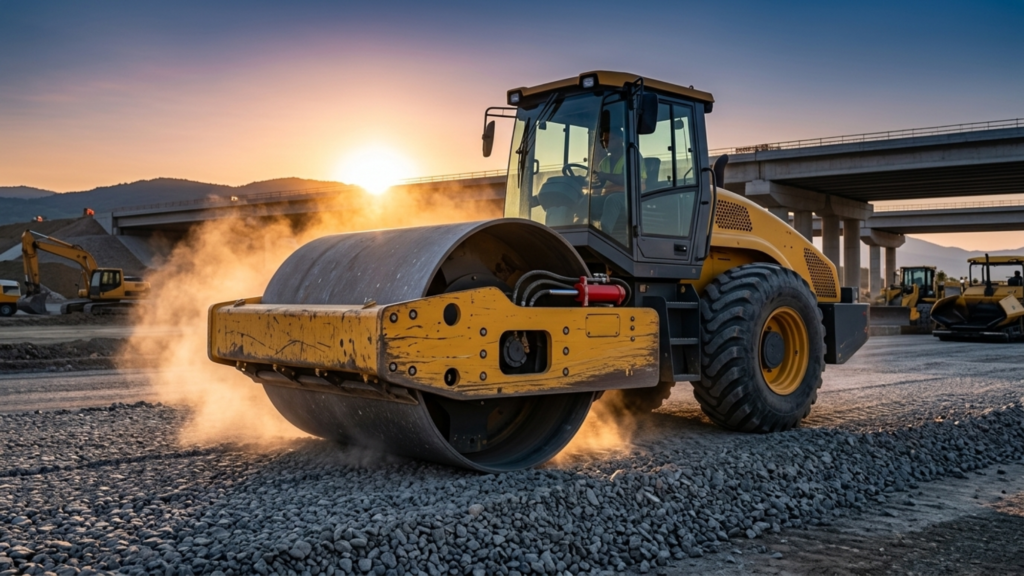
Heavy Earthmoving: Single-Drum Soil Compactors
As your construction projects scale into major housing developments, industrial warehouse pads, or highway sub-base preparation, your primary challenge shifts from sealing smooth asphalt to stabilizing feet of loose, uncompressed earth.
Small tandem rollers are far too light for this work; their dual drums will simply bounce across the loose dirt, destroying their internal bearings without actually packing the lower layers of the soil lift. For these high-volume earthmoving applications, you must invest in a heavy-duty single-drum soil compactor. These machines feature a single, massive smooth steel drum at the front to handle the intense compaction forces and heavy rubber drive tires at the rear to provide raw climbing traction across unstable, loose surfaces.
When calculating costs using a comprehensive road roller price guide, these high-capacity single-drum units command a significantly higher premium. A standard 10-ton to 15-ton single-drum roller typically costs between $80,000 and $150,000, with top-tier 20-ton production models easily eclipsing $200,000. This dramatic leap in asset value is driven by sheer physical mass (steel is expensive), high-output Tier 4 Final diesel engines, and enclosed ROPS/FOPS cabs with HVAC systems to protect operators from severe jobsite dust. The real-world impact on your operation is incredible: an operator can pack down thick 12-inch lifts of structural fill in just a few high-speed passes, creating a rock-solid foundation that prevents future structural settling and liability.
Yet, if the soil you are trying to compress is composed of dense, sticky, cohesive clay rather than loose sand or gravel, a standard heavy smooth drum will quickly become bogged down and fail the density test.
Specialized Engineering: Padfoot Drums and Intelligent Tech
When you find yourself managing an extreme earthmoving project—such as a massive earthen dam, a deep highway cut-and-fill operation, or an industrial site dominated by wet, heavy cohesive clay—smooth steel drums lose their effectiveness entirely.
A smooth drum will bridge across the top of clay pockets, trapping moisture underneath and creating a weak, spongy foundation that will eventually fail under load. To conquer these specific, high-risk soil conditions, you must scale into a specialized padfoot (or sheepfoot) single-drum roller. These drums are heavily engineered with dozens of protruding steel “pegs” or pads that break the surface matrix of the clay, kneading the soil from the bottom up to force out trapped air and moisture.
The trade-offs and cost premiums for this specialized heavy-duty tier are substantial. Purchasing a dedicated padfoot machine—or retrofitting an existing smooth drum with a heavy multi-piece bolt-on padfoot shell kit—adds anywhere from $15,000 to $30,000 directly to your initial equipment acquisition expense.
Furthermore, strict modern highway specifications often require outfitting these heavy-duty production rigs with Intelligent Compaction (IC) technology. This utilizes GPS tracking, infrared temperature sensors, and real-time accelerometers inside the drum to map soil stiffness directly on an in-cab display. Adding IC technology can inflate the baseline asset cost by another $20,000 to $40,000. While expensive, this technology makes sense on large-scale jobs because it completely eliminates guesswork. It prevents over-compaction, lowers daily fuel consumption, and stops operators from making unnecessary passes, easily paying for itself over the lifespan of a multi-year highway contract.
The Flexible Finisher: Pneumatic Tire Rollers
Sometimes, achieving a flawless finish on specific hot-mix asphalt designs requires an approach that moves completely away from traditional rigid steel drums, prioritizing flexible kneading action over raw, rigid vibratory downforce.
When working on critical state highway overlays, high-stress airport runways, or sensitive chip-seal treatments, relying strictly on heavy vibrating steel drums can cause minor surface checking (cracking) or physically fracture sensitive aggregate particles. In these highly specialized paving scenarios, a pneumatic tire roller represents the ultimate flexible alternative. Instead of steel, these unique machines utilize two overlapping rows of smooth, treadless rubber tires that flex, heat up, and manipulate the hot asphalt.
From a procurement perspective, a pneumatic-tire roller occupies a distinct niche within a road roller price guide, often carrying a price tag ranging from $70,000 to over $140,000 depending on operating weight, engine size, and automated tire inflation features. The machine works via a process called “kneading,” where the heavy rubber tires physically manipulate and rearrange the aggregate particles beneath the surface, sealing microscopic voids and creating an impermeable, highly durable waterproof barrier.
A perfect real-world use case is a final chip-seal highway treatment: the rubber tires safely press the loose stone chips firmly into the liquid asphalt emulsion without crushing the rock. This provides a long-lasting, high-traction driving surface that a vibrating steel roller would simply shatter and ruin.
Decision-Making Guide: Optimizing Your Investment
Bringing all of these financial and mechanical variables together into a clear procurement strategy requires looking past baseline equipment metrics and mapping your asset acquisition directly to your daily project requirements.
Avoid over-specifying your fleet based on rare, best-case job scenarios. Instead, utilize this practical comparison framework to balance your operating constraints with the core data points found in a standard road roller price guide:
Focus heavily on your true daily tasks. If 80% of your business is commercial parking lot paving, your capital is best spent on a highly reliable 1-to-3-ton tandem roller equipped with an advanced water filtration system to prevent nozzle clogging and jobsite downtime. Do not buy a 15-ton single-drum compactor just because it seems like a “better deal” per ton of steel; it will be entirely useless on a fresh asphalt mat.
Conversely, if your workload is split evenly between bulk dirt work and finished paving, prioritize a mid-sized single-drum smooth compactor with a split padfoot shell kit. This allows your mechanics to convert the asset to a clay-ready configuration within a few hours, offering immense flexibility without having to purchase two separate $100,000 machines.
Finally, rigorously evaluate your long-term utilization metrics. If a highly specialized machine like a pneumatic tire roller or a heavy 20-ton padfoot rig will sit idle in your equipment yard for more than 40% of the working year, bypass the high upfront costs of ownership entirely. Instead, leverage local equipment rental houses, which typically offer these heavy civil units for $500 to $1,500 per day. This approach protects your liquid cash flow, avoids steep equipment depreciation, and keeps your project margins highly protected.
Conclusion
Navigating a road roller price guide successfully is not about hunting down the cheapest piece of iron available on the auction block; it is about matching the precise physical requirements of your specific jobsite with the correct compaction technology.
From nimble, remote-controlled trench units built for tight utility work to massive, intelligent compaction soil rollers engineered to stabilize multi-acre commercial pads, every incremental cost increase directly correlates to heightened production speed and specific material capabilities. Investing in premium features like enclosed cabs, padfoot shells, or automated density sensors may seem prohibitively expensive upfront, but the long-term payoff in reduced labor hours, lower fuel burn, and guaranteed density compliance is immense.
By looking closely at your immediate material challenges and calculating your true machine utilization rates today, you will choose the exact compaction asset that controls your overhead, protects your project schedules, and drives maximum profitability into your bottom line.
Frequently Asked Questions
What is a road roller price guide?
A road roller price guide is a comprehensive financial and operational reference tool used by contractors, estimators, and fleet managers to evaluate the purchase, rental, and total cost of ownership (TCO) of compaction machinery based on drum style, operating weight, and mechanical technology.
How do I choose the right road roller using a price guide?
Begin by auditing your primary material application. If you work primarily on hot-mix asphalt, prioritize double-drum tandem rollers. If your daily production centers on deep soil stabilization and earthmoving, focus your capital on high-tonnage single-drum compactors. Match the machine’s operating weight to your required lift thickness.
What is the best road roller for thick clay soils?
A single-drum padfoot (or sheepfoot) compactor is the absolute best choice. The specialized steel pads protrude into the wet clay matrix, kneading the material from the bottom up to expel trapped air and moisture that a standard smooth drum would simply bridge over and fail to compact.
Is investing in intelligent compaction technology worth it?
Yes, especially for large-scale municipal, commercial, or highway projects with strict density specifications. The integrated sensors and GPS tracking provide real-time soil stiffness maps directly to the operator, which completely eliminates unnecessary rolling passes, saves massive amounts of fuel, and ensures you pass inspection the first time.
What is the difference between a tandem roller and a pneumatic tire roller?
A tandem roller utilizes two rigid, smooth steel drums to compress and smooth hot-mix asphalt through static weight and high-frequency vibration. A pneumatic tire roller utilizes two overlapping rows of flexible, smooth rubber tires to knead the asphalt aggregate together, creating a tighter waterproof seal without fracturing the stone particles.