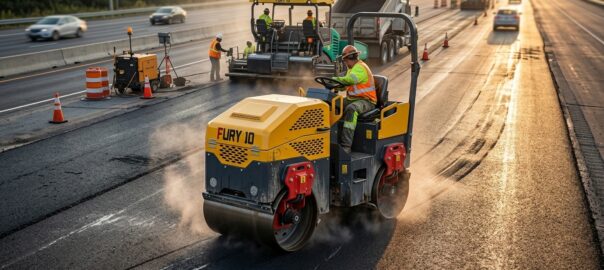
On a typical construction site, the road roller is often the final step before a surface is considered ready for use. Yet this stage is also where many issues begin to show uneven compaction, soft spots, over-compacted areas, or even safety risks due to poor machine handling. In many cases, these problems don’t come from the machine itself but from operator decisions made in real time under pressure.
What is often overlooked is that compaction is not just about weight or machine size. It’s about timing, ground conditions, vibration control, and operator awareness. A skilled operator can achieve strong, uniform compaction with fewer passes, while an untrained approach can lead to wasted fuel, rework, and project delays.
Understanding proper road roller operator tips for safe and efficient compaction is not only about improving surface quality; it directly affects project efficiency, cost control, and long-term road durability.
Understanding Ground Conditions and Early Compaction Challenges
One of the first challenges operators face is reading the ground correctly before compaction begins. Soil type, moisture level, and layer thickness all influence how the roller behaves on the surface. In real jobsite conditions, ignoring these factors often leads to uneven density or surface cracking later.
For example, working on granular soil requires a different approach compared to clay-rich ground, where moisture retention changes how material responds to vibration. Many operators make the mistake of applying maximum vibration force immediately, assuming it speeds up work. In reality, this can trap air pockets or cause material displacement.
A more effective approach is to start with light passes, allowing the material to settle before increasing vibration intensity. This improves efficiency and reduces the number of required passes. It also ensures the compaction process begins in a controlled, predictable manner.
This foundation is critical before moving into more advanced operation techniques.
Vibration Control and Speed Adjustment for Consistent Results
Once the surface begins to stabilize, the next challenge is managing vibration settings and roller speed. Many operators rely on a single fixed setting throughout the entire process, which often leads to inconsistent compaction depth.
Different layers respond differently to vibration frequency. Lower frequencies are generally better for deeper compaction, while higher frequencies help achieve a smoother surface finish. Adjusting these settings based on material behavior can significantly improve results.
Speed is equally important. Moving too fast reduces compaction effectiveness, while moving too slow can cause over-compaction or surface damage. In real-world operations, the most efficient results usually come from maintaining a steady, moderate speed that allows vibration energy to fully transfer into the material.
This balance between vibration and movement is what separates basic operation from efficient compaction work, especially on medium-sized projects.
Scaling Up: Working on Large Surface Areas
When dealing with larger road sections, such as highways or industrial yards, the limitations of basic compaction techniques become more visible. Small inefficiencies multiply quickly across wide areas, leading to uneven density and extended project timelines.
At this stage, operators must focus on overlap consistency between passes. Poor overlap is one of the most common causes of weak zones in large-scale compaction. A structured rolling pattern ensures that every section receives equal pressure and vibration exposure.
In large-scale projects, coordination with material delivery and spreading equipment also becomes critical. If the roller arrives too early or too late, the surface condition may not be ideal for compaction, reducing efficiency and increasing fuel usage.
The impact here is significant: better coordination and controlled rolling patterns can reduce total passes required, saving both time and operational costs.
Heavy-Duty Compaction in Extreme Jobsite Conditions
In heavy-duty environments such as highways, airport runways, or industrial foundations, compaction requirements become much stricter. The material layers are thicker, and the performance expectations are much higher.
Heavy vibratory rollers are typically required in these conditions, offering higher force and deeper penetration. However, increased power also brings trade-offs. Fuel consumption rises, machine wear increases, and maintenance requirements become more frequent.
Operators must be more precise in these conditions. Over-compaction can be just as harmful as under-compaction, leading to material instability or surface fatigue over time. This is where experience plays a key role—knowing when to stop is often more important than knowing how to continue.
Heavy-duty compaction is only efficient when machine capacity matches job requirements accurately.
Flexible Operation for Mixed Jobsite Conditions
Not all construction sites are uniform. Many projects involve mixed materials, varying soil conditions, or restricted working areas. In these situations, flexibility becomes more valuable than raw compaction power.
Smaller or combination rollers are often used where maneuverability is more important than force. These machines allow operators to adapt quickly to changing surface conditions without damaging surrounding structures.
For example, in urban road repairs or utility trench work, a smaller roller can achieve effective compaction without disturbing nearby pavement or underground installations. While they may not match heavy rollers in output, their precision makes them essential in complex environments.
Flexibility ensures that compaction quality is maintained even when conditions are not ideal.
Choosing the Right Approach for Real Jobsite Efficiency
Selecting the right compaction approach is not about choosing the biggest machine—it’s about matching equipment and technique to real site conditions. Operators who understand material behavior, machine limits, and workflow timing consistently achieve better results with fewer resources.
Efficiency comes from reducing unnecessary passes, avoiding rework, and maintaining consistent density across the entire surface. Over time, this leads to lower operational costs, less fuel consumption, and improved project timelines.
In practical terms, the best compaction results always come from combining operator skill with proper machine selection and disciplined workflow planning.
Conclusion
Road compaction is a process where small decisions have large consequences. From initial ground assessment to vibration control and large-scale coordination, every stage affects the final surface quality.
Mastering Road Roller Operator Tips for Safe and Efficient Compaction is less about operating the machine at maximum power and more about controlling it with precision and awareness. When operators focus on consistency rather than speed alone, both safety and productivity improve significantly.
In modern construction, efficiency is no longer just about working harder—it’s about working smarter with the right technique and understanding.
Frequently Asked Questions
What are road roller operator tips for safe and efficient compaction?
It refers to practical operating methods that help achieve uniform soil or asphalt compaction while improving safety, reducing fuel use, and minimizing rework.
How do I choose the right compaction method?
It depends on soil type, layer thickness, project size, and required density. Operators should adjust vibration and speed based on site conditions.
What is the best road roller for compaction work?
Heavy vibratory rollers are best for large-scale projects, while smaller or combination rollers work better in tight or mixed environments.
Is proper compaction training important?
Yes. Operator skill directly affects surface quality, efficiency, and long-term road durability.
What is the difference between light and heavy compaction?
Light compaction is used for initial settling, while heavy compaction is used for achieving final density in thick or load-bearing layers.