A maintenance crew rolls a scissor lift into a warehouse to swap out overhead lighting, and the operator raises the platform toward the ceiling with a full toolbox and two workers aboard. Halfway up, the lift shudders, slows, and simply stops, hanging in midair with the job still out of reach. The operator taps the up control again and again, gets nothing, and now has to lower everyone down and figure out why a machine that worked yesterday quit at the worst moment. Nothing looked broken, yet the lift refused to finish the rise, and tracking down the cause fast is the difference between a five-minute fix and a lost afternoon.
A scissor lift that stalls partway up is almost always telling you something, and the trouble usually traces to one of a handful of causes you can check yourself before calling for service. Diagnosing it quickly keeps your crew safe, protects the machine, and saves the job. This guide walks through the six most common reasons a scissor lift stops halfway up:
- A drained battery or weak charge running low on power
- Low or dirty hydraulic fluid starving the cylinder
- Too much weight on the platform tripping the load limit
- Faulty sensors or limit switches cutting the lift short
- Cold weather thickening fluid and sapping the battery
- Electrical or control faults breaking the circuit
Here’s how to spot each one and set it right.
A Battery Running Out of Muscle
Power is the first thing to suspect when an electric scissor lift stalls mid-rise, since lifting a loaded platform draws heavily on the battery. A charge that reads fine at rest can sag under the strain of a full lift, so the machine climbs partway, runs short of voltage, and quits before it reaches height. A weak battery is the single most common reason these lifts stop halfway.
Check the charge level first, because it’s the quickest thing to rule out. Look at the battery indicator, confirm the machine was fully charged before the shift, and watch for a lift that rises slower than usual, which often signals a battery fading under load. A pack that struggles on the way up is telling you it hasn’t the reserve to finish.
Aging and neglected batteries deserve a hard look too. Cells that no longer hold a full charge, corroded terminals, or loose connections all rob the motor of the current it needs, so cleaning the terminals, tightening the connections, and testing the pack’s real capacity often restores full lift. What this means: charge the battery fully, inspect the terminals and connections, and test an older pack’s capacity, since a lift that slows and stops mid-rise is usually running short on power.
When the Hydraulic Fluid Falls Short
Hydraulic trouble stops a lift as surely as a dead battery, because the fluid is what actually pushes the platform skyward. When the reservoir runs low, air enters the system, or the fluid turns dirty, the cylinder can’t build the pressure it needs, so the platform rises partway and stalls where the pressure gives out. A starved hydraulic system leaves the lift hanging mid-climb.
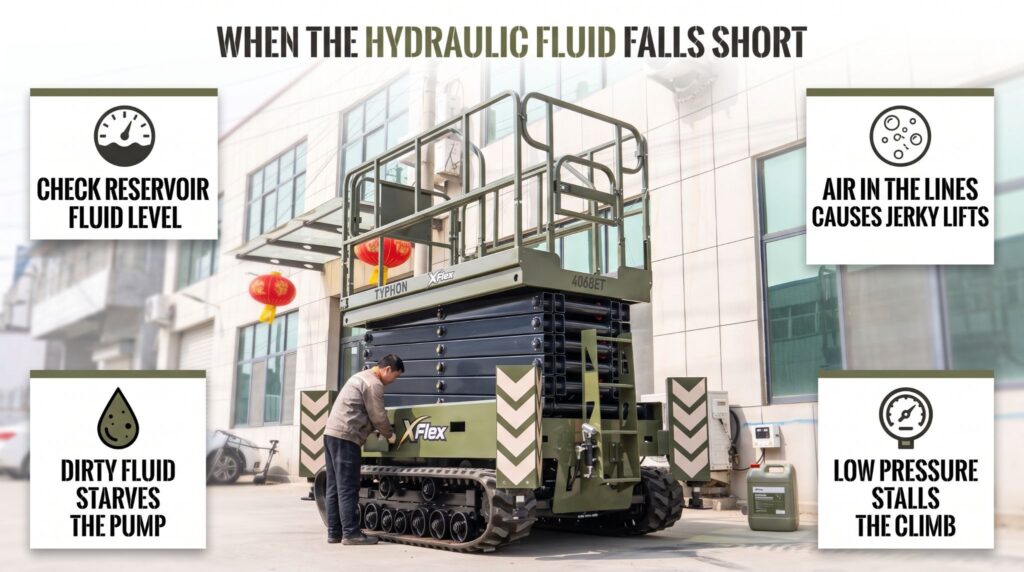
Fluid level is the place to begin your check. Confirm the reservoir holds enough hydraulic oil, since a low level lets the pump draw air and lose the steady pressure a smooth lift demands, and top it off with the correct fluid if it sits below the mark. Air in the lines often shows itself as a jerky, sputtering rise rather than a clean one.
Contamination and leaks round out the hydraulic suspects. Dirty fluid clogs valves and wears the pump, while a leaking hose, fitting, or cylinder seal bleeds off the pressure the lift needs to reach full height, so trace the lines for damp spots and change fluid that looks dark or gritty. Key takeaway: check the fluid level, bleed any trapped air, and trace the system for leaks and contamination, since a hydraulic shortfall is a leading reason a scissor lift stops before the top.
Carrying More Than the Platform Allows
Overloading is a cause many crews overlook, yet a scissor lift is built to stop when the platform carries more than its rated capacity. Load the deck with too many workers, heavy tools, or bulky material, and the machine’s safety system cuts the lift partway up to protect against a dangerous, unstable rise. That mid-air stop is the lift doing exactly what it should.
Weigh the load honestly against the rating stamped on the machine. Add up the workers, their tools, and any material on the platform, then compare that total to the lift’s rated capacity, remembering that the rating covers everything on the deck, not just the people. A load that creeps over the limit trips the cutoff even if the platform looks only half full.
Uneven loading can trigger the same stop. A load bunched to one side or a platform extension carrying too much weight throws off the balance the lift monitors, so distributing the load evenly and keeping within the rated limit lets the machine finish its climb. What this means: total up everything on the platform, keep it under the rated capacity, and spread the load evenly, since an overloaded or unbalanced deck makes the lift stop halfway on purpose.
Sensors and Limit Switches Cutting In Early
Safety devices govern how high and how far a scissor lift will go, so a faulty sensor or limit switch can halt the platform long before it should. These components tell the control system the machine is level, stable, and within its safe range, and when one reads wrong or sticks, the lift responds by stopping mid-rise to stay safe. A tripped or failed switch often masquerades as a mechanical fault.
Tilt and level sensors are worth checking first. A scissor lift on uneven or soft ground may read as off-level and refuse to climb further, so moving the machine to firm, flat ground and confirming the outriggers or leveling system are set often clears a stop the sensor caused. The lift won’t finish a rise it judges unstable.
Limit switches and their wiring round out the check. A pothole switch, a height limit switch, or a loose connection behind one can cut the lift signal even when everything mechanical is sound, so inspect these switches for damage, debris, and secure wiring against the machine’s manual. Key takeaway: confirm the lift sits level on firm ground, then inspect the tilt sensors and limit switches, since a safety device reading wrong is a frequent reason the platform stops partway up.
How Cold Weather Slows the Climb
Temperature shapes how a scissor lift performs, and cold weather quietly causes mid-rise stalls that catch crews off guard on winter mornings. Chilled hydraulic fluid thickens and flows sluggishly, so the pump strains to build pressure and the platform rises slowly or stops short until the system warms. A machine that stalls in the cold often runs fine once it’s had a chance to heat up. See How Wind Affects High Scissor Lift Stability for another weather-related factor that can influence safe and efficient lift operation.
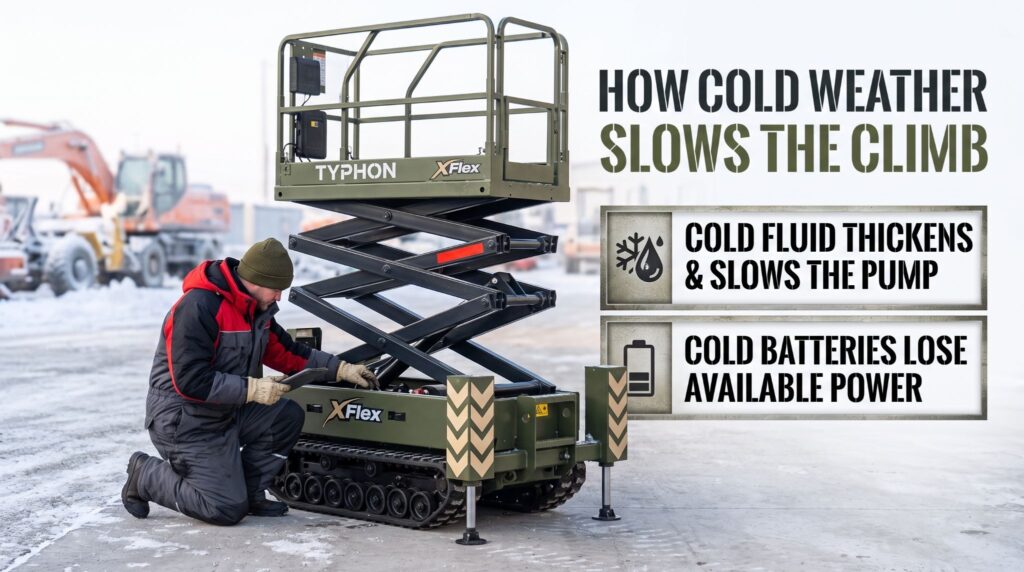
Batteries suffer in the cold as much as the fluid does. Low temperatures cut a battery’s available power sharply, so a pack that would finish a lift in mild weather runs short on a freezing day, leaving the platform hanging partway. Cold and a marginal battery together are a common winter culprit.
Warming the machine before heavy use solves much of this. Running the lift through a few low cycles lets the hydraulic fluid warm and flow properly, keeping the battery charged and the machine sheltered when possible spares it the worst of the chill, and using the fluid grade suited to cold conditions keeps pressure steady. What this means: let the hydraulics warm up, keep the battery charged and protected, and match the fluid to the season, since cold weather thickens fluid and drains power enough to stop a lift halfway.
Faults in the Wiring and Controls
Electrical trouble breaks the chain of signals that tells the lift to rise, so a fault in the wiring, controls, or motor circuit can stop the platform anywhere in its climb. When a connection corrodes, a relay sticks, or the control handle fails to send its signal, the machine simply stops responding partway up even though the battery and hydraulics are sound. A control-side fault is often the hidden reason a healthy machine quits.
Start at the control handle and its cable. A worn joystick, a damaged control cable, or a loose plug can cut the up signal intermittently, so test the controls for a response and inspect the cable for cuts, kinks, or corroded pins that interrupt the circuit. A control that works one moment and dies the next points straight at the wiring.
Relays, solenoids, and connections round out the electrical check. A sticking lift solenoid, a tripped breaker, a blown fuse, or a corroded ground can all break the circuit that powers the rise, so work through these components against the wiring diagram to isolate the fault. Key takeaway: test the control handle and cable first, then work through the relays, solenoids, fuses, and connections, since an electrical or control fault can stop the lift mid-rise even when everything else checks out clean.
Conclusion
A scissor lift that stops halfway up is rarely a mystery once you work through the causes in order, from the simplest to the deepest. Start with the battery, since a weak charge under load is the most common culprit, then check the hydraulic fluid level, air, and leaks that starve the cylinder of pressure. Confirm the platform isn’t overloaded or unevenly loaded, inspect the tilt sensors and limit switches that cut the lift short, and account for cold weather that thickens fluid and drains the battery. If all those check out, move to the wiring and controls, where a faulty handle, relay, or connection can break the circuit. Run the checks in that sequence, and you’ll spot most faults in minutes instead of losing an afternoon to guesswork. Before your next job, charge the battery fully, confirm the fluid level, and stay within the rated load so the lift climbs clean from the ground to full height. When you’re ready to put a dependable, well-maintained scissor lift to work, or need help diagnosing the one you own, reach out to a trusted equipment specialist who can pair a reliable machine with the results your projects depend on.
Frequently Asked Questions
Why does my scissor lift stop partway up but still lower fine?
This pattern usually points to power or pressure running short under load rather than a total failure. Lifting draws far more from the battery and hydraulic system than lowering does, so a weak battery or low hydraulic fluid can climb partway and stall while gravity still lets the platform come back down easily. Start by fully charging the battery and checking the fluid level. If the lift still stops mid-rise, look at an overloaded platform or a tilt sensor reading the machine as off-level, since both cut the upward motion while allowing descent.
Can an overloaded platform make a scissor lift stop halfway?
Yes, and it’s designed to. A scissor lift monitors the weight on its platform and cuts the lift partway up when the load exceeds the rated capacity, protecting against an unstable rise. Remember that the rating covers everything on the deck: workers, tools, and material combined. A load that creeps just over the limit, or one bunched to one side, can trip the cutoff even when the platform looks only half full. Total up the load, keep it under the rated capacity, and spread it evenly to let the lift finish its climb.
Why does my scissor lift stall in cold weather?
Cold affects both the hydraulics and the battery. Chilled hydraulic fluid thickens and flows sluggishly, so the pump strains to build pressure and the platform rises slowly or stops short until the system warms. At the same time, low temperatures cut a battery’s available power, so a pack that would finish a lift in mild weather runs short on a freezing day. Warm the machine with a few low cycles before heavy use, keep the battery charged and sheltered when you can, and use a hydraulic fluid grade suited to cold conditions.