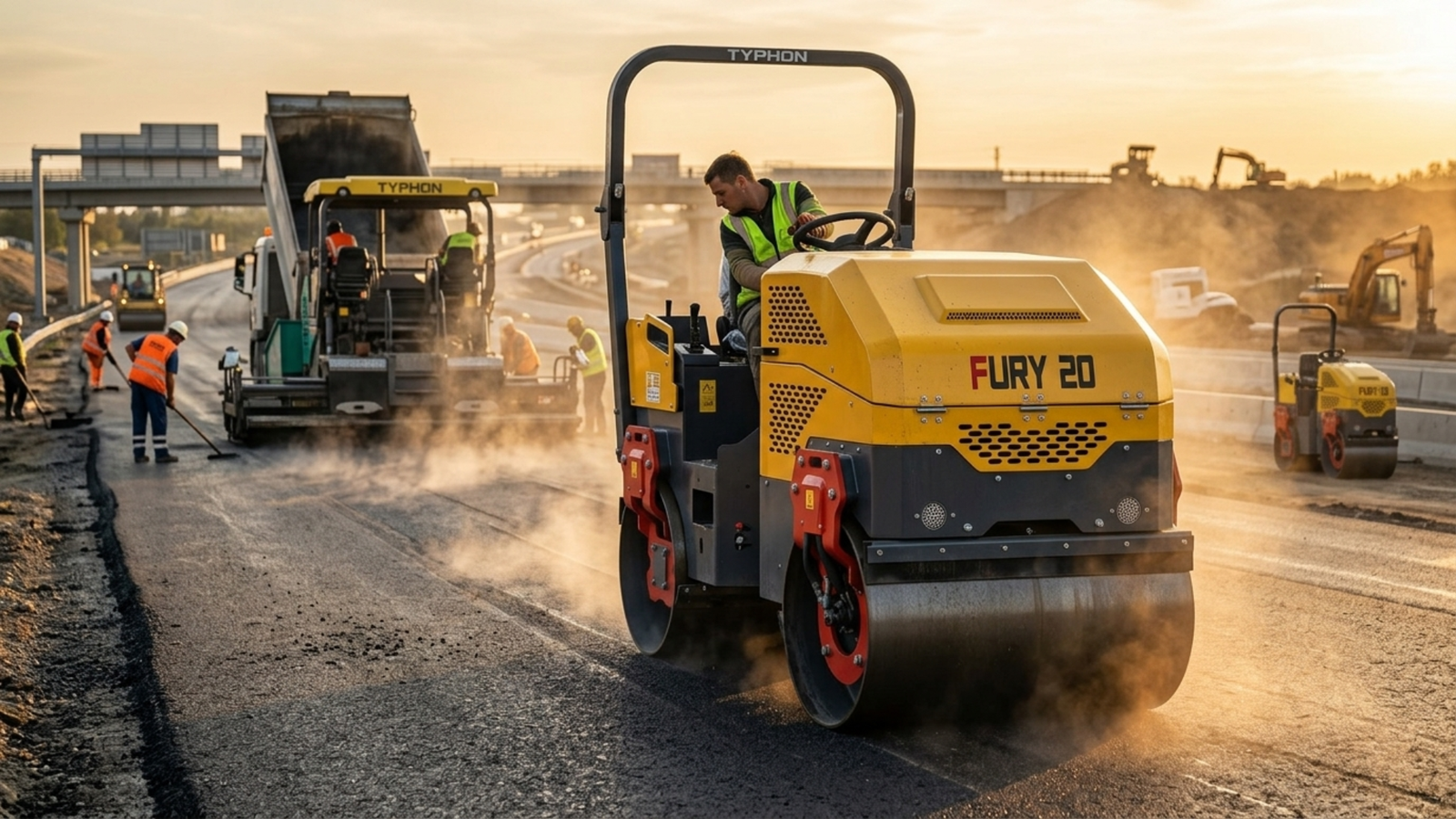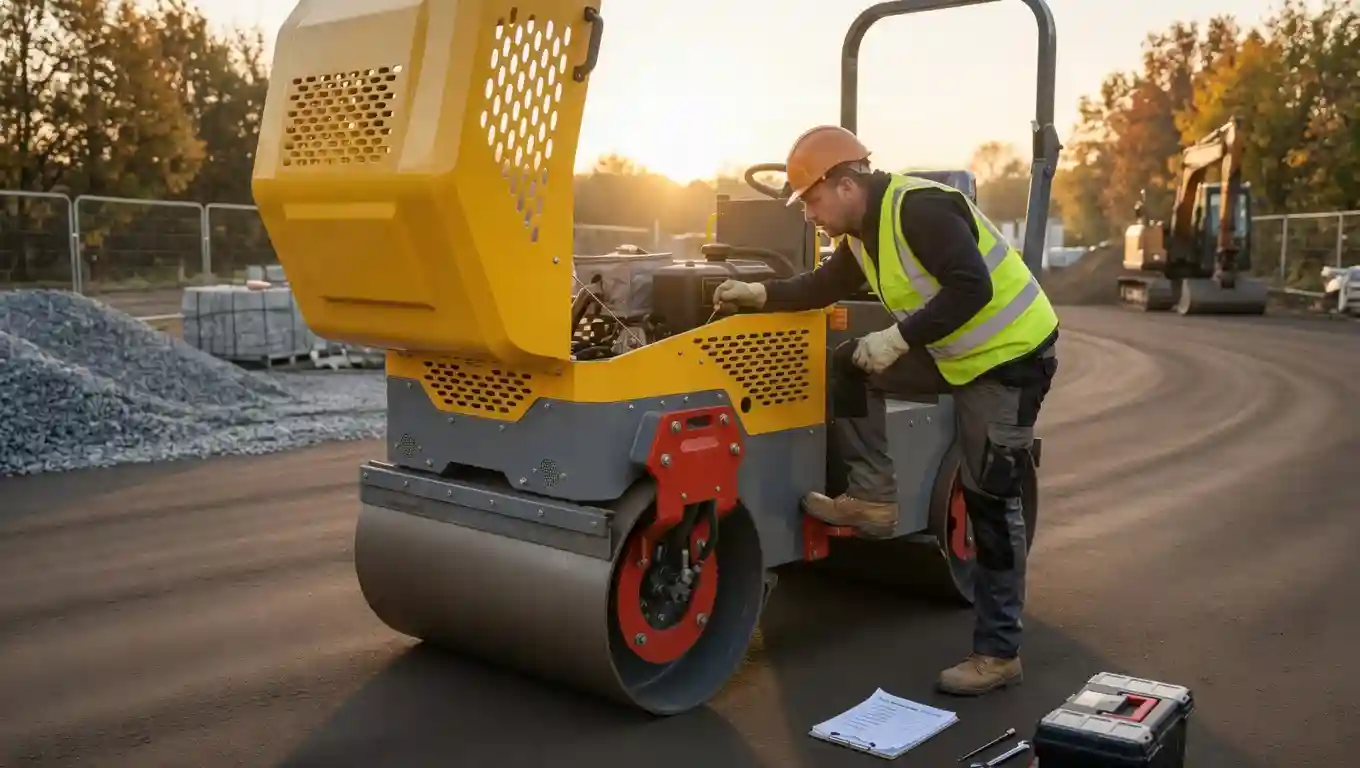
Road roller operators face a distinct mix of hazards every shift. They work close to hot asphalt, endure constant noise from compaction equipment, absorb whole-body vibration for hours at a time, and share active sites with traffic, material trucks, and ground crews. The right personal protective equipment stands between the operator and serious injury, and it is one of the most controllable safety investments a construction business can make.
This guide is written for construction business owners, site supervisors, safety managers, and the operators who run these machines day after day. Below, we break down the essential PPE for road roller operators, explain why each piece matters in the specific context of compaction work, and give you practical guidance for building a PPE program that protects your crew and keeps your jobsite compliant.
Why Road Roller Operators Need Specialized PPE Attention
Road roller work carries hazards that many other equipment roles do not share in the same combination. The machine produces powerful vibration that travels through the operator’s body. Compaction generates noise that can damage hearing over time. Paving crews work near freshly laid asphalt that radiates intense heat and gives off fumes. And nearly all of this happens on or beside live roadways and busy construction sites.
Treating road roller safety equipment as a thoughtful, role-specific decision rather than handing out generic gear is what separates a strong safety program from a checkbox exercise. Each piece of PPE below addresses a real, recurring hazard that operators face. When you match the equipment to the actual risks, you protect your people and reduce the costly downtime that injuries create.
PPE is the last line of defense in the hierarchy of controls. It works best alongside engineering controls, like well-maintained ROPS and low-vibration seats, and administrative controls, like operator rotation and clear traffic plans. Used together, these measures keep your crew safe across every shift.
Hard Hats: Protecting Against Overhead and Impact Hazards
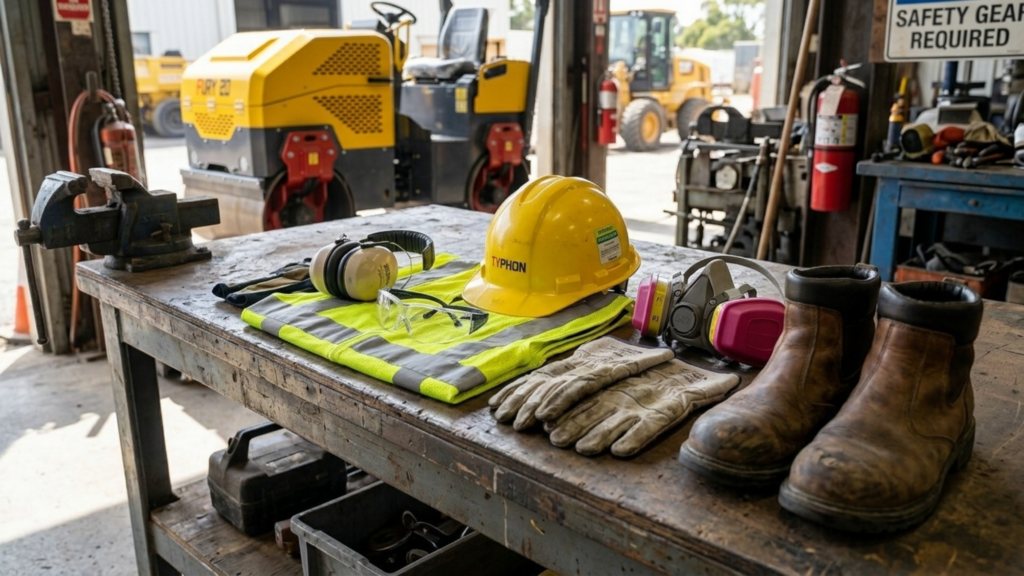
A hard hat is the foundation of construction PPE, and road roller operators are no exception. Active paving and construction sites are full of overhead and impact risks swinging equipment, material being moved by cranes or excavators, tools and debris, and the structural elements common to roadwork and bridge projects.
Operators climbing onto and off the machine also face strike hazards from the cab frame, ROPS, and surrounding equipment. A properly fitted hard hat absorbs the force of an impact and disperses it across the shell, reducing the risk of a serious head injury.
Practical guidance for hard hat use:
- Choose a hard hat that meets the recognized impact and penetration standards for your region
- Inspect the shell and suspension daily for cracks, dents, or wear, and replace any damaged unit immediately
- Replace hard hats on the manufacturer’s recommended schedule, since UV exposure degrades the shell over time
- Ensure the fit is snug and the suspension is adjusted correctly so the hat stays in place
Make hard hat use mandatory whenever an operator is on the site, not just when seated in the machine. The walk to and from the roller carries its own overhead risks.
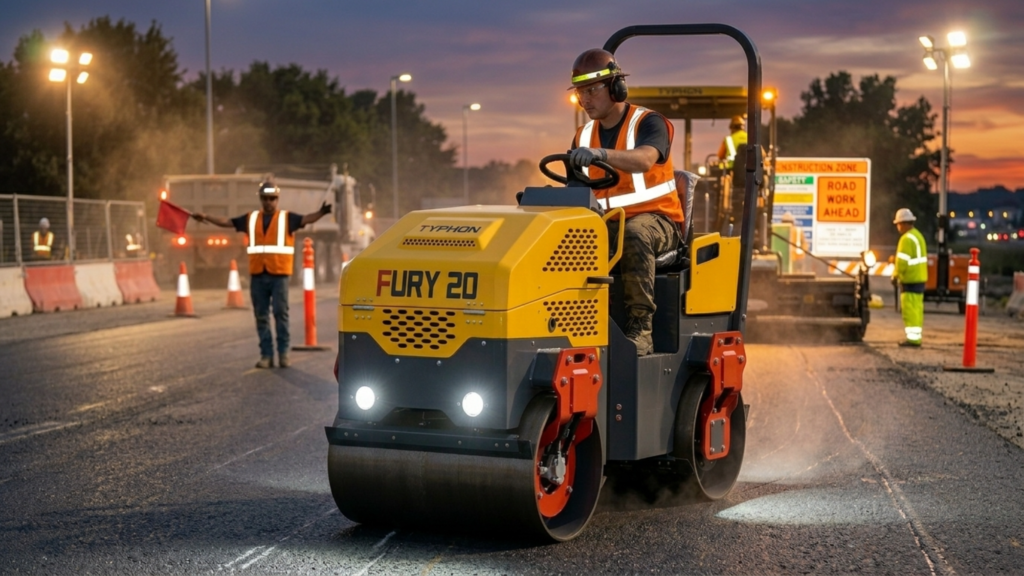
High-Visibility Clothing: Staying Seen on Active Sites
High-visibility clothing is among the most critical pieces of PPE for road roller operators, because so much paving work happens on or beside live traffic. Operators are visible targets only if they wear gear that makes them stand out against a busy, cluttered background day and night.
Road rollers move slowly and predictably, but the crews and vehicles around them do not always do the same. A driver entering a work zone, a material truck backing toward the paver, or a ground worker crossing behind the machine all need to see the operator clearly. High-visibility vests, shirts, and jackets in fluorescent colors with retroreflective striping make that possible.
What to look for in high-visibility apparel:
- Select the appropriate class of high-visibility garment for the speed and risk level of the work zone higher-speed roadways call for higher-visibility classes
- Ensure retroreflective striping is intact and clean, since dirt and asphalt residue reduce reflectivity
- Replace faded or heavily soiled garments, as washed-out fluorescent material loses its protective value
- Provide weather-appropriate options so operators stay visible in rain, low light, and night work
On any project involving traffic, high-visibility clothing is not optional. It is a frontline defense against one of the most serious hazards in roadwork — being struck by a vehicle.
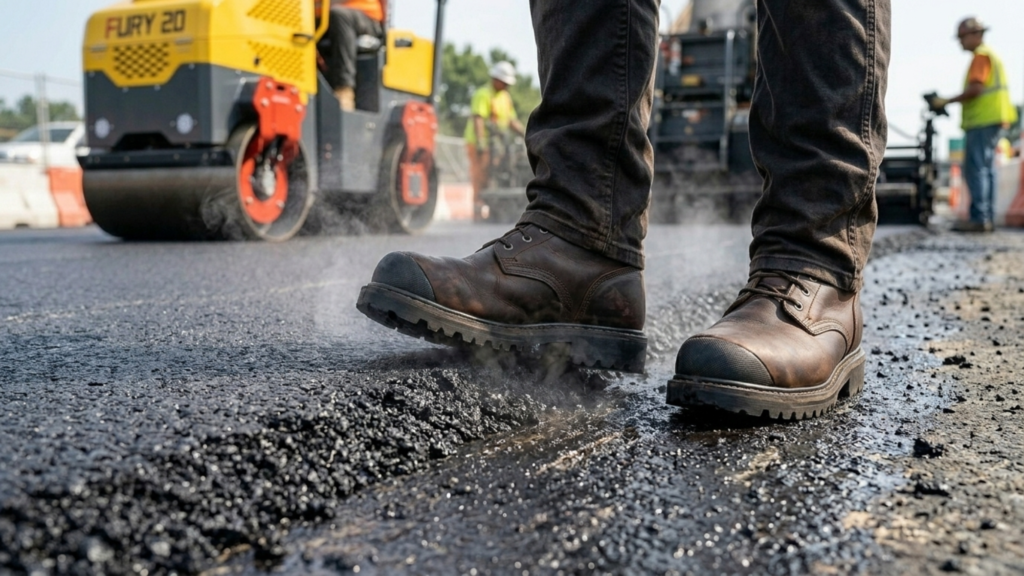
Safety Boots: Protecting Feet Around Heavy Equipment and Hot Asphalt
Road roller operators spend their shifts around heavy machinery, moving equipment, and freshly laid hot asphalt. Their footwear has to protect against crushing forces, punctures, slips, and heat. Standard work boots do not meet this need; safety-rated footwear does.
Protective toe caps guard against the crushing weight of equipment, dropped tools, and materials. Puncture-resistant soles protect against nails, sharp aggregate, and debris common on paving sites. Heat-resistant soles matter specifically in compaction work, where operators walk near and sometimes across hot asphalt surfaces that can degrade ordinary footwear.
Choosing the right safety boots:
- Select boots with protective toe caps and puncture-resistant soles rated to recognized safety standards
- Prioritize heat-resistant soles for asphalt paving work, where surface temperatures are extreme
- Look for slip-resistant tread to maintain footing on uneven ground, ramps, and the machine itself
- Ensure a proper fit, since operators climb on and off the roller repeatedly throughout a shift
Good ankle support also helps prevent the sprains and twists that come from stepping on and off equipment and navigating uneven terrain. Treat boots as essential safety gear, not a personal clothing choice.
Hearing Protection: Guarding Against Compaction Noise
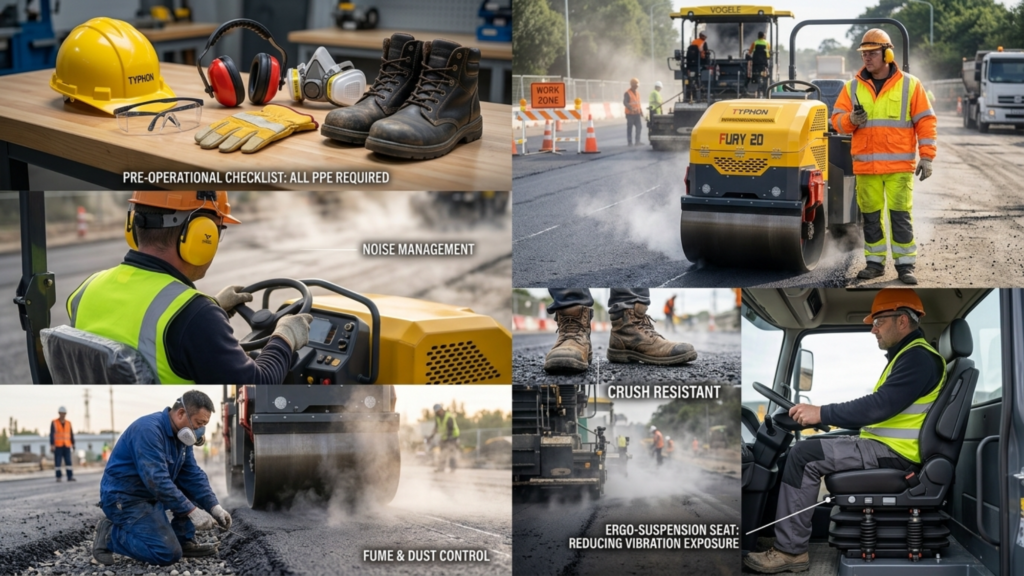
Noise is a constant companion in compaction work, and it is one of the most underestimated hazards road roller operators face. The engine, the vibratory drum system, and the surrounding equipment all generate sound levels that, over time, cause permanent hearing loss. Because the damage accumulates gradually and painlessly, operators often do not realize the harm until it is irreversible.
Hearing protection directly addresses this risk. Earplugs and earmuffs both reduce the noise reaching the operator’s ears, and the right choice depends on the noise levels at your site and operator preference.
Building effective hearing protection into your program:
- Assess noise exposure levels on your sites to determine the protection rating operators need
- Provide both earplugs and earmuffs so operators can choose what fits comfortably and consistently
- Train operators on correct insertion and fit, since poorly fitted protection offers far less defense
- Require hearing protection whenever the machine is running and noise levels warrant it
Comfort drives compliance. When operators find their hearing protection easy to wear for a full shift, they keep it on — and consistent use is what actually preserves hearing over a career.
Eye Protection: Shielding Against Debris, Dust, and Splatter
Eye injuries on paving and construction sites happen fast and carry lasting consequences. Road roller operators face flying debris, dust kicked up by equipment, aggregate particles, and the risk of hot asphalt splatter. A single particle in the eye can sideline an operator and, in severe cases, cause permanent vision loss.
Safety glasses and goggles protect against these hazards. Safety glasses with side shields handle most general debris and dust, while sealed goggles offer stronger protection in dusty conditions or where splatter risk is higher.
Practical eye protection guidance:
- Provide safety glasses that meet recognized impact standards, with side shields for fuller coverage
- Offer sealed goggles for high-dust environments or work near hot asphalt splatter
- Supply tinted or polarized lenses for outdoor work to reduce glare and eye strain on bright days
- Keep anti-fog options available, since fogged lenses tempt operators to remove their protection
Comfortable, clear, well-fitted eye protection encourages consistent use. Make sure operators have options suited to the conditions they actually work in, from bright sun to dusty subgrade preparation.
Gloves: Protecting Hands From Heat, Vibration, and Abrasion
Operators use their hands constantly gripping controls, climbing on and off the machine, handling tools, and occasionally working near hot surfaces and materials. Gloves protect against several distinct hazards at once: heat from asphalt and machine components, abrasion from rough materials, cuts from sharp edges, and the effects of vibration transmitted through the controls.
Vibration deserves particular attention. Road rollers transmit vibration through both the seat and the hand controls, and prolonged exposure contributes to hand-arm vibration syndrome, a serious condition that damages circulation and nerves in the hands. Anti-vibration gloves help reduce the energy reaching the operator’s hands and, combined with operator rotation, lower the long-term risk.
Selecting the right gloves:
- Choose heat-resistant gloves for work near hot asphalt and machine surfaces
- Provide anti-vibration gloves to help manage hand-arm vibration exposure during long shifts
- Ensure gloves offer enough grip and dexterity to operate controls safely
- Replace worn or damaged gloves promptly, since compromised gloves stop protecting effectively
The right glove balances protection with the dexterity operators need for precise control. Provide options matched to the specific tasks each shift demands.
Dust Masks and Respirators: Protecting the Lungs
Air quality is a genuine concern on paving and construction sites. Operators are exposed to dust from aggregate and subgrade material, silica from cutting and grinding nearby, and fumes from hot asphalt. Over time, breathing these contaminants causes respiratory illness and other long-term health problems.
The level of respiratory protection required depends on the specific hazards present. For general nuisance dust, a basic disposable dust mask may suffice. Where silica dust is present a recognized serious health hazard, properly rated respirators and a formal respiratory protection program are required. Asphalt fume exposure also warrants attention, particularly in enclosed or poorly ventilated areas.
Building respiratory protection into your program:
- Assess the specific airborne hazards on each site, including dust, silica, and asphalt fumes
- Provide the appropriate level of respiratory protection for the hazards identified
- Where respirators are required, implement fit testing and a formal respiratory protection program
- Train operators on correct use, maintenance, and the limits of their respiratory protection
Do not treat respiratory protection as one-size-fits-all. Match the equipment to the measured hazard, and where silica or significant fume exposure exists, follow the full requirements that those hazards trigger.
Managing Whole-Body Vibration: Beyond Standard PPE
Whole-body vibration is one of the most significant occupational hazards road roller operators face, and it deserves dedicated attention because no single piece of PPE eliminates it. Sitting on a vibrating machine for hours transmits energy through the operator’s spine and body, contributing to back pain, fatigue, and long-term musculoskeletal problems.
While anti-vibration gloves help with hand-arm vibration, whole-body vibration is best managed through a combination of equipment design and work practices:
- Well-maintained, properly adjusted seats with vibration-dampening suspension significantly reduce the energy reaching the operator
- Operator rotation limits continuous exposure across a shift and gives the body recovery time
- Correct posture and seat adjustment ensure the operator sits in the position the seat’s suspension was designed to protect
- Proper machine maintenance keeps vibration levels within the range the equipment was engineered to produce
Site supervisors and safety managers should treat vibration exposure as a measurable hazard, monitor shift lengths, and build rotation into the daily plan. Combined with the right seat and a comfortable, alert operator, these measures protect long-term health in ways PPE alone cannot.
Building a Complete PPE Program for Road Roller Operators
Individual pieces of PPE protect against individual hazards, but a strong safety program ties them together into a consistent, enforced standard. The most reliable operations build PPE into the rhythm of daily work rather than treating it as an occasional reminder.
Steps to strengthen your PPE program:
- Conduct a hazard assessment for each site and role to confirm which PPE the conditions actually require
- Provide properly fitted, well-maintained equipment and replace damaged gear without delay
- Train every operator on why each piece matters, how to use it correctly, and how to inspect it
- Inspect PPE daily as part of the pre-shift routine, alongside the machine inspection
- Enforce standards consistently, with supervisors modeling the same compliance they expect from the crew
Compliance follows culture. When supervisors wear their PPE without exception, address gaps immediately, and explain the reasoning behind each requirement, operators take the standards seriously. A program built on understanding and consistency protects your crew far better than rules enforced only after an incident.
Conclusion
Personal protective equipment is a frontline defense against the specific hazards road roller operators face every shift: overhead impacts, traffic, hot asphalt, flying debris, damaging noise, contaminated air, and the persistent toll of vibration. Hard hats, high-visibility clothing, safety boots, hearing protection, eye protection, gloves, and appropriate respiratory protection each address a real and recurring risk in compaction work.
Start by conducting an honest hazard assessment of your sites, then confirm that every operator has properly fitted, well-maintained PPE matched to those hazards. Reinforce correct use through training and daily inspection, and treat whole-body vibration as the serious hazard it is by combining good seats, machine maintenance, and operator rotation with the right gear.
A protected operator is a productive operator. Invest in road roller safety equipment and build the habits that keep it in use, and you protect both your crew and your operation for every shift that follows.