Versatility is what determines whether a compact excavator can handle a wide range of jobs or becomes limited to lighter work. Buyers often compare digging depth, bucket capacity, and operating weight while treating engine power as just another number on the specification sheet. In reality, the engine is the source of power for the hydraulic system, which drives the boom, arm, bucket, swing, travel, and hydraulic attachments. When the engine is properly matched to the machine, it provides the hydraulic power needed to move between tasks without sacrificing performance.
That connection becomes even more important when attachments and demanding conditions are involved. Trenching, drilling, breaking, grading, and grappling can place very different demands on the hydraulic system, while slopes, soft ground, and heavy material can increase the load further. An engine with enough power reserve allows the excavator to maintain hydraulic flow and pressure when these demands overlap. An undersized engine, however, can cause slower functions, reduced attachment performance, and weaker productivity, limiting how many jobs the machine can realistically handle.
The Engine Feeds Every Function Through the Hydraulics
A compact excavator does not use the engine to perform digging directly. Instead, the engine drives a hydraulic pump, which pressurizes hydraulic fluid and sends it to the cylinders and motors responsible for digging, swinging, traveling, and operating attachments. Every working function on the machine ultimately depends on the engine providing enough mechanical power to maintain the hydraulic system under load.
Two key figures determine what that hydraulic system can deliver: flow and pressure. Flow, measured in gallons per minute, determines how quickly hydraulic cylinders move and hydraulic motors rotate, while pressure, measured in PSI, determines how much force the system can produce against digging resistance or heavy loads. A properly matched engine provides enough power for the pump to maintain the required flow and pressure during demanding operation, creating the hydraulic capacity needed for productive work.
This hydraulic capacity directly affects the machine’s versatility. The more hydraulic power the engine can sustain, the more effectively the excavator can handle different tasks without excessive strain or performance loss. An engine with sufficient reserve can support digging, lifting, travel, swinging, and hydraulic attachments while maintaining more consistent performance when several functions are used during the same work cycle. This is why engine sizing is closely connected to the excavator’s overall capability, not simply its horsepower rating.
Takeaway: the engine sets the hydraulic ceiling, and that ceiling defines how much the machine can do.
Adequate Output Unlocks a Wider Range of Attachments
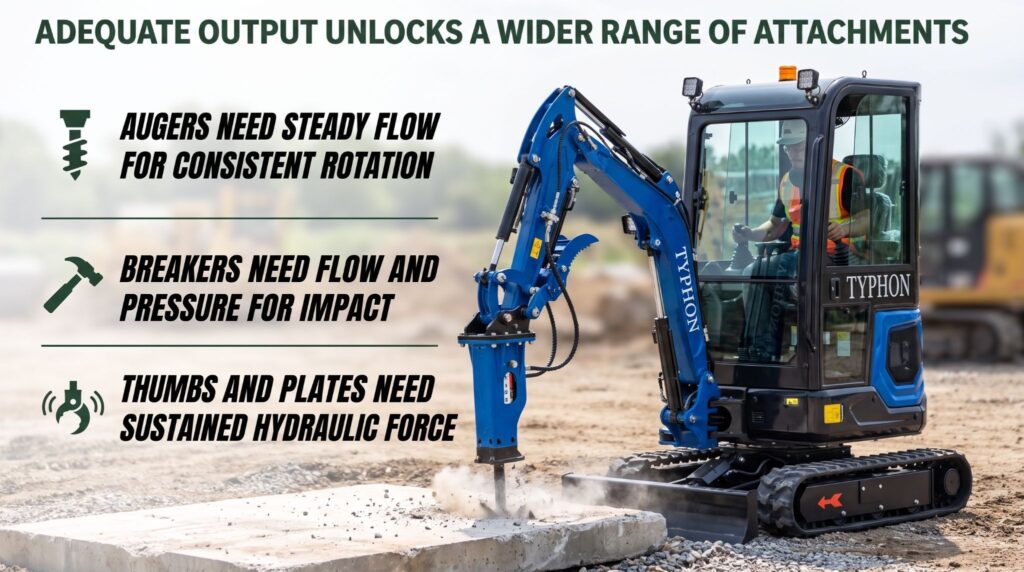
Attachments are where a compact excavator becomes a true multi-tool, but their performance depends heavily on the machine’s hydraulic capacity. Powered attachments draw energy from the auxiliary hydraulic circuit, which is ultimately driven by the engine through the hydraulic pump. If the engine cannot provide enough power to maintain the required flow and pressure, some attachments may operate slowly, lose performance, or fall outside the machine’s practical capability.
Different attachments place different demands on the hydraulic system. Augers need steady hydraulic flow to maintain consistent rotation while drilling through soil for posts, foundations, and other applications. Hydraulic breakers require sufficient flow and pressure to maintain effective impact frequency when breaking concrete, rock, and other hard materials. Thumbs and grapples depend on consistent hydraulic force to grip and position irregular or heavy loads, while compaction plates require continuous hydraulic power to maintain effective vibration during ground preparation.
Hydraulic breakers provide one of the clearest examples of why engine and hydraulic capacity must be properly matched. If the engine lacks sufficient reserve, the breaker may operate with reduced impact performance or cause the excavator’s hydraulic system to struggle under sustained demand. With adequate engine and hydraulic capacity, the attachment can operate closer to its intended flow and pressure requirements while the excavator maintains more consistent performance.
The same principle applies across the attachment range. Having an attachment installed does not guarantee that the excavator can operate it effectively. The engine, hydraulic pump, auxiliary flow, and system pressure all need to provide the capacity the attachment requires.
Takeaway: The right engine and hydraulic system allow a compact excavator to handle a wider range of attachments effectively, turning one machine into a more versatile working platform.
Reserve Power Carries Multi-Function Work Without Compromise
Real jobs rarely ask for one function at a time. During a normal cycle, an operator digs, swings the loaded bucket toward the pile, and tracks the machine forward, all drawing on the same engine and the same hydraulic supply at once. Reserve power is what lets the machine carry those overlapping demands without flinching.
Picture a trenching cycle in motion. The bucket crowds through soil while the upper structure begins rotating toward the spoil, and the tracks creep forward to follow the line. Three demands stack into a single moment. An engine with headroom holds full dig, swing, and travel together, keeping the cycle tight and the operator productive.
An undersized engine, by contrast, is forced to ration. Swing a full bucket while tracking, and swing speed sags, the dig loses force, or both give at once. The operator ends up pausing between functions, waiting for the engine to recover, and every pause stretches the shift.
Takeaway: engine reserve keeps combined tasks smooth, which is exactly where a versatile machine proves its worth.
The Right Engine Adapts to Varied Terrain and Job Types
A machine confined to easy ground isn’t versatile. What makes a compact excavator adaptable is an engine that holds its output whether the work is light landscaping or heavy production digging. Terrain and task variety test that adaptability constantly.
Soft topsoil asks little of the hydraulics, and nearly any engine copes. Hit compacted clay, frost, or buried rock, though, and the load spikes hard. An engine with reserve holds breakout and crowd force through that spike, so the machine digs confidently where an undersized one bogs and stalls. The same reserve lets the machine lift with control, grade with precision, and shift from one job type to the next without hitting a wall.
That adaptability is the practical meaning of versatility. A landscaper trenching in the morning, augering fence posts at midday, and grading a pad in the afternoon needs a machine that never becomes the limiting factor. The right engine makes that range routine.
Takeaway: an engine that holds output across conditions lets one machine move between job types instead of specializing in just one.
Fuel Efficiency and Wear: Matched Versus Undersized
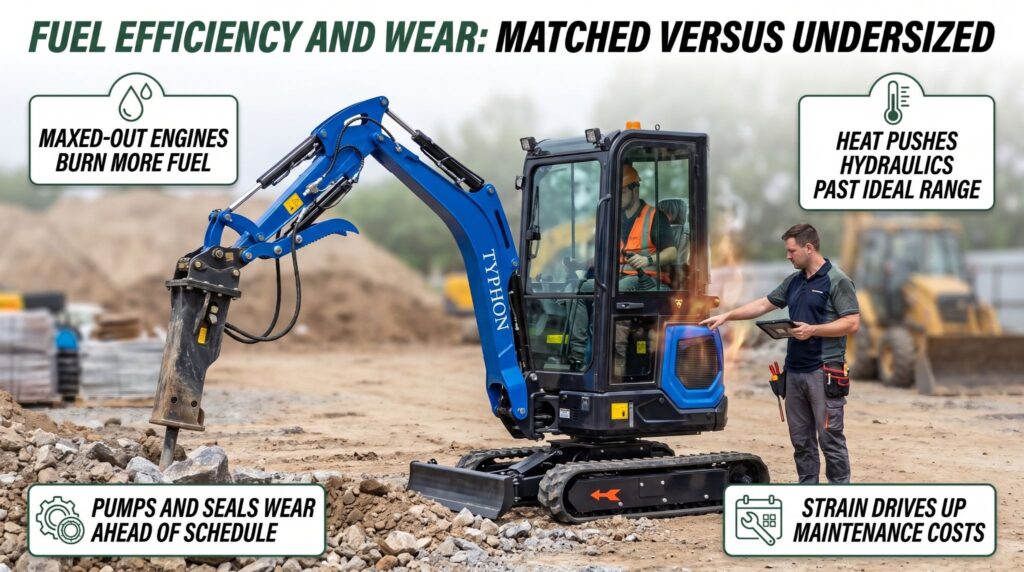
Cost is another important consequence of an undersized engine, especially over long operating hours. An engine forced to run near its maximum output for extended periods can consume more fuel for the amount of material moved than a properly matched engine operating within a more efficient range, increasing fuel costs over time.
Heat adds another concern because a heavily loaded engine generates more heat and can push the hydraulic system beyond its ideal operating temperature. This can reduce hydraulic efficiency and accelerate fluid and component wear, affecting the machine’s ability to maintain consistent performance during demanding work.
This ongoing strain can also accelerate wear across the hydraulic pump, seals, hoses, cooling system, and engine itself. Components that repeatedly operate near their limits may require more frequent maintenance or replacement, increasing the machine’s long-term operating costs.
However, bigger is not automatically better. An oversized engine can also waste fuel when the machine performs mostly light-duty work. The goal is to match engine size to the machine and its actual workload so it can deliver the required performance without unnecessary fuel consumption, heat, or component stress.
Takeaway: A well-matched engine provides the power needed for varied work while helping control operating costs and component wear.
Conclusion
The right engine is what makes a compact excavator genuinely versatile because it provides the hydraulic power behind every function, from digging and lifting to operating attachments such as augers, breakers, thumbs, and grapples. Adequate engine output allows these attachments to perform at their intended capability, while sufficient power reserve keeps digging, swinging, traveling, and lifting smooth when several functions operate at the same time. An engine that maintains its output across changing loads and terrain also gives the machine greater flexibility across different job types, while proper engine sizing helps control fuel consumption, operating temperature, and long-term wear. Before purchasing, consider the full range of work the excavator will perform, identify the toughest materials, lifting demands, and attachments, and test the machine under real working conditions to make sure the engine has enough power and reserve for the jobs you actually need it to handle.
Frequently Asked Questions
Does a more powerful engine really make a compact excavator more versatile?
It makes more hydraulic power available, which expands versatility only if your work demands it. A stronger, well-matched engine can run demanding attachments like breakers, dig through hard material, and carry combined tasks that would stall a smaller one. That said, an oversized engine on consistently light work simply wastes fuel. True versatility comes from matching engine output to the full, realistic range of jobs and attachments you plan to run.
Why can’t my compact excavator run certain attachments?
Powered attachments draw on the auxiliary hydraulic circuit, and that circuit can only deliver what the engine supplies. If the engine’s output falls short of an attachment’s flow and pressure requirement, the tool runs weakly or won’t perform at all. Breakers and augers are especially demanding. Before buying any attachment, confirm its rated flow and pressure fall within your machine’s auxiliary hydraulic capacity, which is ultimately governed by the engine.
How do I know if my engine is undersized for the work I do?
The clearest signs show up during combined and demanding tasks. If swing speed sags when you track and dig together, if the bucket stalls in hard material, or if a powered attachment underperforms, the engine is likely struggling to feed the hydraulics. Higher-than-expected fuel use and excess heat point the same direction. The surest test is running your actual material, attachments, and full cycle, then watching whether the machine holds speed and force throughout.