The hydraulic pump may not be the first thing you notice on a skid steer, but it is the component that makes nearly everything else possible. Every lift, every push, and every attachment you run depends on it. Choosing the right pump type, and keeping it in good condition, has a direct effect on how well your machine performs and how efficiently it works through the day. This guide walks through the role hydraulic pumps play, the difference between fixed and variable displacement designs, how to match a pump to your attachments, and the maintenance that keeps it running reliably. By the end, you will understand what to look for and how to protect the investment.
The Role of Hydraulic Pumps in Skid Steers
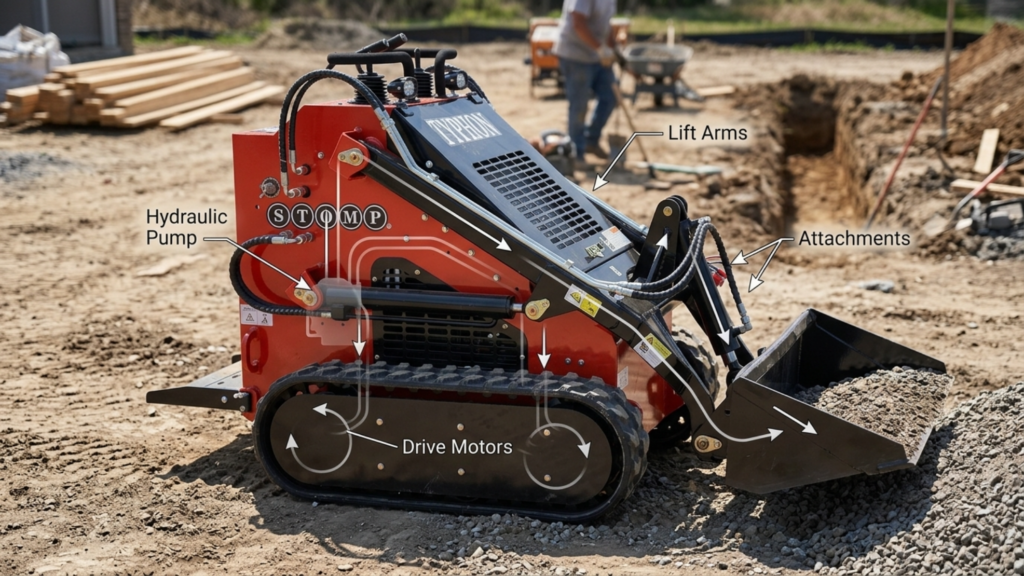
The hydraulic pump is the heart of a skid steer’s hydraulic system. Its job is to pressurize hydraulic fluid and send it where it is needed, supplying the force that drives the machine’s most important functions. When you raise the lift arms to load material, roll the bucket to dump a load, or steer the machine across a site, the pump is delivering the pressurized fluid that makes those movements possible. Without it, the machine simply cannot work, which is why the pump sits at the center of everything a skid steer accomplishes.
That responsibility extends across three critical systems, each depending on steady, reliable pressure from the pump:
- Lift arms, which raise, lower, and tilt to handle material and run the loader’s core work.
- Drive motors, which turn engine power into the wheel or track movement that propels and steers the machine.
- Attachments, from buckets and augers to more demanding tools, all powered through the hydraulic system.
Because the pump feeds all of these functions, its performance directly shapes machine capability and efficiency. A pump that delivers strong, consistent pressure lets the skid steer lift confidently, move smoothly, and run attachments at full potential. A weak or worn pump, by contrast, leaves the machine feeling sluggish and underpowered, unable to keep pace with demanding work. Understanding the pump’s central role helps operators and buyers appreciate why pump type and condition matter so much, and it sets the foundation for choosing and caring for the right system for the job.
Fixed Displacement Hydraulic Pumps
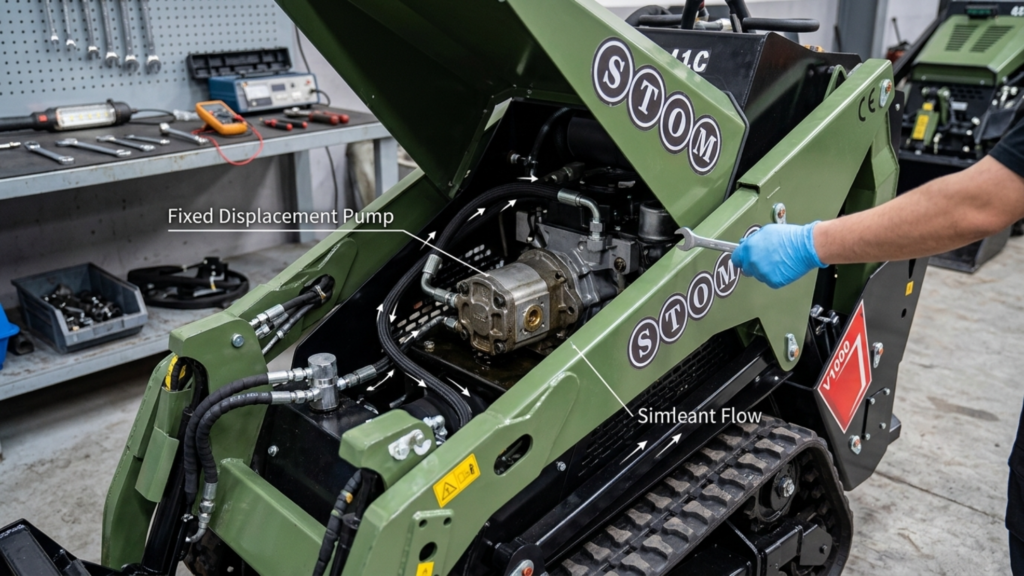
Fixed displacement pumps are the more straightforward of the two main designs, and their simplicity is exactly what makes them so dependable. As the name suggests, a fixed displacement pump delivers a constant amount of hydraulic fluid with each rotation. The flow it produces is tied directly to how fast the pump turns, so it moves the same volume of fluid regardless of what the system actually demands at any given moment. This predictable, uncomplicated operation has made fixed displacement pumps a trusted choice across countless skid steers over the years.
The advantages of this design come down to three qualities that matter a great deal in everyday work:
- Simplicity, with fewer moving parts and a design that is easy to understand and service.
- Durability, since a less complex system has fewer components that can wear or fail.
- Cost-effectiveness, both in the initial purchase and in long-term upkeep.
These strengths make fixed displacement pumps well suited to basic skid steer applications. For operators handling standard tasks such as loading, grading, digging with a bucket, and running common attachments, a fixed displacement system delivers the power needed without unnecessary complexity or expense. The machine performs its core work reliably, and the simpler design means fewer things to go wrong and lower costs to keep it running.
Where fixed displacement pumps show their limits is in efficiency during lighter work. Because the pump moves the same volume of fluid whether the machine needs it or not, it can generate excess flow that is not always put to use, which is less efficient than a system that adjusts to demand. For many operators, though, that trade-off is well worth the reliability and value the design provides. When the work is straightforward and dependability is the priority, a fixed displacement pump remains a sound, practical choice.
Variable Displacement Hydraulic Pumps
Variable displacement pumps take a more sophisticated approach, and that added intelligence translates into real advantages on the right machine. Rather than producing a constant flow, a variable displacement pump automatically adjusts hydraulic flow based on system demand. When the machine needs more fluid to power a heavy task, the pump increases its output; when demand eases, it scales back. This responsiveness means the pump supplies close to what the system actually requires at any moment, rather than moving a fixed volume regardless of the work at hand.
That ability to match flow to demand delivers several meaningful benefits:
- Improved fuel efficiency, since the pump draws only the power needed rather than wasting energy on excess flow.
- Smoother operation, as the system responds precisely to the operator’s inputs and the demands of the task.
- Better performance with high-powered attachments, which rely on strong, well-managed flow to work effectively.
These qualities make variable displacement pumps especially valuable for machines running demanding, high-flow tools. Because the pump can deliver the substantial flow that power-hungry attachments require, then ease off when that flow is not needed, it supports intensive work without the waste that a fixed system would produce. Operators feel the difference in how responsive and controlled the machine becomes under load, and businesses see it in reduced fuel consumption over long working days.
The trade-off is that variable displacement systems are more complex and typically carry a higher cost than fixed designs. For machines that regularly perform demanding work or run high-powered attachments, that investment pays off through greater efficiency and better performance. For an operator whose work justifies it, a variable displacement pump turns a capable skid steer into a more efficient, smoother, and more versatile machine ready for serious tasks.
Choosing the Right Pump for Your Attachments
Selecting the right hydraulic pump comes down to understanding the tools you plan to run and the workload you expect. Different pumps are better suited to different attachments, so the smartest approach is to match the system to your real needs rather than assuming one design fits every situation. The key factor is how much hydraulic flow your attachments demand, because that requirement often determines whether a fixed or variable displacement system will serve you best.
High-flow attachments place heavy demands on the hydraulic system, and they generally perform best with variable displacement pumps that can supply strong, well-managed flow. Consider the kinds of tools that fall into this category:
- Mulchers, which require substantial, sustained flow to power their cutting action.
- Cold planers, which draw heavy hydraulic power to grind and remove tough surfaces.
- Forestry equipment, built for demanding, continuous work that pushes the hydraulic system hard.
For attachments like these, the responsiveness and efficiency of a variable displacement system make a genuine difference, delivering the power the tools need while managing flow intelligently under intense, prolonged use.
Standard attachments, on the other hand, perform well with fixed displacement pumps. Buckets, augers, grapples, and similar everyday tools do not demand the high, carefully managed flow that specialized equipment requires, so the simplicity, durability, and lower cost of a fixed system suit them perfectly. Matching the pump to the work protects both your productivity and your budget: a fixed system handles standard tasks reliably and economically, while a variable system unlocks the full potential of demanding, high-flow tools. Take an honest look at the attachments you use most and the intensity of your typical work, and let that guide your choice. Getting this decision right ensures your skid steer delivers the performance each job requires without paying for capability you will not use.
Maintaining Hydraulic Pump Performance
Even the best hydraulic pump depends on consistent care to keep performing at its best. Regular maintenance is what protects the pump’s power, extends its working life, and ensures your skid steer stays dependable job after job. The good news is that the most important maintenance tasks are straightforward, and staying on top of them prevents the gradual loss of performance and the costly failures that neglect invites. Treating pump care as a routine priority is one of the surest ways to protect both the machine and your productivity.
A few core practices form the foundation of good hydraulic pump maintenance:
- Check hydraulic fluid levels regularly, since low fluid starves the pump and undermines its ability to generate pressure.
- Replace filters on schedule, keeping the fluid clean so contaminants do not damage the pump or restrict flow.
- Inspect for leaks, catching worn hoses, loose fittings, and failing seals before they cause pressure loss or bigger problems.
Beyond these tasks, it helps to pay attention to how the machine behaves during normal work. Clean, properly maintained fluid transmits pressure efficiently, so watching fluid condition matters as much as watching its level. Fluid that appears dirty, discolored, or degraded should be addressed promptly, because contaminated fluid wears components and reduces performance over time. Keeping an eye on operating temperature is wise too, since a system running too hot puts added strain on the pump and its surrounding parts.
Consistent, thoughtful maintenance ties all of these efforts together. A pump supported by regular fluid checks, timely filter changes, and prompt attention to leaks delivers steady power and lasts far longer than one left to run unchecked. Proper care ensures consistent performance on every job and spares you the downtime and expense of avoidable repairs. For any operator who depends on a skid steer to get work done, that reliability makes routine pump maintenance well worth the modest effort it requires.
Conclusion
The hydraulic pump sits at the center of everything a skid steer does, powering the lift arms, drive motors, and attachments that make the machine so useful. Understanding the two main pump types helps you choose wisely: fixed displacement pumps offer simplicity, durability, and value for standard work, while variable displacement pumps provide adjustable flow, better fuel efficiency, and smoother operation for demanding, high-flow tools like mulchers, cold planers, and forestry equipment. Matching the pump to your attachments and workload ensures your machine delivers the performance each job requires without paying for capability you will not use. Just as important, regular maintenance, including checking fluid levels, replacing filters, and inspecting for leaks, keeps the pump running efficiently and extends its life. Choose the right system for your work and care for it well, and your skid steer will reward you with reliable, capable performance for years to come.
