Buying a used road roller can be one of the smartest capital decisions your business makes or one of the most expensive mistakes. The difference comes down to how thoroughly you inspect the machine before you commit.
A used road roller that looks clean and runs on startup can still carry hidden problems that cost you tens of thousands of dollars in repairs, unplanned downtime, and failed compaction results. Sellers are motivated to present their equipment favorably. Your job as a buyer is to look past the presentation and evaluate the machine objectively.
This guide gives construction business owners, fleet managers, and equipment buyers a structured, practical framework for used road roller inspection. Cover every area in this guide before you negotiate a price or sign a purchase agreement.
Why Used Road Roller Inspections Matter More Than You Think
Used equipment purchases carry inherent risk that new equipment purchases do not. You are buying a machine with an unknown operational history, potentially operated by multiple crews across varying conditions, and maintained or neglected according to someone else’s standards.
The stakes on a road roller are particularly high. These machines work under extreme mechanical stress. The vibratory system, hydraulic circuits, and drum bearings endure continuous shock loads across every shift. Components that fail under this stress do not fail cheaply. A drum bearing replacement, hydraulic pump rebuild, or articulation joint repair can each run several thousand dollars. Structural damage to the frame can render a machine financially unrepairable.
Investing two to four hours in a rigorous pre-purchase inspection protects your capital and ensures that the machine you buy will actually perform on your jobsite.
1. Start With the Machine’s History and Documentation
Before you physically inspect anything on the machine, ask for its paperwork. What a seller can and cannot provide tells you a great deal about how the machine was managed.
Maintenance Records
Request the complete service history. You want to see dated records of oil changes, filter replacements, hydraulic services, and any major repairs. A well-maintained road roller will have documentation showing consistent service at manufacturer-recommended intervals. Gaps in the records, missing pages, or vague handwritten notes are warning signs worth probing.
Ask the seller directly: Who performed the maintenance? A machine serviced by a certified dealer technician carries more assurance than one maintained informally by a crew with no documentation. If the seller cannot produce any maintenance records, assume the worst and adjust your price expectations accordingly.
Engine Hours
The machine’s hour meter gives you the most direct indication of remaining useful life. Most diesel-powered road rollers are engineered for 10,000 to 15,000 service hours before major engine work becomes likely. A machine showing 6,000 to 8,000 hours from a reputable fleet with documented maintenance is a very different proposition than one showing the same hours with no service records and a cracked engine mount.
Verify the hour meter reading against the overall physical condition of the machine. If the wear on the controls, operator seat, and pedal surfaces suggests significantly more use than the meter shows, the meter may have been replaced or tampered with. Trust the physical evidence over the numbers when there is a conflict.
Ownership and Usage History
Ask how many owners the machine has had and in what applications it was primarily used. A road roller that spent its life on highway asphalt paving has a very different wear profile than one used primarily in quarry operations or on highly abrasive base materials. The more you know about the operating environment, the better you can interpret what you find during the physical inspection.
2. Inspect the Engine Thoroughly
The engine is the most expensive single system on a road roller. A compromised engine can make an otherwise sound machine a poor purchase.
Fluid Condition and Levels
Pull the engine oil dipstick and examine the oil carefully. Clean, amber-colored oil indicates regular changes. Oil that is jet black, gritty, or smells burnt suggests extended drain intervals and potential internal wear. Oil with a milky appearance is a serious warning; it indicates coolant is entering the oil circuit, which points to a blown head gasket or cracked block.
Check the coolant in the overflow reservoir. It should be clean and at the correct level. Oily residue floating on the coolant surface indicates combustion gases entering the cooling system, another sign of head gasket failure.
Starting and Running Behavior
Start the engine cold if at all possible. Cold starts reveal problems that a warm engine can mask. Listen carefully during the first 30 seconds. You should hear smooth, consistent firing. Excessive cranking before the engine catches, misfiring, or rough idle at startup all indicate potential fuel system or compression issues.
Once the engine is running, watch the exhaust. A brief puff of white smoke on a cold start is normal. Persistent white smoke after warm-up indicates a coolant leak into the combustion chamber. Blue smoke signals oil-burning worn piston rings or valve seals. Black smoke points to a fuel system problem or a restricted air filter.
Let the engine reach full operating temperature and monitor the dashboard gauges. The coolant temperature gauge should stabilize in the normal range and hold there. If it climbs toward the red zone, the cooling system is compromised.
Engine Mounts and External Condition
Inspect the engine mounts for cracking, deterioration, or missing hardware. Loose or failed engine mounts allow the engine to shift under load, stressing attached hoses, wiring, and fuel lines. Look for oil staining around the engine. Minor seepage at gaskets is common on older machines, but heavy oil accumulation on the engine block and frame suggests a chronic leak that has been left unaddressed.
3. Evaluate the Drum Condition
The drum is the working heart of a road roller. Its condition directly determines the machine’s ability to deliver quality compaction results.
Surface Wear and Damage
Examine the entire drum surface at close range. You are looking for deep gouges, cracks, flat spots, and uneven wear patterns. Light surface rust on a machine that has been sitting is normal and not a concern. Pitting, severe scarring, or sections where the drum material has been cut away will create ridge marks in asphalt and compromise surface quality.
Run your hand across the drum surface to feel for irregularities that are not immediately obvious to the eye. Even small deformations in the drum can produce visible defects in finished asphalt at the speeds and temperatures of real production work.
Scraper Bar Condition
Scraper bars press against the drum surface to prevent asphalt from sticking. Inspect the scraper blades for wear, missing sections, and proper contact tension against the drum. Worn scrapers allow hot asphalt to adhere to the drum, which tears the mat and creates costly surface defects. Replacement is relatively inexpensive, but heavy scraper wear indicates the machine has been worked hard, and the rest of the wear components deserve extra scrutiny.

Water Spray System
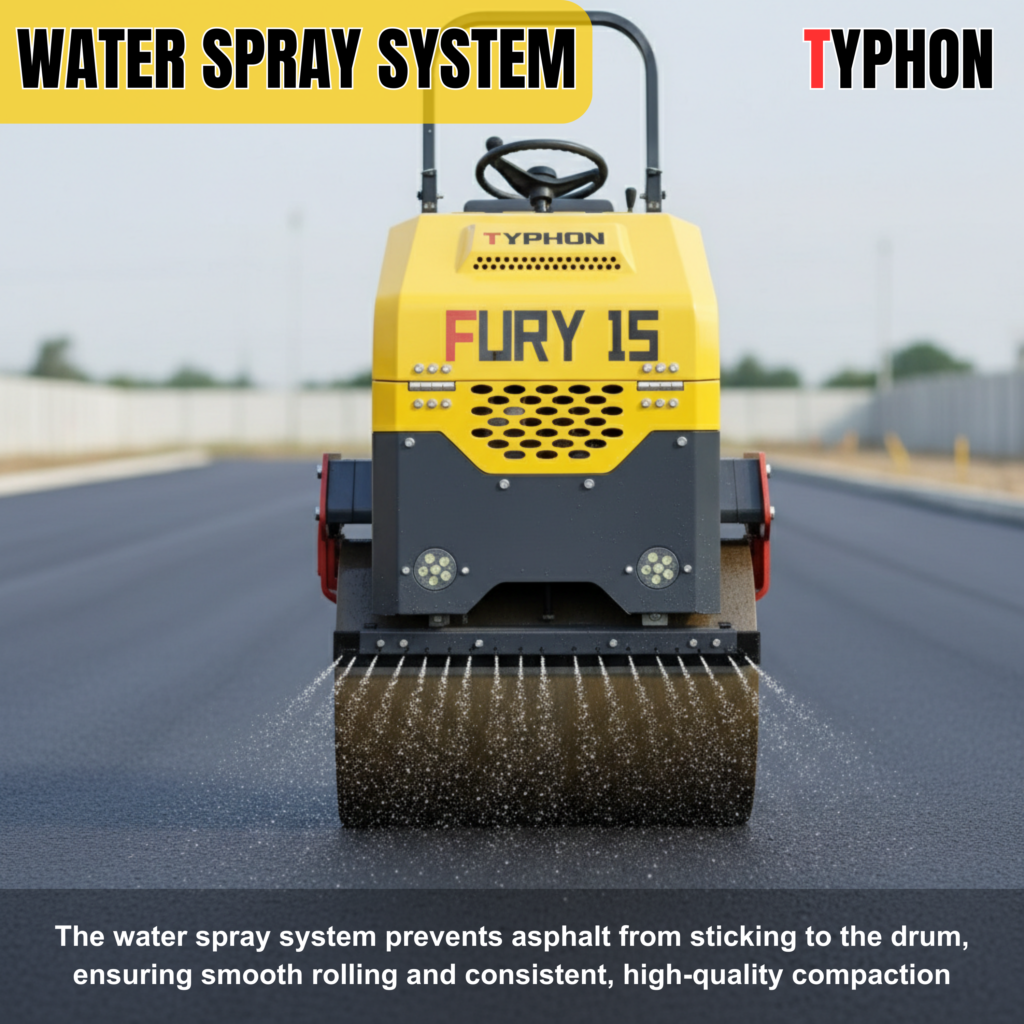
The water spray system keeps the drum wet to prevent asphalt adhesion. Inspect the water tanks for cracks or leaks. Turn the system on and verify that every nozzle produces a consistent, even spray pattern across the full width of the drum. Clogged or missing nozzles create dry zones on the drum, which immediately cause hot asphalt to stick and tear.
Test the spray at different output settings if the system has variable controls. Confirm the pump operates quietly and builds pressure quickly.
4. Assess the Hydraulic System
Hydraulic system problems are among the most common and expensive issues on used road rollers. Inspect this system with the same care you would give the engine.
Fluid Condition
Check the hydraulic fluid level and condition. Healthy hydraulic fluid is clear to light amber in color. Dark brown or black fluid indicates severe oxidation from heat cycling and neglected service intervals. Milky fluid means water contamination has entered the system, a serious problem that requires complete fluid replacement and investigation of how the water entered.
Hoses, Lines, and Cylinders
Inspect every visible hydraulic hose and hard line for swelling, cracking, chafing, or oil staining. A swollen hose has failed internally and is at risk of bursting under operating pressure. Chafed hoses in contact with frame components will eventually wear through entirely.
Look at the chrome rods on any hydraulic cylinders, typically the steering and lift circuits. The rods must be smooth, clean, and free of deep scratches or pitting. Damaged rods destroy hydraulic seals quickly, causing leaks and loss of function.
Operational Testing
With the machine running, cycle every hydraulic function: steering articulation, any blade or lift circuits, and the vibratory system engagement. Movements should be smooth and responsive with no hesitation, jerking, or unusual noise. Hydraulic systems that moan, chatter, or respond sluggishly at operating temperature indicate a pump that is losing efficiency or air in the system.
5. Test the Vibratory System Performance
The vibratory system is what separates a road roller from a simple static weight. It drives compaction energy deep into the material and directly determines the machine’s ability to meet density specifications. Used road roller inspections must give this system serious attention.
Amplitude and Frequency Settings
Verify that the vibratory system engages cleanly at both high and low amplitude settings. You should feel a distinct and strong vibration through the operator platform when the system is active. Weak or inconsistent vibration at either amplitude setting suggests worn eccentric weights, a failing exciter bearing, or a hydraulic drive problem.
Unusual Noises
Listen carefully when the vibratory system is running. The normal sound is a consistent, rhythmic hum. Grinding, rattling, or irregular thumping sounds indicate damage to the exciter assembly or bearing failure within the drum. These repairs are labor-intensive and expensive; a machine with abnormal vibration noise should be priced to reflect the likely repair cost.

Drum Bearing Condition
Ask whether the drum bearings have been inspected or replaced and at what hours. Drum bearings on a vibratory roller have a finite service life under the constant shock loading of compaction work. If the machine is approaching typical bearing service intervals and no recent work is documented, factor replacement into your purchase price.
6. Check the Articulation Joint
The articulation joint is the structural pivot that allows the front and rear frames of the roller to steer. It endures enormous stress and is a common wear point on used road rollers.
Physical Inspection
Inspect the joint closely for excessive play. With the engine off, attempt to move the front frame laterally by hand or with a pry bar. Some minimal movement is normal, but noticeable looseness indicates worn bushings that need replacement. Left unaddressed, worn articulation bushings accelerate wear throughout the steering system and reduce machine control on the jobsite.
Look for grease fittings and check whether they show evidence of regular lubrication. Dry, cracked grease or completely absent grease buildup around the joint indicates a neglected lubrication schedule. This accelerates bushing wear significantly.
Steering Feel During Operation
Drive the machine through full lock-to-lock steering cycles at slow speeds. The front frame should track smoothly and responsively without wandering or requiring constant correction. Steering that feels vague, delayed, or that drifts suggests hydraulic steering wear or excessive play in the articulation joint.
7. Inspect Tires on Pneumatic Tire Rollers
If you are buying a pneumatic tire roller, the condition of the tires deserves thorough inspection. Tire replacement on these machines is a significant expense.
Tread Wear and Sidewall Condition
Inspect each tire individually. Tread depth should be adequate, and wear should be reasonably even across the face of the tire. Uneven wear patterns suggest the machine has been operated on incorrect inflation pressures or with alignment problems.
Check the sidewalls for deep cuts, cracking, or bulging. Bulging indicates internal structural damage, and the tire must be replaced before the machine returns to service. Sidewall cracking on older tires may indicate age-related rubber degradation, even if tread depth remains acceptable.
Inflation Pressure and Ballasting
Pneumatic tire rollers achieve their compaction effect partly through tire inflation pressure adjustments. Verify that the inflation system — if the machine has one — functions correctly and that each tire holds pressure consistently. Some configurations use water or calcium chloride ballasting in the tires for added weight. If ballast is present, confirm it is uniform across all tires and that no tires show signs of leakage.
8. Look for Structural Damage and Frame Integrity
Structural problems are the most serious finding during a used road roller inspection. Frame damage that has been repaired improperly — or not repaired at all — can compromise the machine’s safety and operational capability permanently.
Weld Inspection
Examine every visible weld on the frame, drum mounts, ROPS structure, and articulation joint. Look for cracks, particularly at stress concentration points where different sections of the frame meet. Fresh welds on an older machine indicate a past structural failure that has been repaired. This is not automatically disqualifying, but you should ask about the original cause of the damage and have any repaired areas evaluated by a qualified mechanic before purchase.
Signs of Collision or Roll Damage
Bent or distorted ROPS components, misaligned frame sections, and panels that have been straightened or replaced can indicate the machine was involved in a tip-over or collision. These events stress the entire structure and can cause damage that is not immediately visible. If you see evidence of significant past impact, walk away unless you have a full structural assessment from an independent mechanic.
Cab Condition and Operator Controls
The condition of the operator environment tells you a lot about how the machine was treated. Cracked gauges, missing switches, worn or broken seat components, and inoperative climate controls all indicate a machine that was not treated with care. Critically, verify that all safety systems, including backup alarm, ROPS certification, and seatbelt, are intact and functional.
9. Conduct a Full Operational Test
Never buy a used road roller without running it under actual operating conditions. A static inspection and startup are not sufficient.
Drive the machine at both travel speeds if applicable. Engage the vibratory system at full amplitude and operate the steering through complete cycles. If the seller will allow it, make a few passes on a material surface so you can observe the compaction output and watch for any drum issues that only appear under load.
Pay attention to how the machine responds to operator inputs. Controls should be direct and predictable. Any hesitation, unusual noise, or warning light that appears during the operational test must be investigated before you proceed with the purchase.
10. Get an Independent Pre-Purchase Inspection
For any significant investment, and a road roller qualifies, the most reliable protection is an independent inspection by a qualified heavy equipment mechanic or a certified dealer technician who has no financial interest in the sale.
An independent inspector brings technical knowledge and objectivity that a buyer may lack. They can perform compression tests on the engine, measure hydraulic system pressure against manufacturer specifications, and use specialized tools to assess drum bearing wear. Their findings give you an objective basis for price negotiation and protect you from purchasing a machine with costly hidden problems.
The cost of a professional pre-purchase inspection is a small fraction of what a single major repair would cost. Treat it as a standard part of your construction equipment buying process, not an optional add-on.
What to Do With Your Inspection Findings
Once you have completed your inspection, physical and documentary, you have three options: proceed at the asking price, negotiate based on documented deficiencies, or walk away.
If you find minor wear items, scrapers that need replacement, a few hydraulic hoses that are aging, or tires approaching the end of their service life, these are legitimate grounds for negotiating a lower price. Get quotes for the repair work before the negotiation and use real numbers.
If you find major issues, engine problems, structural damage, a failing vibratory system, or a hydraulic pump that is clearly declining, the negotiation becomes significantly more complex. Calculate the full repair cost and determine whether the machine, properly repaired, is worth the combined cost of purchase and repair. In many cases, it is not. There are always other machines available.
Knowing when to walk away is as important as knowing what to inspect.
Conclusion
Buying a used road roller is a substantial investment that rewards preparation and punishes shortcuts. The machines that look the most appealing on a dealer’s lot or in an online listing are not always the ones that deliver the most value over their remaining service life.
Use this guide as your structured framework every time you evaluate used road roller options. Check the documentation first, then the engine, drum, hydraulics, vibratory system, articulation joint, and frame. Run the machine under working conditions. Get an independent inspection. And make your purchase decision based on facts, not on a seller’s assurances.
The right used road roller, bought at the right price with the right due diligence, will deliver reliable compaction performance and a strong return on your investment for years to come.
