You back into a dense pile of wet aggregate, curl the bucket, and drive forward to lift a full load toward a waiting truck. The bucket bites, the front end squats, and the whole machine surges as it hoists thousands of pounds like it weighs nothing. That effortless power isn’t magic, and it isn’t the engine alone. It’s a set of steel cylinders quietly turning fluid pressure into raw force at exactly the right moment. When those cylinders work, heavy lifting feels easy. When they fail, the machine that moved mountains an hour ago can’t raise an empty bucket.
Hydraulic cylinders play a critical role in how a wheel loader handles lifting, digging, and material movement tasks. If you are comparing machines for heavy-duty applications, our guide to choosing the right loader provides additional insight into selecting the proper equipment. The cylinder system directly affects lifting strength, breakout capability, and control by converting hydraulic pressure into powerful mechanical movement. Understanding cylinder design, pressure requirements, and maintenance practices helps you evaluate how well a wheel loader can perform under real operating conditions.
How Hydraulic Cylinders Function in a Wheel Loader
Before you can appreciate why these components matter so much, you need to see what they actually do. A hydraulic cylinder is a deceptively simple device doing extraordinary work, and understanding the basics makes every performance and maintenance decision clearer.
The Anatomy of a Hydraulic Cylinder
A hydraulic cylinder is a sealed steel tube with a piston inside and a rod extending out one end. Pressurized fluid enters the tube, pushes against the piston, and drives the rod out or pulls it back, depending on which side the fluid enters. That linear push-and-pull motion is what raises the boom, curls the bucket, and holds a load steady in the air.
Seals are the unsung heroes inside. They keep pressurized fluid from slipping past the piston or out around the rod, so every bit of pressure turns into motion and force. When those seals hold, the cylinder delivers full, consistent power. When they wear, force bleeds away and the whole system weakens.
The Cylinders That Do the Work
A wheel loader typically relies on two main sets of cylinders. The lift cylinders raise and lower the boom, hoisting the bucket and its load through the machine’s vertical range. The tilt, or bucket, cylinders curl and dump the bucket, controlling how material is scooped, carried, and released.
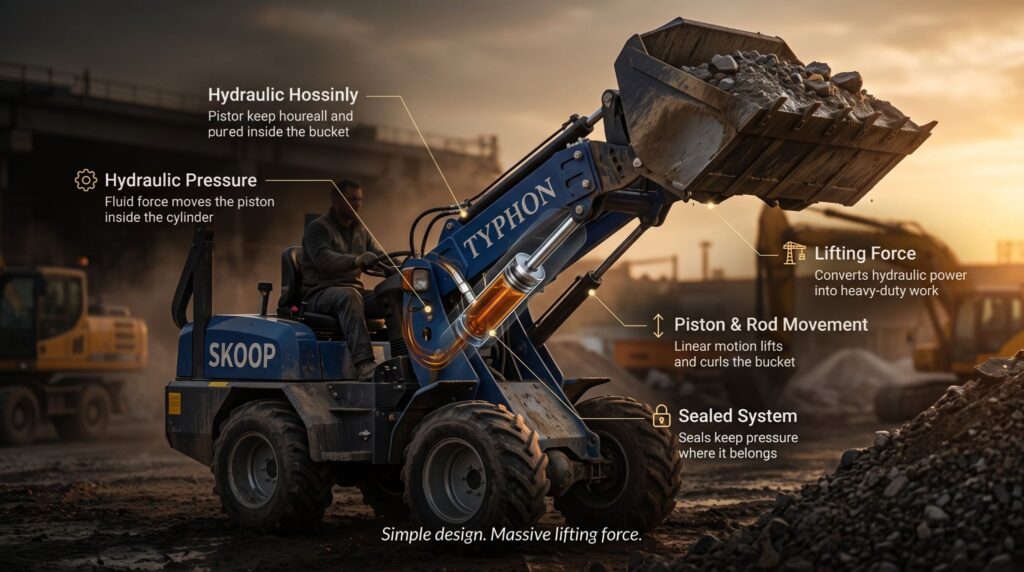
These sets work in concert with the hydraulic pump and control valves. The pump generates flow, the valves direct it, and the cylinders turn that pressurized flow into the precise, powerful movements the operator commands. Every scoop and dump is a coordinated effort, with the cylinders doing the heavy physical work.
Takeaway: Hydraulic cylinders convert pressurized fluid into linear force, and a wheel loader’s lift and tilt cylinders turn that force into the lifting, curling, and dumping that define the machine’s work.
How Cylinders Deliver Force for Heavy Lifting and Pushing
Now that you know what the cylinders are, let’s look at where they truly earn their place: generating the massive force a loader needs to move dense, heavy material. This is the heart of why they’re essential.
Turning Pressure Into Lifting Power
The force a cylinder produces comes from a straightforward relationship: pressure multiplied by the area of the piston. Feed high-pressure fluid against a large piston face, and you get enormous force at the rod. That’s how a machine can hoist a bucket packed with wet sand or crushed rock and hold it steady thirty feet in the air.
This multiplication of force is what makes hydraulics so powerful for heavy work. A pump and a set of cylinders generate lifting force far beyond what mechanical linkages alone could manage. The operator moves a lever with one hand, and the cylinders answer with thousands of pounds of controlled lift.
Force for Breakout and Pushing
Lifting is only half the story. When a loader drives into a compacted pile, the tilt cylinders generate breakout force, the power that curls the bucket and pries material loose. That force decides how aggressively the machine digs into dense, stubborn material without stalling.
The cylinders also hold their position under load, which matters as much as generating force. When you carry a full bucket across a yard, the lift cylinders resist the load’s weight and keep the boom steady instead of sagging. Independent equipment resources on hydraulic system fundamentals cover how this force is generated and sustained in more depth. That ability to both create and hold force is what lets a loader work heavy loads all day without giving ground.
Takeaway: Cylinders multiply fluid pressure into the tremendous lifting and breakout force heavy work demands, and they hold that force steadily so the machine can dig, carry, and lift without faltering.
How Cylinder Size and Pressure Affect Performance
Not all cylinders deliver the same power, and the differences trace back to two key factors: size and operating pressure. Understanding how these elements influence performance helps you match a machine to the demands of your work while recognizing the maintenance practices needed to keep the system operating efficiently. Since hydraulic cylinders handle constant lifting and pushing forces, regular maintenance such as checking leaks, inspecting lubrication points, monitoring fluid condition, and evaluating cylinder movement can help prevent wear and maintain dependable performance over time.
Bore Size and the Force It Produces
The bore, or the internal diameter of the cylinder, sets the piston area that pressure acts on. A larger bore means a bigger piston face, which produces more force at the same pressure. That’s why heavy-duty loaders built for dense material run larger cylinders than lighter machines meant for lighter work.
Bore size has to match the machine and the job. Too small, and the cylinders can’t generate the force to lift rated loads or break out of tough piles. Properly sized, they deliver the power the loader is designed for, with margin to work hard without straining. It’s a core reason two loaders of similar weight can handle very different loads.
Operating Pressure and System Balance
Operating pressure is the other half of the force equation. Higher system pressure lets a cylinder of a given size produce more force, so a well-designed high-pressure system delivers strong performance without oversizing every component. Pressure and bore work together to hit the force targets the machine needs.
Consistent pressure matters as much as peak pressure. If the system can’t hold pressure under load, force sags and heavy lifts slow or stutter right when you need them most. A healthy system with matched bore size and steady pressure gives predictable, dependable power, which is exactly what heavy work demands day after day.
Takeaway: Bore size sets the piston area that generates force, and operating pressure multiplies it, so matched, consistent size and pressure are what give a wheel loader the reliable muscle for heavy loads.
How Cylinder Maintenance Impacts Reliability and Work Output
The most powerful cylinders in the world mean nothing if they aren’t maintained. This is where reliability is won or lost, and it’s the factor most within your control. Care for the cylinders, and the machine keeps earning its keep.
What Wear and Damage Do to Performance
Cylinders live in a punishing environment, exposed to dust, grit, impact, and constant high pressure. Over time, seals wear, rods can score or bend, and fluid can slip past internally. The first sign is often subtle: a boom that drifts down slowly when it should hold, or lifts that feel weaker than they used to.
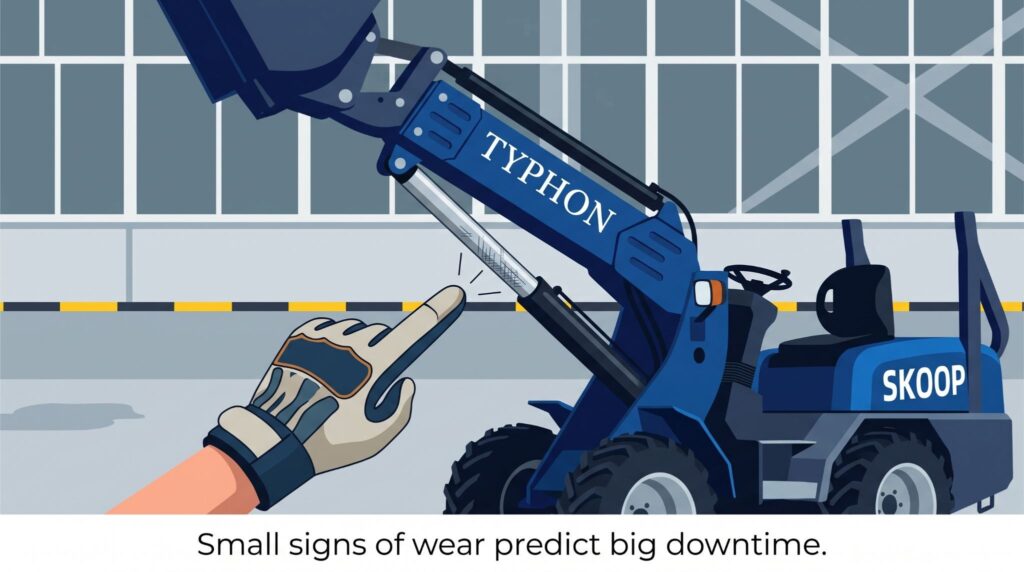
Left unchecked, small problems compound. A worn seal that starts as minor drift can progress to a cylinder that won’t hold a load, and a scored rod chews through seals repeatedly until the cylinder fails outright. Every one of those failures costs you productivity, since a loader that can’t lift reliably can’t work.
Simple Habits That Protect Power
Protecting cylinder performance comes down to consistent, straightforward care. Build these habits into your routine:
- Keep hydraulic fluid clean and topped off, since contaminated or low fluid is the leading cause of seal and cylinder wear.
- Inspect rods regularly for scoring, pitting, or bends, and address damage before it destroys the seals.
- Watch for drift by holding a raised load steady and checking whether the boom or bucket sinks on its own.
- Check for leaks around the rod seals and fittings, repairing them promptly before they worsen.
- Follow the manufacturer’s service intervals for the hydraulic system and its components.
Catching issues early is far cheaper than replacing a failed cylinder mid-job. A machine backed by clean fluid, healthy seals, and reliable parts support keeps its full lifting power available whenever the work demands it.
Takeaway: Cylinder wear quietly erodes force and leads to costly failures, so clean fluid, regular rod inspection, and prompt leak repair protect both the machine’s power and your productivity.
Frequently Asked Questions
How do I know if my wheel loader’s hydraulic cylinders are wearing out?
Watch for drift first: raise a loaded bucket, hold the controls steady, and see if the boom or bucket slowly sinks on its own. Healthy cylinders hold position, so any creep points to worn seals or internal leakage. Weaker or slower lifting under load, visible fluid around the rod seals, and scored or bent rods are other warning signs. Have them inspected early, since addressing wear beats replacing a failed cylinder.
Why does my loader lift heavy loads slowly or struggle under weight?
Load-dependent weakness usually points to the hydraulic system’s inability to generate or hold pressure. Worn cylinder seals let fluid slip past the piston, so force bleeds away under load even when an empty bucket lifts fine. Low or contaminated fluid, a struggling pump, or a system that can’t hold pressure produce the same result. Start with fluid level and condition, then have the cylinders, pump, and valves inspected if that doesn’t restore strong lifting.
Does cylinder size determine how much my loader can lift?
Size is a major factor, but it works together with operating pressure. The bore sets the piston area that pressure pushes against, and a larger bore produces more force at the same pressure. However, force equals pressure times piston area, so a higher-pressure system can generate strong force without oversizing every cylinder. The machine’s real capacity comes from bore, pressure, linkage design, and counterweight working as a matched system, so judge by rated capacity rather than cylinder size alone.
Can I repair a hydraulic cylinder, or does it need full replacement?
It depends on the damage. Many problems, like worn seals or minor leaks, can be fixed by resealing the cylinder, which is far more economical, and a lightly scored rod can sometimes be reconditioned. A badly bent rod, a scored bore, or extensive internal damage may make full replacement the smarter, more reliable choice. A qualified technician can weigh repair cost against replacement and tell you whether the cylinder is still safe to trust under heavy loads.
Conclusion
Hydraulic cylinders are the muscle that makes a wheel loader capable of heavy work. They convert pressurized fluid into the linear force that raises the boom, curls the bucket, and holds a full load steady in the air. Bore size and operating pressure together decide how much lifting and breakout force the machine delivers, and steady, consistent pressure is what lets it hold that force under load. When those cylinders are healthy, heavy lifting feels effortless; when they wear, that power quietly slips away.
Reliable lifting performance starts with selecting a hydraulic system that matches the machine’s workload and operating conditions. Regular checks of cylinder movement, holding ability, fluid quality, and seal condition help maintain consistent power and prevent small issues from affecting daily productivity. Before your next project, evaluate how the loader responds when handling heavy materials, check for signs of hydraulic weakness, and make sure the system is properly maintained. Choosing the right machine configuration and following a proper service routine can help improve lifting efficiency and support dependable performance in a wide range of material-handling applications.
